Logo
IndianGlobalBlogsPublicationsPodcastsMarketAboutContact
Logo
IndianGlobalBlogsPublicationsPodcasts
7News
India’s Dairy Sector Rethinks Supply Trust & Nutrition StrategyU.S. Dietary Guidelines Overhaul Raises Dairy, MeatYear end review of Animal Husbandry and Dairy for the year 2025Fog & Frost Pose New Risks to Agriculture & Dairy in PunjabNandini Adopts AI-Based Product Counting to Boost Dairy Operations

Indian Dairy News

India’s Dairy Sector Rethinks Supply Trust & Nutrition Strategy
Jan 09, 2026

India’s Dairy Sector Rethinks Supply Trust & Nutrition Strategy

India’s dairy industry — long anchored in high production volumes but thin value realisation — is undergoing strategic recalibration around supply reliability, consumer trust and long-term nutrition v...Read More

Year end review of Animal Husbandry and Dairy  for the year 2025
Jan 09, 2026

Year end review of Animal Husbandry and Dairy for the year 2025

Hon'ble Prime Minister inaugurates Regional Center of Excellence (CoE) for Indigenous Breeds established at Motihari with an investment of Rs 33.80 crore. Genotyping of 75000 animals from the first...Read More

Fog & Frost Pose New Risks to Agriculture & Dairy in Punjab
Jan 08, 2026

Fog & Frost Pose New Risks to Agriculture & Dairy in Punjab

Persistent dense fog and dropping temperatures across Punjab — especially around Ludhiana and surrounding districts — are raising fresh concerns for both agriculture and dairy sectors, as winter weath...Read More

DairyNews7x7
Advertisement

Latest Blogs

See More
From Forecast to Fact: 2025 Lessons, 2026 Dairy Outlook
Jan 01, 2026

From Forecast to Fact: 2025 Lessons, 2026 Dairy Outlook

As we step into 2026, it is worth pausing to reflect on how the Indian dairy sector navigated the challenges of 2025 and how closely reality tracked the forecasts I outlined in the first blog of last...Read More

India–NZ Dairy FTA: Safeguards or Silent Slippages?
Dec 26, 2025

India–NZ Dairy FTA: Safeguards or Silent Slippages?

The recently concluded India–New Zealand Free Trade Agreement (FTA) marks an important milestone in bilateral trade, while carefully ring-fencing India’s sensitive dairy sector. Under the agreement, c...Read More

Vision 2047: India’s Dairy Development Roadmap
Dec 21, 2025

Vision 2047: India’s Dairy Development Roadmap

As India moves steadily toward Vision 2047, the dairy sector stands at a strategic inflection point. From being a food security instrument in the decades following Independence, dairy has evolved into...Read More

Global Dairy Dynamics: Innovation, Sustainability & Inclusion
Dec 18, 2025

Global Dairy Dynamics: Innovation, Sustainability & Inclusion

The International Dairy Processing Conference (IDPC) 2026, organised by the Trade Promotion Council of India (TPCI) at Yashobhoomi Convention Centre, Dwarka, New Delhi on 7 January 2026, will serve as...Read More

Global Dairy News

U.S. Dietary Guidelines Overhaul Raises Dairy, Meat
Jan 09, 2026

U.S. Dietary Guidelines Overhaul Raises Dairy, Meat

The newly released 2025–2030 U.S. Dietary Guidelines, unveiled by Health Secretary Robert F. Kennedy Jr. and the Department of Agriculture, represent a major shift in federal nutrition policy, placing...Read More

Spoiled Dairy Becomes 3D Printing Plastic
Jan 07, 2026

Spoiled Dairy Becomes 3D Printing Plastic

Researchers patent a biomaterial from wasted milk proteins, creating biodegradable 3D printing filament and a potential new revenue stream for dairy. Excess milk that once flowed down farm drains duri...Read More

Milk production declines amid rising water costs
Jan 07, 2026

Milk production declines amid rising water costs

Dairy producers across Victoria are facing a tightening operating environment, with declining milk flows and escalating water and fodder costs, according to the Dairy Australia Situation and Outlook Y...Read More

DairyNews7x7
Advertisement
Dairy News 7x7

Your trusted source for all the latest dairy industry news, market insights, and trending topics.

FOLLOW US
CATEGORIES
  • Global News
  • Indian News
  • Blogs
  • Publications
  • Podcasts
SUBSCRIBE TO OUR NEWSLETTER

Stay informed with the latest updates and trending news in the dairy industry.

No spam, unsubscribe at any time

GET IN TOUCH
C-49, C Block, Sector 65,
Noida, UP 201307
+91 7827405029dairynews7x7@gmail.com

© 2026 Dairy News 7x7. All Rights Reserved.

Terms of ServicePrivacy Policy

Water Footprint of Milk in India

By Kuldeep Sharma•Published on June 17, 2024

The water footprint of Milk production in 2022 in India is more than half that of total water required for irrigation in 2025. Isn't it something alarming for all stakeholders to find ways to create paradigm shift in efficiency and sustainability of dairy ing in our country ? 

Following my recent article on the five critical areas driving the Meta crisis in the dairy industry, I decided to delve deeper into the water footprint of the dairy sector. Water and climate are inextricably linked, with the saying "Water is Climate and Climate is Water" capturing this connection. I recently encountered a compelling research study titled "Water Requirement Estimates of Feed and Fodder Production for Indian Livestock vis-à-vis Livestock Water Productivity," (Sultan Singh et al -IGFRI,Jhansi, UP) which sheds light on this crucial aspect.

As per the research paper, the water required for feed production constitutes the largest part of livestock water needs and significantly impacts livestock water productivity. Producing one kilogram of dry matter (DM) for feed ranges from 267 liters (sorghum) to 713.3 liters (lucerne), 1,000 liters (linseed) to 2,000 liters (soybean), and 690 liters (maize grain) to 850 liters (oat grain). The total water requirement for drinking, washing and cleaning livestock in 2003 and 2010 was 16.30 and 16.15 million cubic meters (MCM), respectively, with cattle needing the most (10.11 and 9.51 MCM).Water for drinking and washing livestock is minimal (3.6%) compared to feed production.

Projected water needs for green fodder and concentrate in 2015, 2020, and 2025 are 151.72, 156.83, and 161.81 billion cubic meters (BCM) for fodder and 142.76, 157.67, and 172.04 BCM for concentrate. Livestock water productivity for milk ranges from 475 to 3,751 liters per kilogram, while meat requires 8,215 to 9,680 liters per kilogram. 

Water Footprint of milk

As per multiple sources, the average water footprint of milk in India is approximately 1,560 liters per liter of milk. influenced by farming practices, feed types, and climatic conditions. While the The global average is about 1,020 liters per liter of milk, indicating that India's water footprint is relatively high due to inefficient practices and climatic conditions.

Considering total milk production of 220 billion Litres in 2022, the total water foot print of milk produced becomes, 343.5 BCM ( Billion Cu mtr).  Let us compare it with the national demand of water in the country. Water requirement of the country for irrigation in high demand scenario for the years 2025 and 2050 has been assessed by National Commission on Integrated Water Resources Development-1999 as 611 BCM (Billion Cubic Metre) and 807 BCM respectively. As per ground water resource assessment for the years 2017, 2020 and 2022, the ground water extraction utilised by the irrigation sector are 221.46 BCM, 217.61 BCM and 208.49 BCM, respectively. 


Considering these numbers the milk production is consuming a significant part of this water demand. It is high time to assess the factors contributing to this huge water foot print of dairying in India.

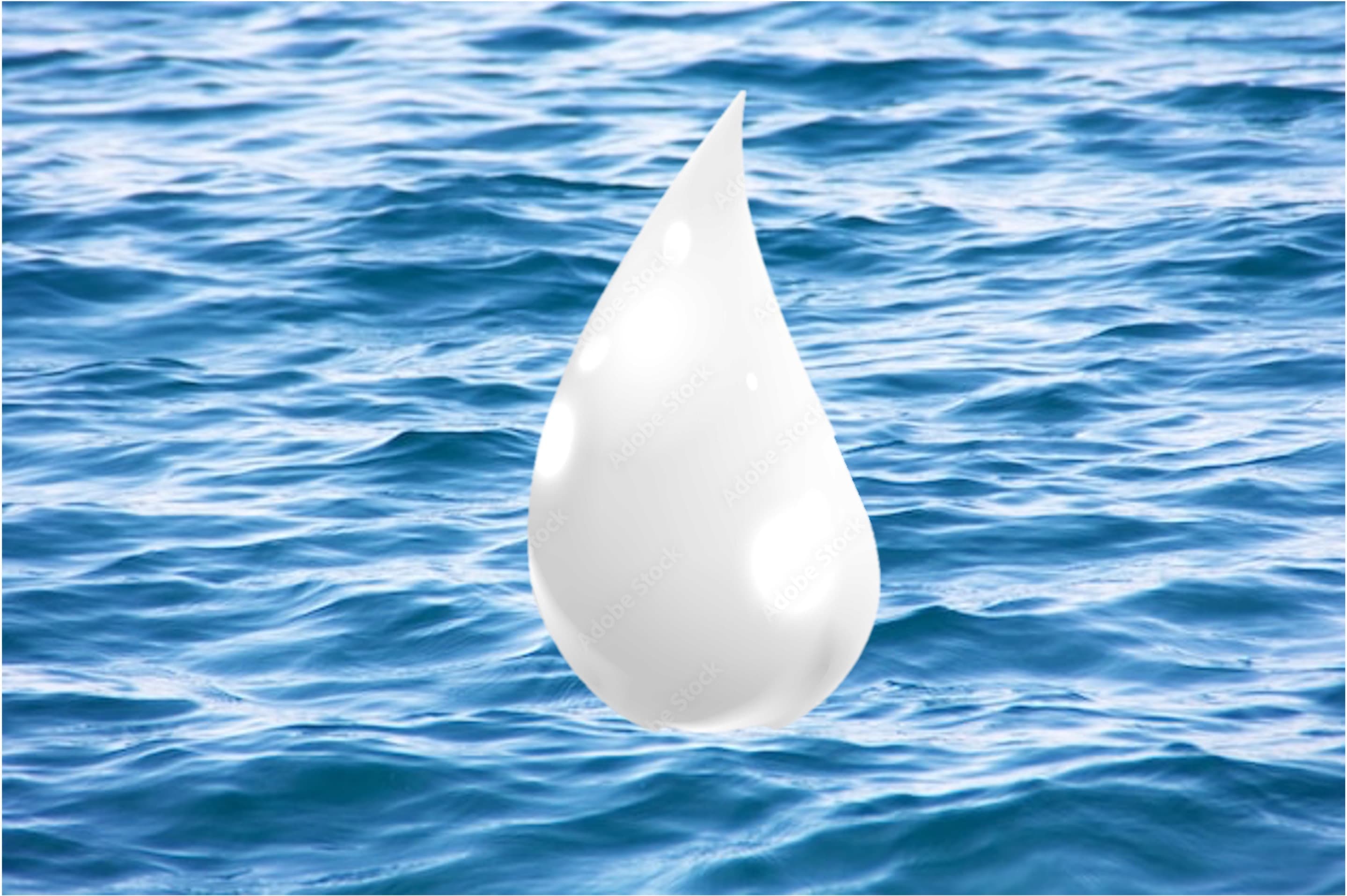
Several factors contribute to the high water footprint of milk production in India. A significant portion of this footprint comes from the cultivation of feed crops such as maize, soy, and other grains, with irrigation practices often leading to higher water consumption. Inefficient water management and irrigation techniques in many parts of India exacerbate this issue.

Traditional dairy farming practices, characterised by lower cattle productivity and feed efficiency, further increase the water footprint. Additionally, there are significant regional variations in the water footprint of milk, influenced by differences in climate, agricultural practices, and water availability. For instance, milk production in arid and semi-arid regions tends to have a higher water footprint compared to more water-abundant regions.

The high water footprint of milk production has several environmental implications. Excessive use of groundwater and surface water for irrigation and animal consumption can deplete water resources. The grey water footprint highlights the issue of water pollution due to agricultural runoff, including fertilisers and pesticides, which can contaminate local water bodies. These factors collectively underscore the need for more efficient water use and management practices in India's dairy industry.

To reduce the water footprint of milk production in India, several strategies can be implemented. Improved irrigation techniques, such as drip or sprinkler systems, can significantly reduce water usage. Sustainable feed production involves using rain-fed crops and optimising the feed mix to reduce dependence on water-intensive crops. Implementing water-efficient farming practices and training farmers in water conservation techniques are crucial for better water management. Additionally, utilising technology for monitoring water usage and improving the overall efficiency of dairy farms can further help in reducing the water footprint.


Swipe to continue reading

Previous Article

Next Article