Latest Blogs
See More


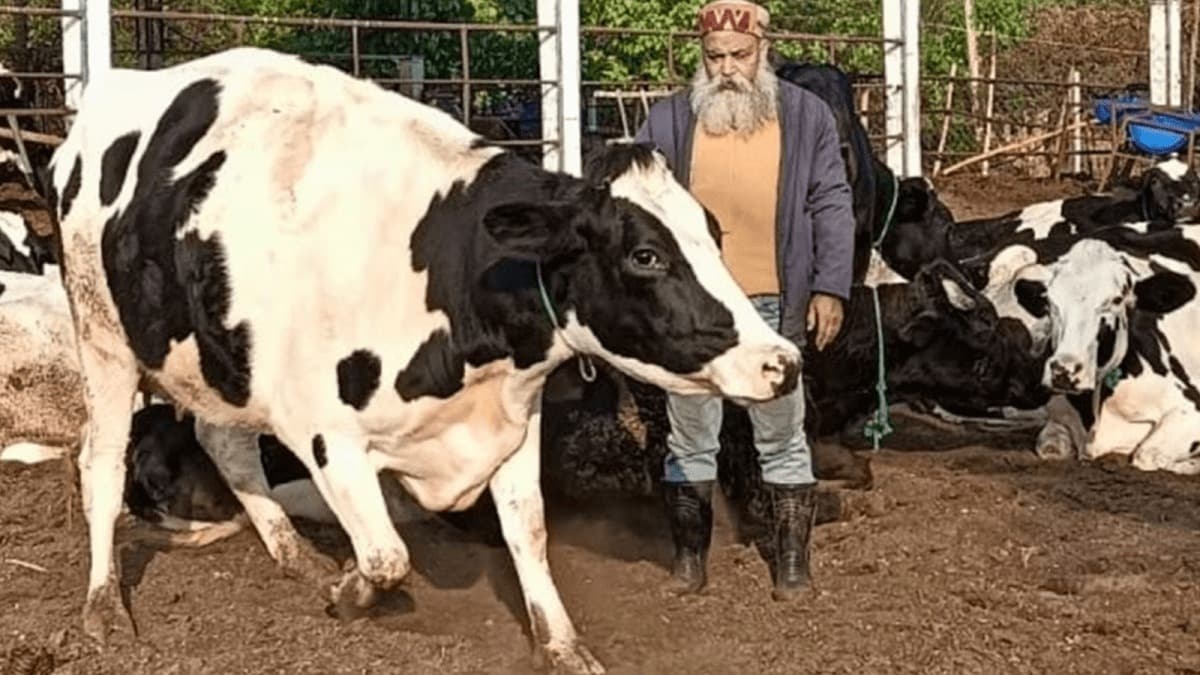
The livestock and dairy production sector in Himachal Pradesh accounts for more than 85 per cent of the state’s annual methane emissions, a new scientific assessment has warned, cautioning that the situation could worsen significantly if timely remedial measures are not adopted.
The findings are part of a report titled “Scientific Assessment of Tackling Non-CO2 Emissions: Pathways for Himachal Pradesh”. The report was released on February 24. The study highlights that methane emissions from livestock and domestic cattle form the overwhelming share of the state’s non-carbon dioxide greenhouse gas burden, while the remaining 15 per cent is attributed to landfill sites, waste management and related sectors.
“Livestock contributes nearly 85 per cent of annual methane emissions in the baseline year and emissions are projected to continue rising under a Business-As-Usual (BAU) scenario. For the purpose of the assessment, 2019 was taken as the baseline year,” the study stated.
“Almost 12 per cent of methane emission can be curbed through the balanced feeding of livestock and around 27 per cent under the combing pathway including fodder management and breed preservation.”
Dr Nimish Singh, director (Science) at IGSD, told The Indian Express that the state’s unique agricultural profile explains the disproportionate contribution of livestock to methane emissions. “There are certain reasons why 85 per cent of emissions were attributed to livestock and dairy farming in Himachal. In states like Punjab and Haryana, paddy cultivation is the largest source of methane emissions, followed by dairy, landfill etc. But in Himachal, paddy production is marginal and largely confined to plain areas bordering Punjab and Haryana,” he said.
The expert clarified that the livestock category considered in the study includes only cows and buffaloes. “In terms of methane accounting, goats, sheep and pigs are not included in this category,” he added. He accepted the fact that rearing goats, sheeps is more overwhelming than cows and buffalos, especially in the higher reaches and snow-bound areas.
Pranjali Chowdhary, policy strategist with IGSD, said that 2019 was selected in line with national climate accounting practices. “The Government of India is also using 2019 as the baseline year for its national climate and cleanliness policies. The report not only assesses emissions but also provides a set of practical solutions to reduce methane, which have been submitted to the state government,” she said.
Policy recommendations include expanding balanced fodder programmes, improving feed quality through silage and fodder banks, scaling up household and community-level biogas plants using manure, and aligning indigenous cattle conservation with productivity enhancement. The report also suggests leveraging the state’s milk Minimum Support Price framework to improve farmer incomes while reducing emission intensity.
Data from the Himachal Pradesh Animal Husbandry Department indicates that nearly 6.5 lakh cows and buffaloes become pregnant annually in the state. They remain in lactation for six to seven months during pregnancy, followed by a dry period of about three months — a biological cycle that significantly influences methane output through enteric fermentation.
The report proposes alternative scenarios centred on balanced feeding practices and promotion of indigenous cattle breeds. These pathways are projected to deliver methane emission reductions of around 12 per cent through balanced feeding alone and up to 27 per cent under a combined strategy that includes improved fodder management and breed preservation.
The study further said that however, even under these mitigation pathways, livestock is expected to remain the dominant source of methane emissions in the state, underscoring the need for focused climate action in this sector.
Methane, a colourless and highly flammable greenhouse gas, has over 80 times the warming potential of carbon dioxide over a 20-year period and is considered a critical target for rapid climate action. At the national level, livestock accounts for nearly 48 per cent of total agricultural methane emissions, with 100 out of 721 districts contributing around 40 per cent of the total burden.
Source : Dairynews7x7 March 1st 2026 Indian Express
#methane #climatechange #GHGemission #teri #dairy #livestock