Latest Blogs
See More
Indian Dairy News

DairyNews7x7
Global Dairy News


DairyNews7x7
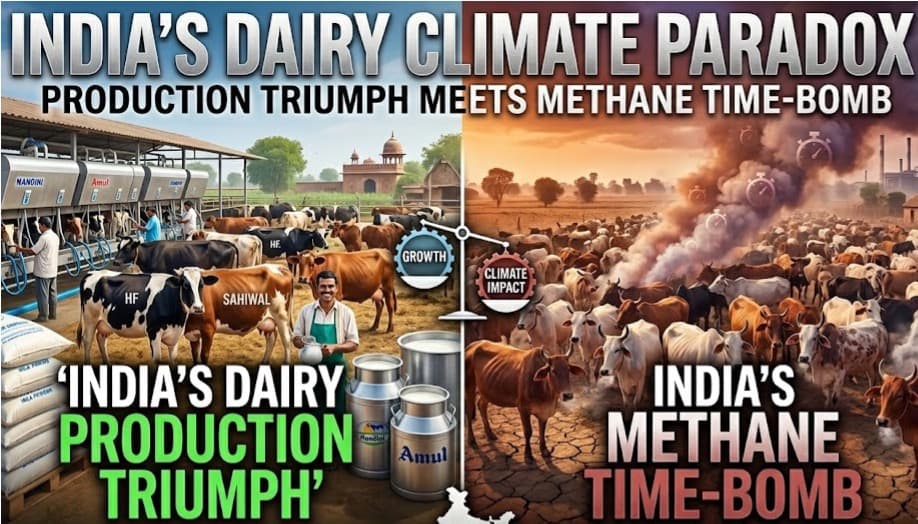
India’s rise to the top of the global dairy league board has been one of the most remarkable agricultural success stories of the 21st century. With milk production surpassing 247 million tonnes per year and household incomes rising in hinterland India, this narrative of abundance is rightly a source of pride. Yet beneath the figures and celebratory headlines lies a climate paradox few in the sector are willing to confront — one that threatens not only India’s climate commitments but the very resilience of its dairy ecosystem.
Recent scientific evidence now makes this paradox impossible to ignore. A national methane inventory shows that ~100 out of 721 districts contribute nearly 40 % of India’s total livestock methane emissions — despite being home to a minority of the cattle population. This concentration means that climate impact in dairy is not evenly dispersed, but clustered in identifiable hot-spots that demand urgent policy attention.
At the same time, state-level evidence from The Energy and Resources Institute (TERI) shows that in Himachal Pradesh, *livestock — particularly cattle and buffalo — account for over 85 % of annual methane emissions. Yet this is happening in a state that has pushed hard in recent years to grow milk production through breed improvement and cooperative procurement — without any corresponding strategy for methane mitigation.
At the national level, the Council on Energy, Environment and Water (CEEW) has documented that climate change is already eroding milk productivity, especially in heat-stressed regions, and that future warming could reduce milk yields by up to 25 % by 2050 if no adaptation pathway is mobilised.
This triple evidence — methane burden, climate impact, and productivity decline — should have galvanized dairy policy. Instead, it has been met with quiet indifference and fragmented responses.
Methane is not just another greenhouse gas. It is more than 25 times as potent as carbon dioxide over 100 years, and reductions today deliver climate benefits within a decade — a rare opportunity in emissions mitigation. Its primary sources in dairy are:
Enteric fermentation: Methane generated during ruminal digestion in cattle and buffalo.
Manure decomposition: Methane released where manure is stored or grazed.
Despite its potency, methane has been sidelined in most national dairy strategies, which remain focused on production, quality, and procurement — but quiet on climate risk.
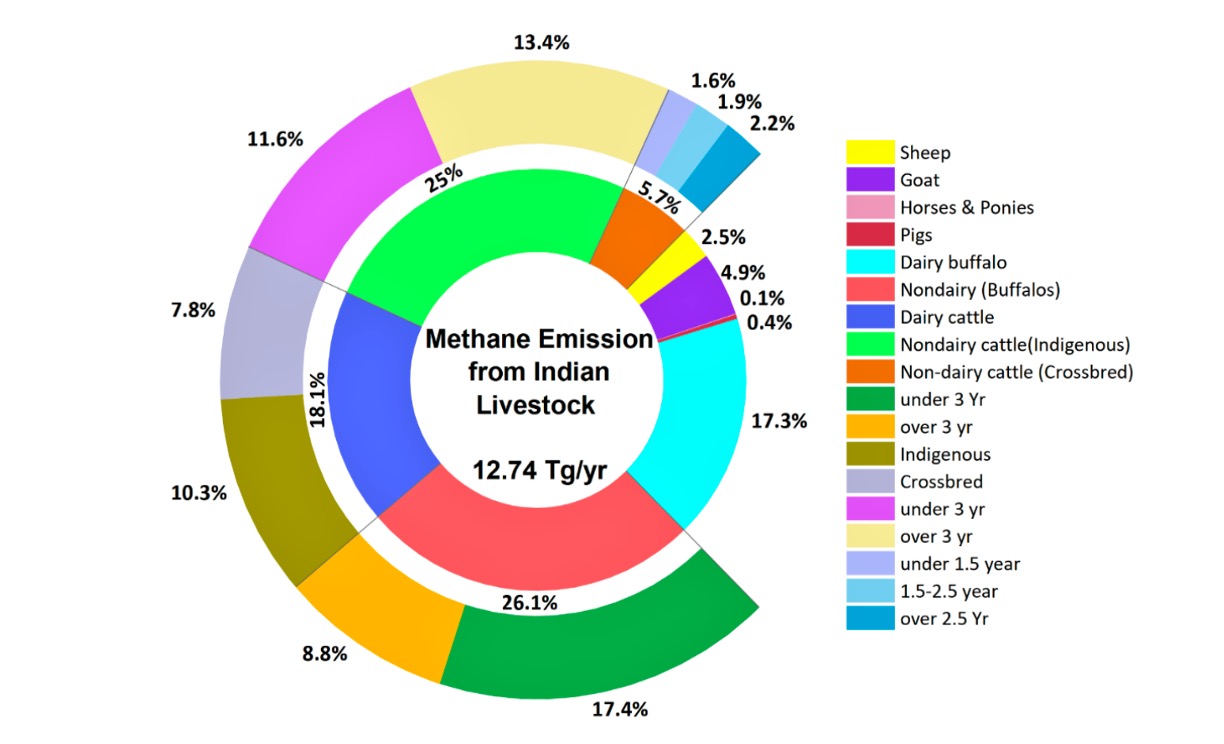
Livestock category-wise Methane emission from the country (2019)*
*National Livestock Methane Inventory (Samal et al., Aerosol and Air Quality Research)
TERI’s assessment for Himachal Pradesh is revealing. Unlike states like Punjab or Haryana where paddy straw dominates methane statistics, in Himachal, cattle and buffalo methane overwhelms all other non-CO₂ sources, at more than 85 %. This is meaningful not as a statistic, but as a policy diagnostic: a dairy-centric state economy with a dairy-centric emissions challenge.
Yet policies in the state — from breed improvement to dairy cooperative expansion — have not been re-oriented to include methane mitigation. State incentives remain heavily tilted toward increased milk production without climate alignment. This disconnect risks locking in a high-emission dairy model that undermines national climate goals and local productivity resilience.
CEEW’s study on climate impacts on milk production adds urgency. Farmers across surveyed districts reported:
Perceived reduction in milk yields due to heat stress.
Higher disease incidence in livestock linked to warming.
Increased feed and fodder insecurity tied to rainfall variability.
Climate models project that rising temperatures and rainfall variability could reduce milk yields by 10–25 % by 2050, depending on region and breed composition. These are not future projections; they are farmer-perceived current realities. If dairy systems are already feeling the climate effect now, the industry’s oscillation toward growth without adaptation is strategically myopic.
Despite climate commitments under India’s Nationally Determined Contributions (NDCs) and repeated methane pledges at international forums, there is no robust national dairy methane mitigation strategy. Key omissions include:
No district-level methane action planning for the high-emission districts identified in the national methane inventory.
Limited integration of methane metrics into dairy support programmes (e.g., fodder schemes, dairy cooperatives’ performance KPIs).
No targeted research funding for dairy methane reduction technologies in India’s research councils or agri-university agendas.
Absence of climate risk buffers in dairy insurance or product pricing, despite clear exposure to climate-driven productivity losses.
In contrast, some other sectors — notably paddy and sugarcane — have seen dedicated climate mitigation roadmaps at state and national levels.
Given this triad of evidence — concentrated emissions, climate impact, and policy neglect — India’s dairy sector needs a suite of actionable mitigation pathways, not aspirational slogans.
Improving fodder quality and balanced rations enhances digestibility, shifting rumen fermentation away from methane production. High-digestibility forages and improved silage practices can cut emissions intensity significantly, while also boosting yields.
Uncovered manure heaps are methane hothouses. Covered anaerobic digesters can capture methane for renewable energy, turning a climate liability into an asset.
Genetic differences mean some animals inherently emit less methane per unit of milk. Selective breeding and genomic selection — backed by real-time methane monitoring — can gradually shift herd emission profiles without reducing productivity. This is a long-term, scalable strategy.
Feed additives like Bovaer® suppress methane production in the rumen and have shown substantial reductions (~30 %). While adoption costs and dosing logistics remain challenges, cooperative purchasing and targeted incentives can speed deployment.
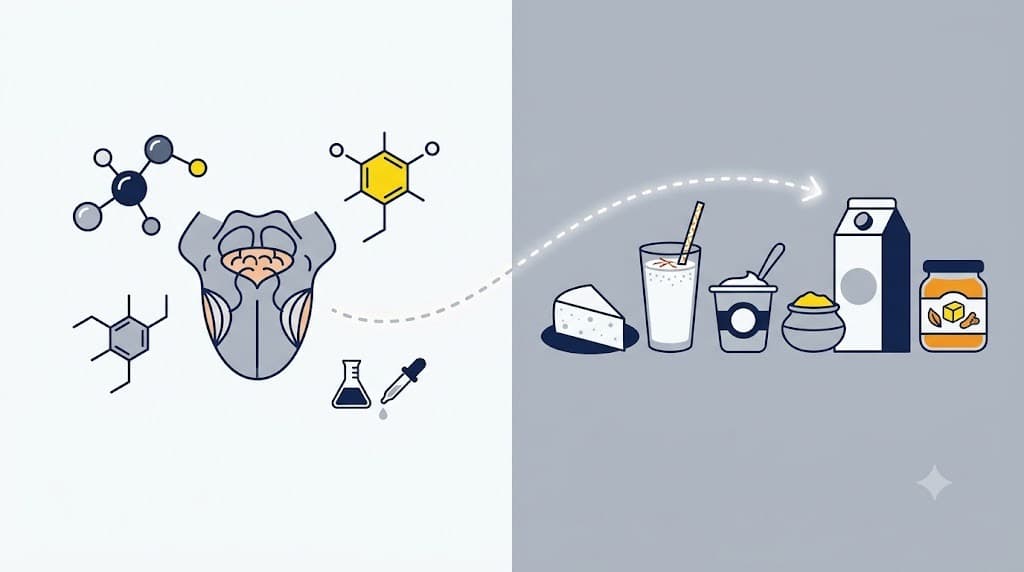
Perhaps the most disruptive innovation on the horizon is the methane vaccine, currently in advanced global development. Biotechnology firms and research consortia — backed by funds like the Bezos Earth Fund — are working on vaccines designed to stimulate the cow’s immune system to suppress methane-producing microbes in the rumen. The goal is a one-shot intervention at an early age that could reduce methane emissions by 15 % or more without affecting milk production. Commercial readiness is targeted between 2027 and 2030.
This methane vaccine represents a potential moonshot solution: one that pairs immediacy with scalability. But like any transformative technology, its success in India will depend on regulatory clarity, farmer economics, and institutional push — not passive optimism.
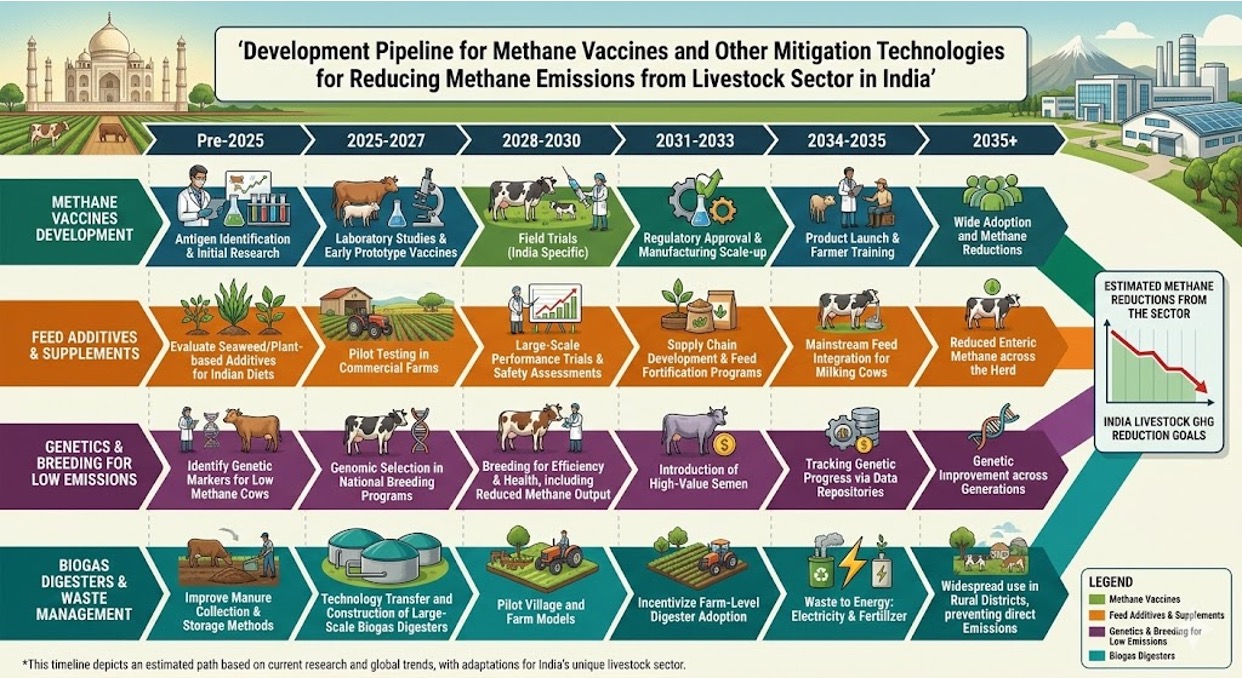
Pic credit Gemini
The science and tech exist — what India lacks is strategic prioritisation. A climate-aligned dairy vision requires:
District-level methane action planning focused on the 100 hot-spot districts identified in the national inventory.
Integrated mitigation KPIs in dairy support programmes (including fodder schemes, breed subsidies, and cooperative performance metrics).
Public investment in methane R&D, especially for vaccines, genetics, and methane sensing.
Market incentives for methane reduction, such as carbon payments or emission intensity credits.
Farmer extension and adoption support so that rural dairy producers benefit directly from mitigation solutions.
Allowing Methane reducing interventions under CSR. Why Livestock Methane Fits CSR Perfectly ? Methane mitigation in dairy sits at the intersection of:
Climate action (SDG 13)
Farmer livelihoods (SDG 1 & 8)
Nutrition & food systems (SDG 2)
Responsible production (SDG 12)
Currently, it receives almost zero structured CSR funding, unlike renewables or sanitation.
India’s dairy sector stands at a crossroads. On one side is a continuation of the “grow first, green later” model — a choice that science now shows is unsustainable. On the other is a climate-aware dairy strategy that marries improved productivity with methane mitigation, turning a structural challenge into a competitive advantage.
With targeted policy, investment in disruptive innovations like methane vaccines, and a shift in the dairy narrative to include climate reality, India can craft a future in which dairy remains abundant and climate-responsible. Anything less is a risk the sector cannot afford — for farmers, for consumers, or for the planet.
National Livestock Methane Inventory (Samal et al., Aerosol and Air Quality Research)
TERI: Tackling Non-CO₂ Emissions: Pathways for Himachal Pradesh
CEEW: Climate Change Impact on India’s Milk Production
Global vaccine and methane innovation context — Bezos Earth Fund and ArkeaBio developments.
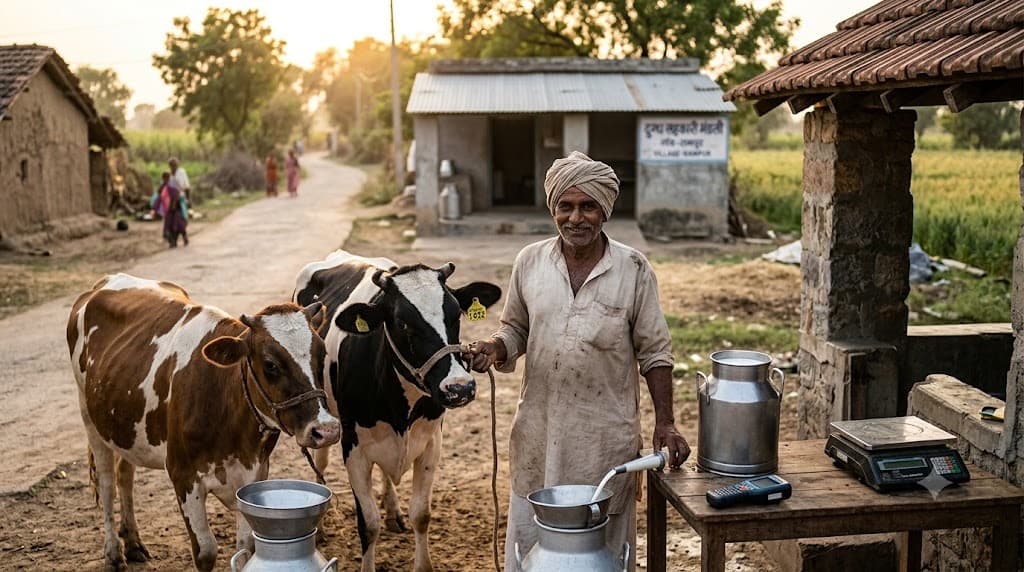
Title Pic credit Gemini