Logo
IndianGlobalBlogsPublicationsPodcastsMarketAboutContact
Logo
IndianGlobalBlogsPublicationsPodcasts
7News
India’s Dairy Sector Rethinks Supply Trust & Nutrition StrategyU.S. Dietary Guidelines Overhaul Raises Dairy, MeatYear end review of Animal Husbandry and Dairy for the year 2025Fog & Frost Pose New Risks to Agriculture & Dairy in PunjabNandini Adopts AI-Based Product Counting to Boost Dairy Operations

Indian Dairy News

India’s Dairy Sector Rethinks Supply Trust & Nutrition Strategy
Jan 09, 2026

India’s Dairy Sector Rethinks Supply Trust & Nutrition Strategy

India’s dairy industry — long anchored in high production volumes but thin value realisation — is undergoing strategic recalibration around supply reliability, consumer trust and long-term nutrition v...Read More

Year end review of Animal Husbandry and Dairy  for the year 2025
Jan 09, 2026

Year end review of Animal Husbandry and Dairy for the year 2025

Hon'ble Prime Minister inaugurates Regional Center of Excellence (CoE) for Indigenous Breeds established at Motihari with an investment of Rs 33.80 crore. Genotyping of 75000 animals from the first...Read More

Fog & Frost Pose New Risks to Agriculture & Dairy in Punjab
Jan 08, 2026

Fog & Frost Pose New Risks to Agriculture & Dairy in Punjab

Persistent dense fog and dropping temperatures across Punjab — especially around Ludhiana and surrounding districts — are raising fresh concerns for both agriculture and dairy sectors, as winter weath...Read More

DairyNews7x7
Advertisement

Latest Blogs

See More
From Forecast to Fact: 2025 Lessons, 2026 Dairy Outlook
Jan 01, 2026

From Forecast to Fact: 2025 Lessons, 2026 Dairy Outlook

As we step into 2026, it is worth pausing to reflect on how the Indian dairy sector navigated the challenges of 2025 and how closely reality tracked the forecasts I outlined in the first blog of last...Read More

India–NZ Dairy FTA: Safeguards or Silent Slippages?
Dec 26, 2025

India–NZ Dairy FTA: Safeguards or Silent Slippages?

The recently concluded India–New Zealand Free Trade Agreement (FTA) marks an important milestone in bilateral trade, while carefully ring-fencing India’s sensitive dairy sector. Under the agreement, c...Read More

Vision 2047: India’s Dairy Development Roadmap
Dec 21, 2025

Vision 2047: India’s Dairy Development Roadmap

As India moves steadily toward Vision 2047, the dairy sector stands at a strategic inflection point. From being a food security instrument in the decades following Independence, dairy has evolved into...Read More

Global Dairy Dynamics: Innovation, Sustainability & Inclusion
Dec 18, 2025

Global Dairy Dynamics: Innovation, Sustainability & Inclusion

The International Dairy Processing Conference (IDPC) 2026, organised by the Trade Promotion Council of India (TPCI) at Yashobhoomi Convention Centre, Dwarka, New Delhi on 7 January 2026, will serve as...Read More

Global Dairy News

U.S. Dietary Guidelines Overhaul Raises Dairy, Meat
Jan 09, 2026

U.S. Dietary Guidelines Overhaul Raises Dairy, Meat

The newly released 2025–2030 U.S. Dietary Guidelines, unveiled by Health Secretary Robert F. Kennedy Jr. and the Department of Agriculture, represent a major shift in federal nutrition policy, placing...Read More

Spoiled Dairy Becomes 3D Printing Plastic
Jan 07, 2026

Spoiled Dairy Becomes 3D Printing Plastic

Researchers patent a biomaterial from wasted milk proteins, creating biodegradable 3D printing filament and a potential new revenue stream for dairy. Excess milk that once flowed down farm drains duri...Read More

Milk production declines amid rising water costs
Jan 07, 2026

Milk production declines amid rising water costs

Dairy producers across Victoria are facing a tightening operating environment, with declining milk flows and escalating water and fodder costs, according to the Dairy Australia Situation and Outlook Y...Read More

DairyNews7x7
Advertisement
Dairy News 7x7

Your trusted source for all the latest dairy industry news, market insights, and trending topics.

FOLLOW US
CATEGORIES
  • Global News
  • Indian News
  • Blogs
  • Publications
  • Podcasts
SUBSCRIBE TO OUR NEWSLETTER

Stay informed with the latest updates and trending news in the dairy industry.

No spam, unsubscribe at any time

GET IN TOUCH
C-49, C Block, Sector 65,
Noida, UP 201307
+91 7827405029dairynews7x7@gmail.com

© 2026 Dairy News 7x7. All Rights Reserved.

Terms of ServicePrivacy Policy

National Dairy Data Centre:Closing the Trust Gap

By Kuldeep Sharma•Published on March 16, 2025

In the recently concluded 51st DIC at Patna, the Union Minister for Dairying has urged the private dairy sector to share data to facilitate better policymaking. While this may seem like a step towards inclusivity, it raises concerns about fairness and transparency. For the first time, on a national platform, I have seen the government officially acknowledge that the private sector processes 12% of the total milk produced in the country. This recognition is a welcome and much-needed step towards a more inclusive dairy policy. It reflects a shift towards a holistic approach that values the contributions of both cooperative and private players in strengthening India’s dairy sector. Yet, historically, government policies have primarily focused on supporting the cooperative sector, often at the expense of private players at state level.

Selective attention

For decades, the government has selectively highlighted the achievements of the cooperative dairy sector while downplaying the significant contributions of private dairies. Discussions around India’s dairy growth have often revolved around milk handled by cooperatives, conveniently ignoring the private sector’s rising share. Even during COVID-19, this bias was evident—while state-led cooperatives received interest subvention and financial aid, private dairies, which kept supply chains running without state support, were left to fend for themselves.

The government has access to extensive data on the cooperative sector through NDDB, including milk prices, procurement volumes, and commodity stocks. NDDB also plays a dual role—supporting cooperatives while competing with private dairies. Meanwhile, state governments provide subsidies to their respective dairy federations, creating an uneven playing field. If the government truly seeks comprehensive industry data, it must first ensure transparency by sharing cooperative sector data and establishing a national platform where all stakeholders, including private dairies, can contribute and access information.

Inclusion of private sector in AHIDF : A welcome move

It is encouraging that the government has now started extending support to the private sector under AHIDF. However, with private dairies now handling nearly equal volumes of milk—without the subsidies and state-backed infrastructure that cooperatives enjoy—it is time for the government to recognize their role and open up resources for them as well. The private sector should not be treated as a competitor to cooperatives but as an equal collaborator in India’s dairy development. A National Dairy Data Center, ensuring transparency and fair policy decisions, could be the first step in fostering this much-needed synergy.

Instead of seeking data from private players under a potential conflict of interest, the government already has multiple avenues to gather necessary insights. Installed capacities are documented through FSSAI, revenue figures are available via ROC filings, and sales data is captured under GST. These channels offer a robust mechanism to assess industry trends without placing an undue burden on private enterprises.

To foster trust, the government must go beyond merely collecting data. It should ensure that NDDB’s expertise and services are accessible to all dairy players—cooperative and private alike. The exclusionary policies of the past, originally designed to protect farmers from exploitative private firms in Dr. Kurien’s time, no longer hold the same relevance. Today’s private dairy sector has emerged as a key contributor to farmer prosperity, quality assurance, and supply chain efficiency.

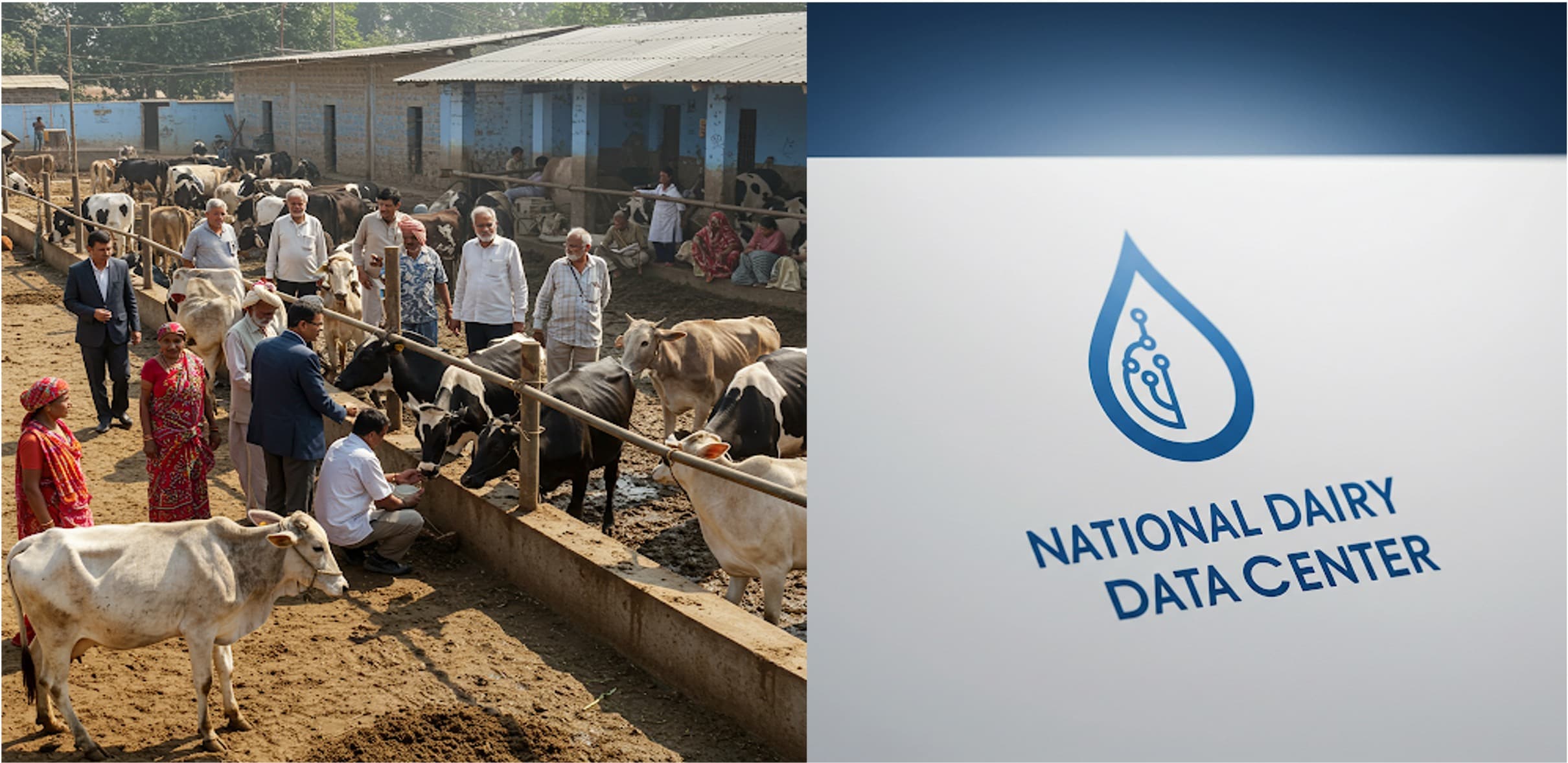
National Dairy Data Center

The Indian dairy sector is operating under a stark asymmetry of information—cooperatives lack private sector data, and vice versa—creating an uneven playing field that demands immediate correction for a more transparent and balanced industry.

A truly inclusive approach would mean treating both sectors as equal pillars of India’s dairy industry. Transparency, data sharing, and equitable access to government resources can help build a dairy ecosystem where cooperatives and private players complement rather than compete with each other. The creation of a National Dairy Data Center could be the first step toward achieving this long-overdue balance. The same centre could also regulate buffer stocks of SMP and Butter in the country so that our farmers keep on getting reasonable farmgate prices for their produce.

Taking on global markets with confidence

The government is encouraging exports of agri-produce and at all the forums exports of dairy products  is discussed in order to double the farmers income. In order to compete at a global level, our cooperative and private dairy sectors must come together as partners rather than rivals and take on the world. The government must act as the right anchor, ensuring a level playing field and fostering an ecosystem where both sectors complement each other’s strengths. Only by enabling equal opportunities can India establish itself as a dominant force in the global dairy industry, driving innovation, efficiency, and farmer prosperity.

Source : Dairynews7x7 March 16th 2025 A blog by Kuldeep Sharma Chief editor Dairynews7x7


Swipe to continue reading

Previous Article

Next Article