Logo
IndianGlobalBlogsPublicationsPodcastsMarketAboutContact
Logo
IndianGlobalBlogsPublicationsPodcasts
7News
Feed Inflation Now Top Stress for India’s Dairy FarmersIndia’s Dairy Sector Rethinks Supply Trust & Nutrition StrategyU.S. Dietary Guidelines Overhaul Raises Dairy, MeatYear end review of Animal Husbandry and Dairy for the year 2025Fog & Frost Pose New Risks to Agriculture & Dairy in Punjab

Indian Dairy News

Feed Inflation Now Top Stress for India’s Dairy Farmers
Jan 09, 2026

Feed Inflation Now Top Stress for India’s Dairy Farmers

Dairy farmers across the country are facing intensifying economic stress as feed cost inflation emerges as the greatest pressure point for milk producers, with prices of all key inputs rising sharply,...Read More

India’s Dairy Sector Rethinks Supply Trust & Nutrition Strategy
Jan 09, 2026

India’s Dairy Sector Rethinks Supply Trust & Nutrition Strategy

India’s dairy industry — long anchored in high production volumes but thin value realisation — is undergoing strategic recalibration around supply reliability, consumer trust and long-term nutrition v...Read More

Year end review of Animal Husbandry and Dairy  for the year 2025
Jan 09, 2026

Year end review of Animal Husbandry and Dairy for the year 2025

Hon'ble Prime Minister inaugurates Regional Center of Excellence (CoE) for Indigenous Breeds established at Motihari with an investment of Rs 33.80 crore. Genotyping of 75000 animals from the first...Read More

DairyNews7x7
Advertisement

Latest Blogs

See More
From Forecast to Fact: 2025 Lessons, 2026 Dairy Outlook
Jan 01, 2026

From Forecast to Fact: 2025 Lessons, 2026 Dairy Outlook

As we step into 2026, it is worth pausing to reflect on how the Indian dairy sector navigated the challenges of 2025 and how closely reality tracked the forecasts I outlined in the first blog of last...Read More

India–NZ Dairy FTA: Safeguards or Silent Slippages?
Dec 26, 2025

India–NZ Dairy FTA: Safeguards or Silent Slippages?

The recently concluded India–New Zealand Free Trade Agreement (FTA) marks an important milestone in bilateral trade, while carefully ring-fencing India’s sensitive dairy sector. Under the agreement, c...Read More

Vision 2047: India’s Dairy Development Roadmap
Dec 21, 2025

Vision 2047: India’s Dairy Development Roadmap

As India moves steadily toward Vision 2047, the dairy sector stands at a strategic inflection point. From being a food security instrument in the decades following Independence, dairy has evolved into...Read More

Global Dairy Dynamics: Innovation, Sustainability & Inclusion
Dec 18, 2025

Global Dairy Dynamics: Innovation, Sustainability & Inclusion

The International Dairy Processing Conference (IDPC) 2026, organised by the Trade Promotion Council of India (TPCI) at Yashobhoomi Convention Centre, Dwarka, New Delhi on 7 January 2026, will serve as...Read More

Global Dairy News

U.S. Dietary Guidelines Overhaul Raises Dairy, Meat
Jan 09, 2026

U.S. Dietary Guidelines Overhaul Raises Dairy, Meat

The newly released 2025–2030 U.S. Dietary Guidelines, unveiled by Health Secretary Robert F. Kennedy Jr. and the Department of Agriculture, represent a major shift in federal nutrition policy, placing...Read More

Spoiled Dairy Becomes 3D Printing Plastic
Jan 07, 2026

Spoiled Dairy Becomes 3D Printing Plastic

Researchers patent a biomaterial from wasted milk proteins, creating biodegradable 3D printing filament and a potential new revenue stream for dairy. Excess milk that once flowed down farm drains duri...Read More

Milk production declines amid rising water costs
Jan 07, 2026

Milk production declines amid rising water costs

Dairy producers across Victoria are facing a tightening operating environment, with declining milk flows and escalating water and fodder costs, according to the Dairy Australia Situation and Outlook Y...Read More

DairyNews7x7
Advertisement
Dairy News 7x7

Your trusted source for all the latest dairy industry news, market insights, and trending topics.

FOLLOW US
CATEGORIES
  • Global News
  • Indian News
  • Blogs
  • Publications
  • Podcasts
SUBSCRIBE TO OUR NEWSLETTER

Stay informed with the latest updates and trending news in the dairy industry.

No spam, unsubscribe at any time

GET IN TOUCH
C-49, C Block, Sector 65,
Noida, UP 201307
+91 7827405029dairynews7x7@gmail.com

© 2026 Dairy News 7x7. All Rights Reserved.

Terms of ServicePrivacy Policy

Milk subsidy to the farmers : A tool for development or a weapon to kill

By Kuldeep Sharma•Published on April 07, 2022

The Meteorological Department has said that there is a possibility of severe heat in most parts of the country; this year between March and May. The IMD said that areas from west to central and northwest India will have a heat-surge between March and May;and the temperatures will go above normal. In other words, this year’s forecast says that the entire nation will witness a record-breaking surge in temperatures.

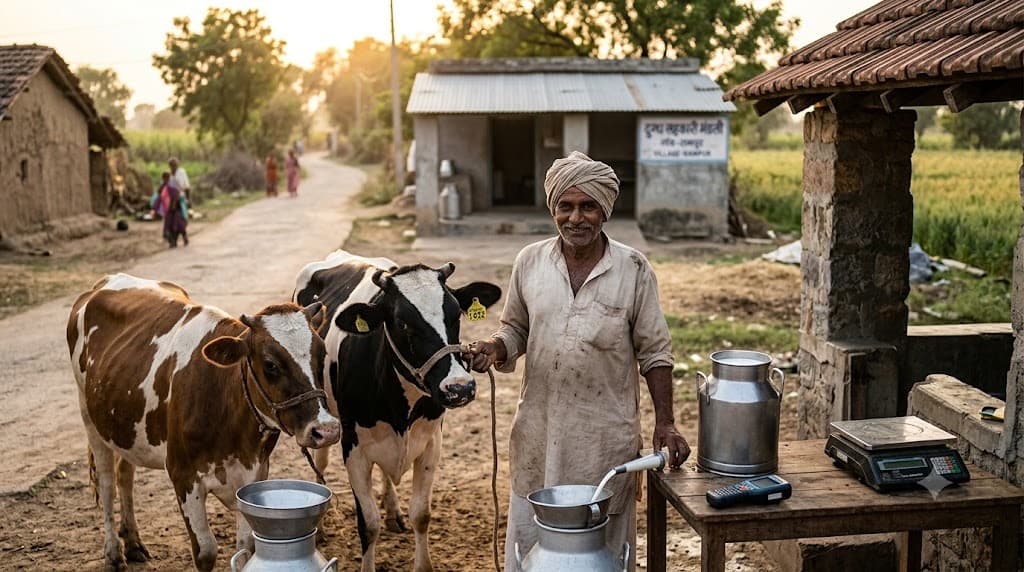
There has been an acute shortage of milk in the country. The cost of production of milk is also increasing due to inflationary pressure on feed, fodder and logistics . The farmers need a reasonable price for their produce. The method of imputed costs in agriculture prevails over the computed costs. The dairy farmers are not much aware of their real cost of milk production.

Farm Gate price computation

Normally the milk buyers fix the Milk procurement prices.The Dairy cooperatives play an important role in deciding the milk prices. Amul has always set up bench marks for giving the best prices to their farmers. Amul is a role model and all other players try to follow the suit .

The procurement of total surplus milk in India is run by the following players in the organised sector :

a.State run Cooperatives

b.Private cooperatives

c. Farmer producer companies

d. The private sector

Subsidies and Supports are not bad

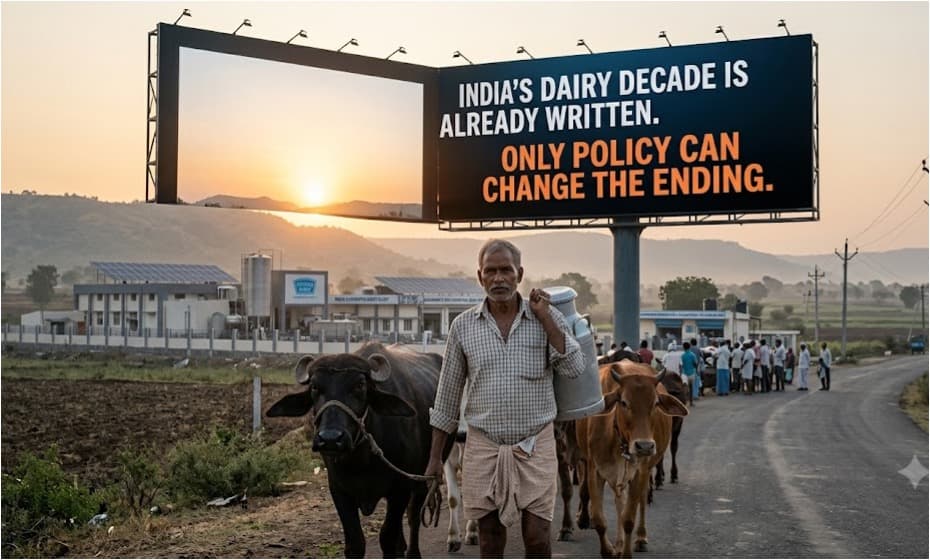
Many states in India are giving direct subsidies to milk producers. Only the dairy farmers registered with the state dairy cooperative federation get these subsidies .The dairy farmers must get the necessary support for their sustainability. These supports may cover their major cost of rearing non productive animals in their backyards as well as higher input costs. An in depth cost benefit analysis of dairy farm business must be carried out before computing these subsidies.

These subsidies also must have an objective of either increasing milk production, improving quality and filling in the gaps between flush and lean production. The farmers may not require the subsidy support throughout the year. It shows the lack of research behind developing a dairy development program by the state cooperatives. These subsidies must be empowering by nature and must have a timeline for discontinuation.

Excessive subsidies start to cross subsidise the inefficiencies of the beneficiary organisations also over a period of time. The most important point is that the subsidies must be democratic and inclusive by its nature.

Milk subsidy -A case study

There are many states which are giving milk subsidies to its farmers. The state cooperatives provide these subsidies to their registered members only. Karnataka, Rajasthan, Haryana ( Rs 5 /liter from April to September) , Kerala, Telangana , etc are amongst a few of the states offering these subsidies.

In one of the states, the subsidies were increased from Rs 2 per litre to Rs 5 per litre from 1st April. There are around 90 lakhs rural households in that state. It is said that around 80% of them rear cattle. Let us say that there are around 70 lakhs rural households which does dairy farming. The state dairy cooperative Federation has around 9 lakhs registered farmers. A large Farmer producer company in this state also has one lakh registered dairy farmers.

However the subsidy will be provided to 9 lakh farmers of the state cooperative only. Which means that 61 lakhs dairy farmers including 1 lakh from the farmer producer organization will not be able to get this benefit.

Does it make the subsidy inclusive in any sense ?

In India most of the dairy players increased their milk prices from March 1 st due to very high input costs. This was followed by most other dairy companies including the state cooperative dairy federation we are analysing now. However after the announcement of the Rs 3 additional milk subsidy, the state federation rolled back their price increase. What does this mean in simple business terms ?

First you are getting your milk procurement becoming costlier through subsidies, thereby making competition suffer. Secondly you are using this subsidy as a market weapon to maintain your market position by being competitive by Rs 2 per liter. Is it truly a level playing field ? My answer is no.

Can’t we see the 15% farmers linked to the state cooperative enjoying their benefits in front of 85% of other farmers in the state.

Reimagine subsidies

The better way should be to give subsidies to all the dairy farmers and then let the market forces decide on which of the companies collect milk from them. If all the farmers are getting the subsidy then let the most efficient dairy company give as much of a discount to their consumers as they can.

I wish that the policy makers in India do better due diligence and subsidise the efficient eco system rather than the product or the producer. Let us reimagine this game of subsidies. Let us be more pragmatic and work for better animal productivity, cost effective feed and fodder management and excellent market linkages .

I seek your valuable comments and insights on creating a level playing field for the dairy industry in India.

Source : Blog by Kuldeep Sharma, Chief editor Dairynews7x7.com

Swipe to continue reading

Previous Article

Next Article