One Unit's Fault, a Brand's Statewide Ban: Why That Doesn't Add Up
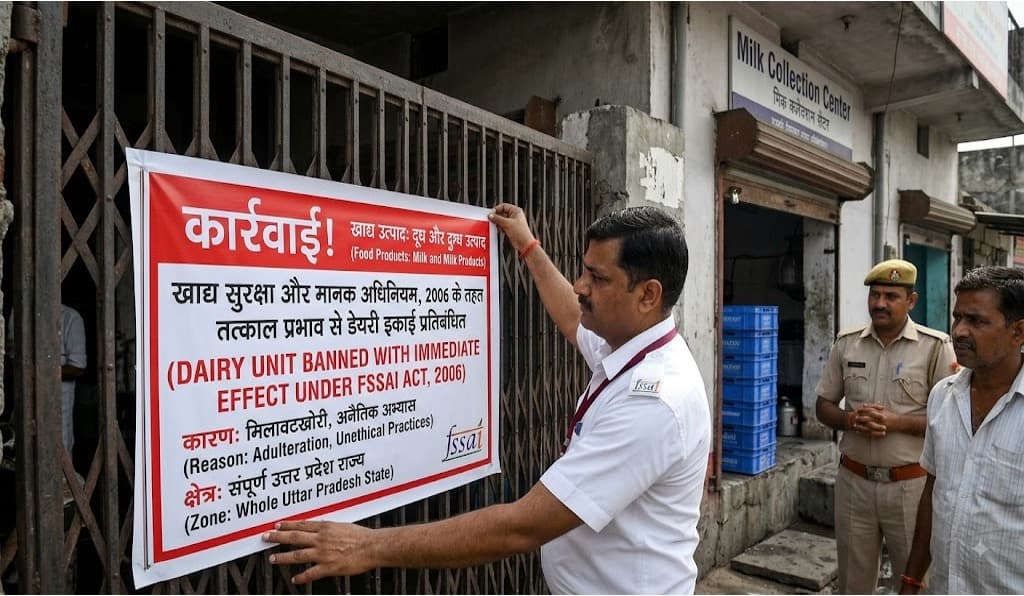
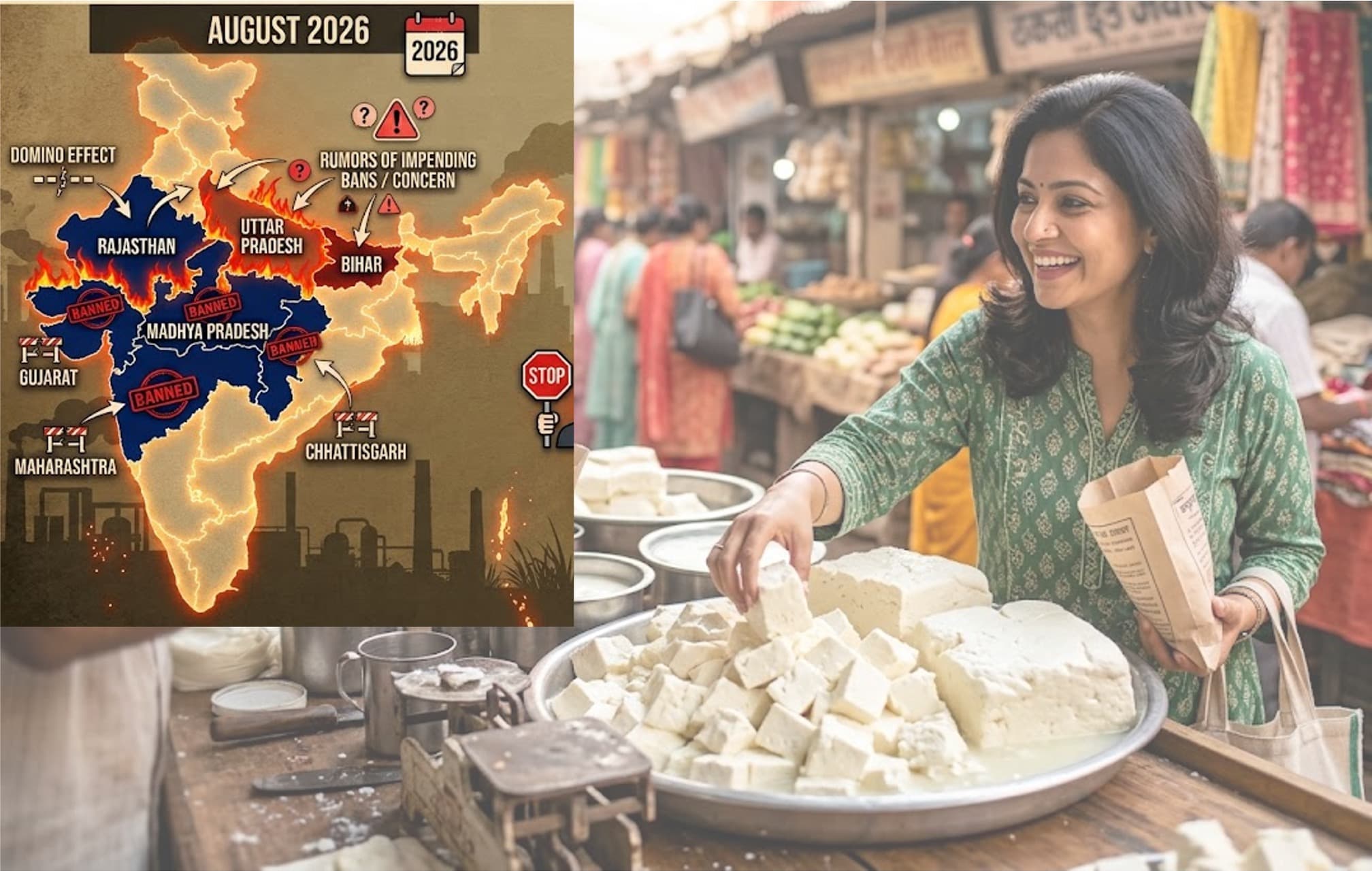
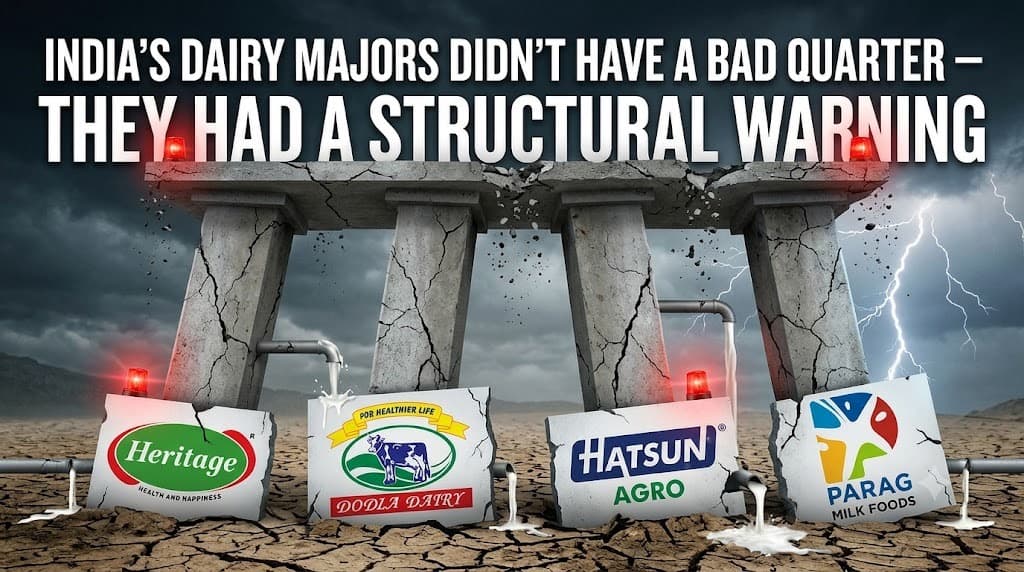
On 15 August 2026, the UP Food Safety and Drug Administration, under Commissioner Dr. Roshan Jacob, issued a revised order tightening enforcement against adulteration in milk and milk products — ghee, khoya, paneer, chhena, cream. Where foreign fat or hazardous chemicals are detected at a manufacturing unit, the entire stock at that facility will be seized and destroyed, the unit shut under Section 34 of the FSS Act, an FIR registered where organised adulteration is established, the licence suspended under regulation 2.1.8(4), and — most consequentially — sale of the associated brand banned across the state.
It is a tough order, and it deserves a fair reading: both of what it gets right, and of the questions it leaves open for a sector that is already under real strain.
The order is not unusual — and that's worth saying plainly
It would be easy to read this as UP singling out dairy. It isn't. The same enforcement architecture — seizure, destruction, licence suspension, brand-wide action — has been rolled out over the past year against edible oil manufacturers in Maharashtra (crores of rupees of oil seized over reused tins and relabelling), against spice makers nationally after over a hundred manufacturing licences were cancelled following the 2024 export-market scare, against jaggery, sweets, rusk and bakery units, and dairy orders nearly identical to UP's have already been issued in Maharashtra, Chhattisgarh, Jammu & Kashmir and Madhya Pradesh. Dairy is one category among several currently facing intensified scrutiny, not a category being uniquely made an example of. It's worth the sector saying this clearly and often, because the "we are being singled out" framing, however emotionally true it feels on the ground, doesn't hold up to the facts — and arguments that don't hold up to the facts get dismissed, along with the legitimate points sitting next to them.
Nor is the legal basis in question. Every licence holder already commits to Schedule 4 GMP/GHP conditions, and Sections 18, 30 and 34 of the FSS Act give the Commissioner exactly this kind of enforcement authority. Adulteration with detergents, titanium dioxide, hydrogen peroxide or industrial-grade chemical whiteners is not a technicality — it is a genuine public health hazard, and FSSAI's own surveys over the years have found real, if uneven, adulteration in the milk supply chain. None of that is manufactured outrage. The regulator has a job to do, and this order is inside its remit.
Where the sector has a legitimate question to raise
The one place worth pressing, calmly and specifically, is proportionality — not persecution. A state-wide ban on an entire brand, triggered by adulteration found at a single unit or even a single consignment, doesn't distinguish between a company-wide practice and the actions of one rogue processor, franchisee, or vendor operating under a brand's name. For a large cooperative or a multi-plant company, that gap matters enormously — it can shut down clean production alongside contaminated production, and put thousands of farmers' daily milk pour-in at risk over a fault that may sit three steps removed from them. A reasonable ask of the FDA is not "stop enforcing," but: build in a fast, transparent verification and appeal window before a brand-wide ban takes full effect, and make clear how a unit or a brand gets off the list once it demonstrates compliance. That is a constructive, specific ask — the kind regulators generally engage with, because it doesn't undermine their objective.
The backdrop the order lands on
It's also fair to name the conditions this order arrives into, because they shape how it's felt even when the order itself is reasonable. Milk producers have absorbed a rough run: erratic weather affecting fodder and yields, feed and input costs that climbed sharply through the recent global commodity disruptions, and milk production growth that has slowed compared to the previous decade. Layered on top is a noisy information environment — some of it good-faith advocacy from plant-based and animal-welfare groups, some of it low-quality social media content that trades in fear rather than fact, all of it landing on a public that is genuinely trying to make sense of what's safe to buy. For roughly 80-100 million households whose income runs through milk, that noise has real economic weight, even when no single actor in it is acting in bad faith and even when — as is almost certainly the case — there is no coordination between social media commentary, advocacy campaigns, and state regulators. Attributing all of it to one plot would be its own kind of distortion; the more accurate and more useful story is that several independent pressures are converging on the sector at once.
What's worth asking for
The dairy sector's stake in strict enforcement is, if anything, larger than the regulator's — genuine adulteration by a minority of bad actors damages consumer trust in every honest producer's product. We are not asking for less scrutiny. We are asking that the punishment match the fault. Let a clean brand clear its name quickly, and keep this a food-safety conversation, not a trial of dairy farming itself. That is the message the system can act on — and it is the one that keeps the hundred million or so farmers who depend on this sector standing with it, not against it.
Source : Review editorial by Kuldeep Sharma Chief Editor Dairynews7x7 Aug 17th 2026