Latest Blogs
See More


Indian Dairy News


DairyNews7x7
Global Dairy News

DairyNews7x7
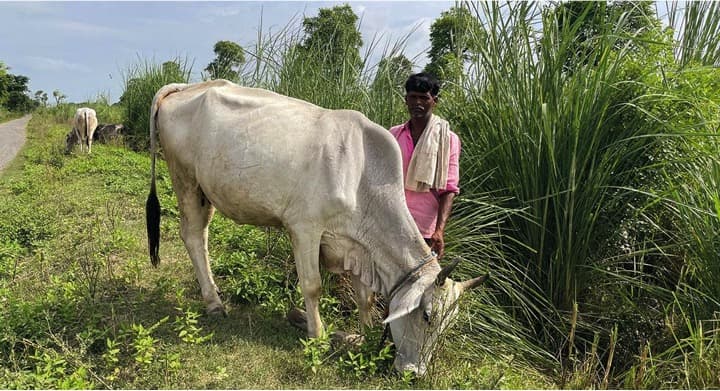
Arvind Kumar’s hopes were high when he bought two Jersey cows in 2019 by taking a loan of Rs 1 lakh from his relative. “Despite constant care, the cows would often fall sick. Milk production would reduce in summers because of heat stress. Impregnating the cows, which is essential for lactation, was also diffi-cult,” says the farmer from Durgapura village in Etawah district of Uttar Pradesh. Last year, he sold off the cows and bought three indigenous cows for Rs 32,000.
Surender Sahoo, a farmer from Patapur village in Cuttack district of Odisha, narrates a similar story. “We make every effort to provide them cool interiors, but in summers exotic cows always foam at the mouth and wheeze. Their milking capacity also reduces drastically,” says Sahoo. Two years ago, he sold one of his two Jersey cows and now plans to sell the other one as well. He also has two indigenous cows, which he says are better accustomed to heat stress and diseases.
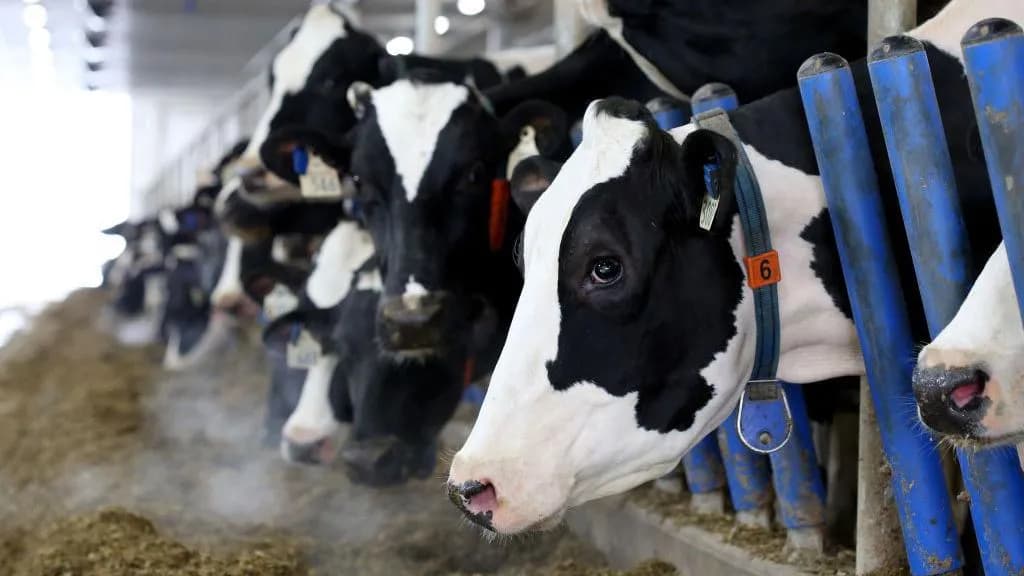
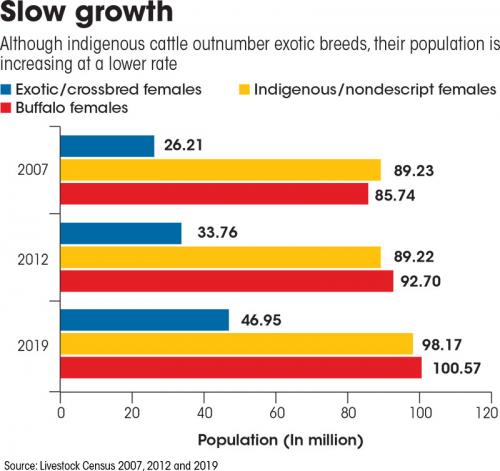
There appears to be a reversal in the dairy farmers’ preference for exotic or foreign breeds. Since 1970, the Union government has promoted high-yielding breeds, such as Holstein-Friesian, Jersey, Brown Swiss and Red Dane, under the dairy development programme Operation Flood. India’s milk production surged from a deficit of 110 g per capita in 1973 to a surplus of 433 g per capita in 2022, according to a March 2023 white paper by the Centre’s think tank NITI Aayog. Today, India is the world leader in milk production and contributes 24 per cent to global output. Though indigenous and nondescript cattle, which are a mix of native breeds, still outnumber exotic breeds in the country, an analysis of Livestock Census data from 2007, 2012 and 2019 shows that the number of indigenous and nondescript cows have increased by a measly 10 per cent, as against a 76 per cent rise in exotic or crossbred cows.
A quick field survey and analysis of research by the Centre for Science of Environment (CSE), Delhi, shows that in a warming world, dairy farmers no longer find the upkeep of exotic or foreign breeds cost-effective. CSE spoke to more than 20 dairy farmers from eight states, and almost all of them said that the exotic breeds, adapted to temperate regions, struggle in heat and humidity. In contrast, indigenous breeds, be it the Gir from Gujarat, which is known for its potential for milk production, or Lakhimi from Assam, which is used both as a milch and draught animal, are more adaptable to weather changes as they have been an integral part of Indian agriculture for centuries.
R K Tripathi, veterinary officer at the District Veterinary Hospital in Etawah, says, “Almost 15-16 of the cows he treats in a day are exotic or crossbred, and only two to four are indigenous.”
“Native animals exhibit heat tolerance, disease resistance and ability to thrive in extreme climates,” says D K Sadana, former head of animal genetic resources at the Indian Council of Agricultural Research’s (ICAR’s) National Bureau of Animal Genetic Resources. They have smaller bodies, more sweat glands, and well-developed dewlaps, which help dissipate heat more effectively. “Tharparkar (found mainly in Rajasthan and used as a dual purpose animal) is a great example of indigenous cattle’s adaptability to local climate. It becomes darker in winter to absorb more heat,” adds Ravinder Kumar, principal scientist, ICAR-Central Institute for Research on Cattle.
2023 study by researchers in Uttar Pradesh, published in the Asian Journal of Dairy and Food Research, says that indigenous breeds are renowned for their resistance to illnesses including the vector-borne trypanosomiasis, and tick-borne babesiosis and theileriosis. For instance, tropical theileriosis is more severe in European breeds, with a mortality rate of 40-90 per cent, while the mortality rate in indigenous breeds from endemic areas can be 3 per cent, says a 2021 study by researchers from Tamil Nadu Veterinary and Animal Sciences University, Chennai.
According to a 2020 study conducted by ICAR-National Dairy Research Institute (NDRI), Karnal, Karan Swiss, a cross of Brown Swiss and Sahiwal developed at the institute, excelled in milk production by 56 per cent in the first generation but this dropped by 24.5 per cent in the second.
Also, unlike indigenous cattle, purchase and maintenance of exotic or crossbred cattle is expensive. They need a richer diet, regular baths, fans and separate enclosures. “In the absence of adequate nutri-tion, they (exotic and crossbred cattle) not only become more disease-prone but also barren,” says Ravinder Kumar. But indigenous cattle thrive on grazing and need no special care or enclosure.
The country’s large cattle numbers are often painted as the problem for these emissions. However, according to BUR, indigenous dairy cattle account for only 28±5 kg of methane emissions a head per year, whereas a crossbred dairy cattle releases 43±5 kg of methane in a year. Ashutosh, principal scientist at NDRI’s National Innovation in Climate Resilient Agriculture Centre, says indigenous cattle account for fewer emissions due to their smaller size and efficient metabolism. They thrive in domestic, small-holder and pastoral systems, which further reduces their carbon footprint.
However, India faces a shortage of semen of indigenous cattle breeds. As of 2019-20, the country has 56 semen stations. But most semen stations cater to the demand for buffalo semen and the germplasm of exotic or crossbred cattle. Of the 37 indigenous cattle breeds known for milk production, the semen stations provide germplasm for only nine breeds that are in demand under state breeding policies. On average, each station produce limited semen doses for two to three indigenous breeds. The lack of quality semen for most indigenous breeds also makes breeders dependent on scrub bulls or those of unknown genetic potential.

There are also challenges in building infrastructure and in facilitating breeding under the Mission. An official with the Department of Animal husbandry and Dairying says, on the condition of anonymity, that adoption of IVF faces reluctance among farmers. The predominantly non-intensive and small herd struc-ture of India’s dairy sector also poses challenges for effective implementation of organised breeding.
Some states have taken initiatives to address these challenges. Uttar Pradesh, Haryana and Bihar are providing incentives to farmers for purchasing and rearing indigenous cows. Himachal Pradesh is promoting indigenous cows not only for milk but also their use in natural and organic farming.
Apart from improving population, focus is also needed to improve the demand for indigenous cattle milk. Urban commercial dairies in particular are driven by profit and prioritise maximising milk production. Hemant Khurana from Khurana Dairy in Ghaziabad notes that while demand for desi cow’s milk is rising, dairies prefer crossbred cattle and buffalos for their milk quantity and fat content. There is an increasing trend of upscale boutique dairies that only sell milk from purebred indigenous cattle. But limited demand and lack of awareness among consumers means they are unable to reap the benefits of economy of scale and sell at premium prices (Rs 120-170 per litre) to a smaller group of clients. Establishing milk co-operatives to promote desi cow milk could improve demand.
Source : This was first published in the 16-30 November, 2023 print edition of Down To Earth