Logo
IndianGlobalBlogsPublicationsPodcastsMarketAboutContact
Logo
IndianGlobalBlogsPublicationsPodcasts
7News
Farm Economy Seen Stabilizing in 2026; Costs & Policy Still Key ConstraintsThe FAO Dairy Price Index declined by 4.4% in Dec 2025Heritage Foods MD Wins Outstanding Dairy Professional Award 2025Parag Milk Sharpens Focus on Health & Nutrition with Protein-Led PushMidan’s Top 10 Meat & Dairy Trends to Watch in 2026

Indian Dairy News

Farm Economy Seen Stabilizing in 2026; Costs & Policy Still Key Constraints
Jan 11, 2026

Farm Economy Seen Stabilizing in 2026; Costs & Policy Still Key Constraints

According to the December Ag Economists’ Monthly Monitor, agricultural economists now expect the farm economy to stabilise in 2026 after years of pressure, but high input costs and policy uncertainty...Read More

The FAO Dairy Price Index declined by 4.4% in Dec 2025
Jan 11, 2026

The FAO Dairy Price Index declined by 4.4% in Dec 2025

The FAO Dairy Price Index declined by 5.9 points (4.4 percent) in December. Butter prices fell sharply, driven by seasonally higher cream availability in Europe and stock accumulation following strong...Read More

Heritage Foods MD Wins Outstanding Dairy Professional Award 2025
Jan 11, 2026

Heritage Foods MD Wins Outstanding Dairy Professional Award 2025

Heritage Foods Limited announced that Mrs. N. Bhuvaneswari, Vice Chairperson & Managing Director, received the Outstanding Dairy Professional Award 2025 (Andhra Pradesh) at the Indian Dairy Associatio...Read More

DairyNews7x7
Advertisement

Latest Blogs

See More
From Forecast to Fact: 2025 Lessons, 2026 Dairy Outlook
Jan 01, 2026

From Forecast to Fact: 2025 Lessons, 2026 Dairy Outlook

As we step into 2026, it is worth pausing to reflect on how the Indian dairy sector navigated the challenges of 2025 and how closely reality tracked the forecasts I outlined in the first blog of last...Read More

India–NZ Dairy FTA: Safeguards or Silent Slippages?
Dec 26, 2025

India–NZ Dairy FTA: Safeguards or Silent Slippages?

The recently concluded India–New Zealand Free Trade Agreement (FTA) marks an important milestone in bilateral trade, while carefully ring-fencing India’s sensitive dairy sector. Under the agreement, c...Read More

Vision 2047: India’s Dairy Development Roadmap
Dec 21, 2025

Vision 2047: India’s Dairy Development Roadmap

As India moves steadily toward Vision 2047, the dairy sector stands at a strategic inflection point. From being a food security instrument in the decades following Independence, dairy has evolved into...Read More

Global Dairy Dynamics: Innovation, Sustainability & Inclusion
Dec 18, 2025

Global Dairy Dynamics: Innovation, Sustainability & Inclusion

The International Dairy Processing Conference (IDPC) 2026, organised by the Trade Promotion Council of India (TPCI) at Yashobhoomi Convention Centre, Dwarka, New Delhi on 7 January 2026, will serve as...Read More

Global Dairy News

Midan’s Top 10 Meat & Dairy Trends to Watch in 2026
Jan 10, 2026

Midan’s Top 10 Meat & Dairy Trends to Watch in 2026

Midan Marketing has published its annual Top 10 meat and dairy industry trends for 2026, highlighting the forces likely to shape consumer behaviour, product development and value-chain strategies in t...Read More

U.S. Dietary Guidelines Overhaul Raises Dairy, Meat
Jan 09, 2026

U.S. Dietary Guidelines Overhaul Raises Dairy, Meat

The newly released 2025–2030 U.S. Dietary Guidelines, unveiled by Health Secretary Robert F. Kennedy Jr. and the Department of Agriculture, represent a major shift in federal nutrition policy, placing...Read More

Spoiled Dairy Becomes 3D Printing Plastic
Jan 07, 2026

Spoiled Dairy Becomes 3D Printing Plastic

Researchers patent a biomaterial from wasted milk proteins, creating biodegradable 3D printing filament and a potential new revenue stream for dairy. Excess milk that once flowed down farm drains duri...Read More

DairyNews7x7
Advertisement
Dairy News 7x7

Your trusted source for all the latest dairy industry news, market insights, and trending topics.

FOLLOW US
CATEGORIES
  • Global News
  • Indian News
  • Blogs
  • Publications
  • Podcasts
SUBSCRIBE TO OUR NEWSLETTER

Stay informed with the latest updates and trending news in the dairy industry.

No spam, unsubscribe at any time

GET IN TOUCH
C-49, C Block, Sector 65,
Noida, UP 201307
+91 7827405029dairynews7x7@gmail.com

© 2026 Dairy News 7x7. All Rights Reserved.

Terms of ServicePrivacy Policy

Thermal-Battery Chillers Revolutionising India’s Dairy Cold Chain

By DairyNews7x7•Published on October 23, 2025

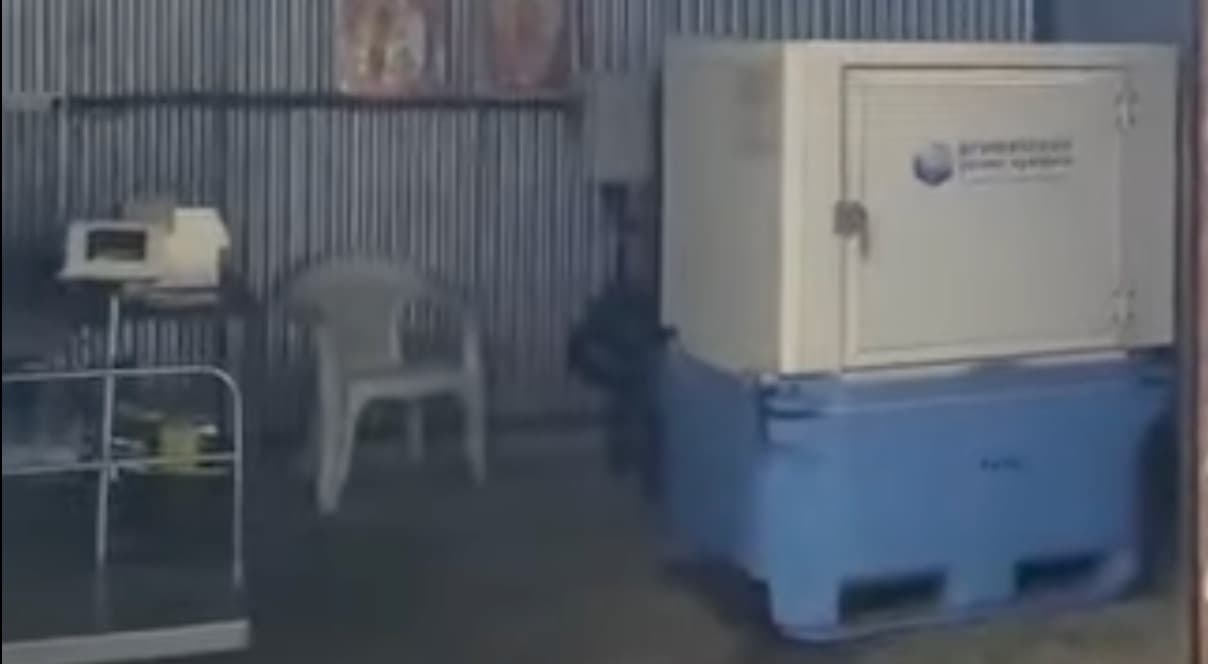
In an insightful report by Latitude Media, Promethean Power Systems’ thermal-battery technology is shown to be transforming cold storage for India’s dairy farmers. The system uses a phase-change “thermal battery” to chill milk rapidly, bypassing the limits of unreliable rural grids. Founded with an MIT grant in 2007, the company settled on dairy collection centres in India after testing other industries.  Their advanced chillers can handle up to 1,000 litres of milk daily, thanks to a 500-litre tank design that is 300% more efficient than earlier models. The adoption of this tech addresses key issues: India averages six hours to chill milk post-milking, exceeding the four-hour standard, increasing spoilage risks.  With thousands of installations across the country, the model is scaling from pilot to mainstream.

we have created a state-wise map and investment/impact table) for the thermal-battery chilling hubs by Promethean Power Systems in India’s dairy sector. Note: Not all state-level installation data is publicly available, so some entries are estimated/indicative based on published impact reports.

State Estimated units installed / capacity Investment cost per unit Farmer-income uplift / other impacts Notes
Maharashtra ~100 units (village collection hubs) ~₹5-6 lakh/unit (~US$7,900) Farmer incomes up ~30% in pilot hubs Strong grid-interruption zones; women-entrepreneur model applied.
Tamil Nadu / Andhra Pradesh Estimate ~50-70 units Similar cost structure Collections increased 30-40% in hub villages Technology adopted by major dairies (Hatsun etc)
Uttar Pradesh / Bihar Emerging rollout; ~20-30 units (estimate) As above Potential for income uplift; phosphorus feed & cold-chain gap large Data mostly from pilot/trial hubs.
National total >1,200 units as of 2020 (Promethean spec) – >150,000 farmers impacted; >30 000 litres diesel saved/day Scale-up phase; many states still underserved.

Key take-aways from the data:

  • Investment cost per unit (~₹5 lakh) is relatively modest for dairy co-ops; pay-back possible via higher milk volumes + quality premiums + diesel/fuel savings.

  • Farmer incomes in hub locations show meaningful uplift (30-40%) through higher volume, better quality and reduced spoilage risk.

  • The technology is particularly beneficial in grid-weak rural areas where conventional chilling is prohibitively expensive and spoilage high.

Recommendations for dairy co-ops / industry stakeholders:

  • Prioritise states/regions with grid instability, high small-holder dairy density and weak cold-chain penetration.

  • Consider financing models: leasing or pay-per-litre models reduce upfront burden and match investment to milk volumes.

  • Link cold-chain upgrade with farmer training, quality-testing equipment and aggregation infrastructure to fully capture benefits.

  • Monitor and document impact metrics: milk volume increase, reduction in spoilage/despatch delay, cost savings (fuel/diesel), farmer-income change—these help build business case for expansion and funding.

  • Explore support from state/federal schemes (cold-chain subsidy, dairy infrastructure grants) to reduce effective cost per unit.

Industry Insight

For India’s dairy sector, the thermal-battery chilling infrastructure offers a dual benefit: it enhances milk quality (reducing spoilage risk for smallholder farmers) and accelerates cost-efficiency by reducing reliance on diesel generators or erratic grids. As a result, cooperatives and collection centres can expand supply reach, stabilize farmer incomes, and position for higher-value processing. Key take-aways for stakeholders:
  • Invest in collection-centre chilling tech as a foundation for value-added dairy growth.
  • Prioritise remote/underserved villages where grid instability is highest — the tech offers largest impact there.
  • Link infrastructure upgrade with farmer education (on chilling time, hygiene) so quality gains are fully realised.
  • Position environmental cost-savings as a strategic asset — in an era of rising ESG/clean dairy demand, such cold-chain advances become competitive differentiators.
Source : Dairynews7x7 Oct 23rd 2025  Lattitude Media

Swipe to continue reading

Previous Article

Next Article