Latest Blogs
See More


Indian Dairy News


DairyNews7x7
Global Dairy News


DairyNews7x7

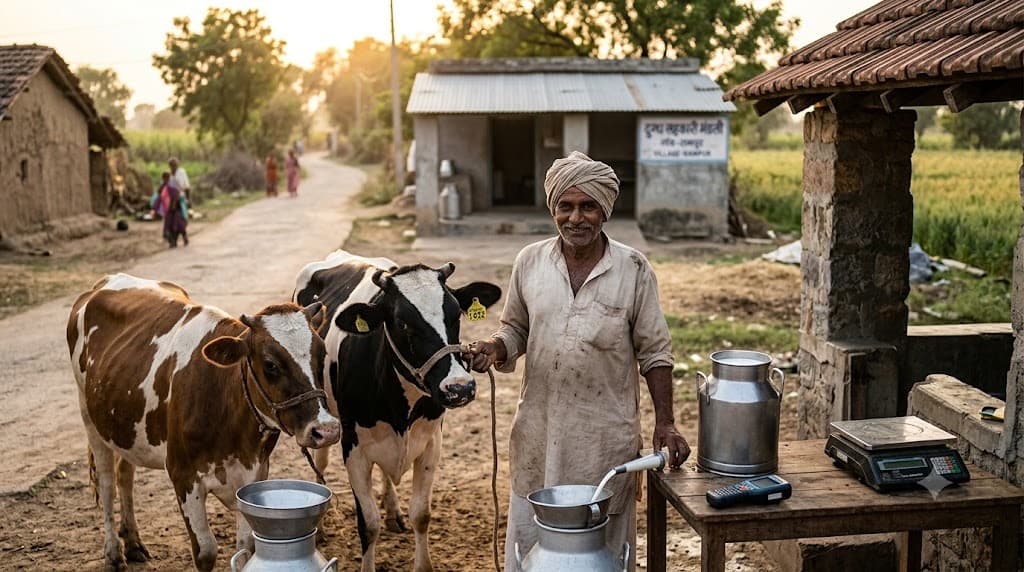
During a recent assignment in rural Rajasthan, I was tasked with facilitating the registration of several primary dairy cooperative societies. The objective was to empower local dairy farmers by formalizing their operations and integrating them into the cooperative framework. However, I encountered an unexpected regulatory hurdle: the registration process mandated that these primary cooperatives affiliate with the respective district milk union, which, in turn, is linked to the Rajasthan Cooperative Dairy Federation (RCDF).
This requirement is rooted in the state's three-tier cooperative structure, where village-level Dairy Cooperative Societies (DCS) are affiliated with district milk unions, and these unions collectively form the RCDF at the state level. While this model has historically facilitated organized milk procurement and marketing, it also imposes a centralized framework that can limit the autonomy of primary cooperatives.
Then I reviewed the bylaw of the neighbouring states and found that in almost all the states similar structure prevailed. Brief synopsis on the findings is given below.Haryana
In Haryana, the cooperative dairy sector is structured into a three-tier system comprising village-level societies, district milk unions, and the Haryana Dairy Development Cooperative Federation Ltd. (HDDCF). According to the HDDCF's bye-laws, a "Milk Society" is defined as a Primary Milk Producers Cooperative Society registered under the Haryana Cooperative Societies Act, 1984. These societies are required to affiliate with district milk unions, which in turn are members of the state federation. This affiliation ensures integration into the state's cooperative framework, facilitating coordinated operations and support services. v
Rajasthan
Rajasthan's dairy cooperative structure also follows a three-tier model: Primary Milk Producers Cooperative Societies at the village level, District Milk Producers Cooperative Unions at the district level, and the Rajasthan Cooperative Dairy Federation Limited (RCDF) at the state level. The Rajasthan Cooperative Societies Act, 1965, outlines the powers of various officers concerning the registration and management of these societies. Specifically, Assistant Registrars of Cooperative Societies in Dairy Cooperative Unions are vested with powers under sections 30, 31, 32, 37, 70, 71, 74, 117, 118, and 135 of the Act, insofar as they relate to Primary Dairy Cooperative Societies affiliated with their respective Dairy Cooperative Unions. This legal framework underscores the necessity for primary societies to affiliate with district unions to ensure proper governance and oversight.
GujaratGujarat's dairy cooperative movement, epitomized by the "Amul model," operates under a three-tier system: Village Dairy Cooperative Societies (VDCS), District Milk Unions, and the Gujarat Cooperative Milk Marketing Federation (GCMMF) at the state level. The Gujarat Cooperative Societies Act, 1961, and its accompanying rules provide the legal basis for this structure. In the case of The Jodiya Kheralu Dudh Utpadak ... vs State Of Gujarat, the petitioner society, a milk-producing entity, was registered and became a member of the Mehsana District Milk Producers' Union Limited. This case illustrates the standard practice and legal expectation for primary dairy cooperatives to affiliate with district milk unions upon registration.
Madhya Pradesh
In Madhya Pradesh, the cooperative dairy sector is governed by the Madhya Pradesh Cooperative Societies Act, 1960. The Act stipulates that cooperative societies operating within a district must affiliate with the respective District Cooperative Union. This requirement ensures that primary dairy societies are integrated into the district and state cooperative structures, promoting coordinated development and support. While specific bye-laws detailing this affiliation are not readily available in the provided sources, the overarching legal framework mandates such integration for effective functioning.
Then I began to look into the recently proposed interventions by ministry of cooperation to create multi- state cooperatives under white revolution 2.0. Two questions came to my mind.In order to find answers I started to look deeper into the provisions discussed under white revolution 2.0 till date discussed as below.
Provision under White revolution 2.0
Under the Ministry of Cooperation's 'White Revolution 2.0' initiative, the formation of multi-state dairy cooperatives is being encouraged to strengthen the dairy sector across India. The initiative aims to increase milk procurement by dairy cooperative societies by 50% over the next five years, focusing on setting up and strengthening new and existing district cooperative societies, multi-purpose district cooperative societies, and multi-purpose Primary Agriculture Credit Societies (PACS) .
While the initiative emphasizes the expansion and strengthening of dairy cooperatives, it does not explicitly state provisions for primary dairy cooperatives to affiliate with more than one state dairy operator. The current framework continues to support the traditional three-tier cooperative structure, where village-level dairy cooperative societies are affiliated with district-level milk unions, which in turn are part of the state-level federations.
However, the 'Cooperation among Cooperatives' initiative, also launched under 'White Revolution 2.0', aims to foster collaboration between cooperatives across different regions. This could potentially open avenues for primary cooperatives to engage with multiple state-level entities, promoting a more integrated and flexible cooperative network. The initiative includes measures such as the distribution of RuPay Kisan Credit Cards to dairy farmers and the installation of micro-ATMs at dairy cooperative societies, enhancing financial inclusion and operational efficiency .
In conclusion, while 'White Revolution 2.0' focuses on expanding and strengthening the dairy cooperative sector, specific provisions for primary cooperatives to affiliate with multiple state dairy operators are not explicitly outlined. The initiative's emphasis on inter-cooperative collaboration may, however, pave the way for more flexible affiliations in the future.Challenges of Mandatory Affiliation
India's dairy cooperative sector predominantly operates under a three-tier structure: village-level primary dairy cooperative societies (DCS), district-level milk unions, and state-level federations. The mandatory affiliation raises several concerns. Firstly, it can lead to monopolistic control by state federations, potentially stifling competition and innovation. Secondly, it may restrict the decision-making power of primary cooperatives, as major decisions are often made at higher levels of the hierarchy. Lastly, it can pose barriers to the establishment of new cooperatives, particularly in regions where existing unions may not adequately represent local interests.
The Way Forward
By addressing the challenges associated with mandatory affiliation and implementing these forward-looking strategies, India's dairy cooperative sector can evolve to better serve its primary stakeholders—the farmers—while maintaining the benefits of organized cooperation.
Conclusion and disclaimerThe above observations are based on my preliminary research into the bylaws governing cooperative societies across selected states, as well as a discussion with a senior official from a State Registrar’s office. It is possible that some states may not impose such mandatory affiliations—if that is the case, the limitations highlighted here may not apply universally. However, the broader picture remains deeply concerning.
Today, the average milk procurement by state dairy cooperatives hovers around just 10–12% of total milk production. Barring a few outliers like Gujarat and Karnataka, most states barely scratch the surface. In a large and milk-rich state like Madhya Pradesh, the cooperative system collects less than 2% of the milk produced. This underperformance is mirrored in farmer enrolment—millions of dairy farmers remain disconnected from the formal cooperative network, and therefore from the benefits it promises.
If India is to realize the full potential of the White Revolution 2.0, bold reforms are imperative. We must create an enabling environment for other stakeholders to enter and energize the grassroots cooperative movement—starting with permitting the formation of primary milk cooperatives beyond the grip of state-run federations. Multi-State Cooperative Societies offer a viable alternative, but they must be shaped with care.
Let us not forget: “Prosperity through Cooperation” will only be possible when we replace restrictive monopolies with a spirit of collaborative cooperation, not competitive confrontation. It is time to open the doors of India’s dairy sector to more inclusive, farmer-centric, and innovation-driven growth.
Source : Dairynews7x7 June 1st 2025 , A Blog by Kuldeep Sharma Chief editor Dairynews7x7 on World Milk Day