Logo
IndianGlobalBlogsPublicationsPodcastsMarketAboutContact
Logo
IndianGlobalBlogsPublicationsPodcasts
7News
India’s Dairy Sector Rethinks Supply Trust & Nutrition StrategyU.S. Dietary Guidelines Overhaul Raises Dairy, MeatYear end review of Animal Husbandry and Dairy for the year 2025Fog & Frost Pose New Risks to Agriculture & Dairy in PunjabNandini Adopts AI-Based Product Counting to Boost Dairy Operations

Indian Dairy News

India’s Dairy Sector Rethinks Supply Trust & Nutrition Strategy
Jan 09, 2026

India’s Dairy Sector Rethinks Supply Trust & Nutrition Strategy

India’s dairy industry — long anchored in high production volumes but thin value realisation — is undergoing strategic recalibration around supply reliability, consumer trust and long-term nutrition v...Read More

Year end review of Animal Husbandry and Dairy  for the year 2025
Jan 09, 2026

Year end review of Animal Husbandry and Dairy for the year 2025

Hon'ble Prime Minister inaugurates Regional Center of Excellence (CoE) for Indigenous Breeds established at Motihari with an investment of Rs 33.80 crore. Genotyping of 75000 animals from the first...Read More

Fog & Frost Pose New Risks to Agriculture & Dairy in Punjab
Jan 08, 2026

Fog & Frost Pose New Risks to Agriculture & Dairy in Punjab

Persistent dense fog and dropping temperatures across Punjab — especially around Ludhiana and surrounding districts — are raising fresh concerns for both agriculture and dairy sectors, as winter weath...Read More

DairyNews7x7
Advertisement

Latest Blogs

See More
From Forecast to Fact: 2025 Lessons, 2026 Dairy Outlook
Jan 01, 2026

From Forecast to Fact: 2025 Lessons, 2026 Dairy Outlook

As we step into 2026, it is worth pausing to reflect on how the Indian dairy sector navigated the challenges of 2025 and how closely reality tracked the forecasts I outlined in the first blog of last...Read More

India–NZ Dairy FTA: Safeguards or Silent Slippages?
Dec 26, 2025

India–NZ Dairy FTA: Safeguards or Silent Slippages?

The recently concluded India–New Zealand Free Trade Agreement (FTA) marks an important milestone in bilateral trade, while carefully ring-fencing India’s sensitive dairy sector. Under the agreement, c...Read More

Vision 2047: India’s Dairy Development Roadmap
Dec 21, 2025

Vision 2047: India’s Dairy Development Roadmap

As India moves steadily toward Vision 2047, the dairy sector stands at a strategic inflection point. From being a food security instrument in the decades following Independence, dairy has evolved into...Read More

Global Dairy Dynamics: Innovation, Sustainability & Inclusion
Dec 18, 2025

Global Dairy Dynamics: Innovation, Sustainability & Inclusion

The International Dairy Processing Conference (IDPC) 2026, organised by the Trade Promotion Council of India (TPCI) at Yashobhoomi Convention Centre, Dwarka, New Delhi on 7 January 2026, will serve as...Read More

Global Dairy News

U.S. Dietary Guidelines Overhaul Raises Dairy, Meat
Jan 09, 2026

U.S. Dietary Guidelines Overhaul Raises Dairy, Meat

The newly released 2025–2030 U.S. Dietary Guidelines, unveiled by Health Secretary Robert F. Kennedy Jr. and the Department of Agriculture, represent a major shift in federal nutrition policy, placing...Read More

Spoiled Dairy Becomes 3D Printing Plastic
Jan 07, 2026

Spoiled Dairy Becomes 3D Printing Plastic

Researchers patent a biomaterial from wasted milk proteins, creating biodegradable 3D printing filament and a potential new revenue stream for dairy. Excess milk that once flowed down farm drains duri...Read More

Milk production declines amid rising water costs
Jan 07, 2026

Milk production declines amid rising water costs

Dairy producers across Victoria are facing a tightening operating environment, with declining milk flows and escalating water and fodder costs, according to the Dairy Australia Situation and Outlook Y...Read More

DairyNews7x7
Advertisement
Dairy News 7x7

Your trusted source for all the latest dairy industry news, market insights, and trending topics.

FOLLOW US
CATEGORIES
  • Global News
  • Indian News
  • Blogs
  • Publications
  • Podcasts
SUBSCRIBE TO OUR NEWSLETTER

Stay informed with the latest updates and trending news in the dairy industry.

No spam, unsubscribe at any time

GET IN TOUCH
C-49, C Block, Sector 65,
Noida, UP 201307
+91 7827405029dairynews7x7@gmail.com

© 2026 Dairy News 7x7. All Rights Reserved.

Terms of ServicePrivacy Policy

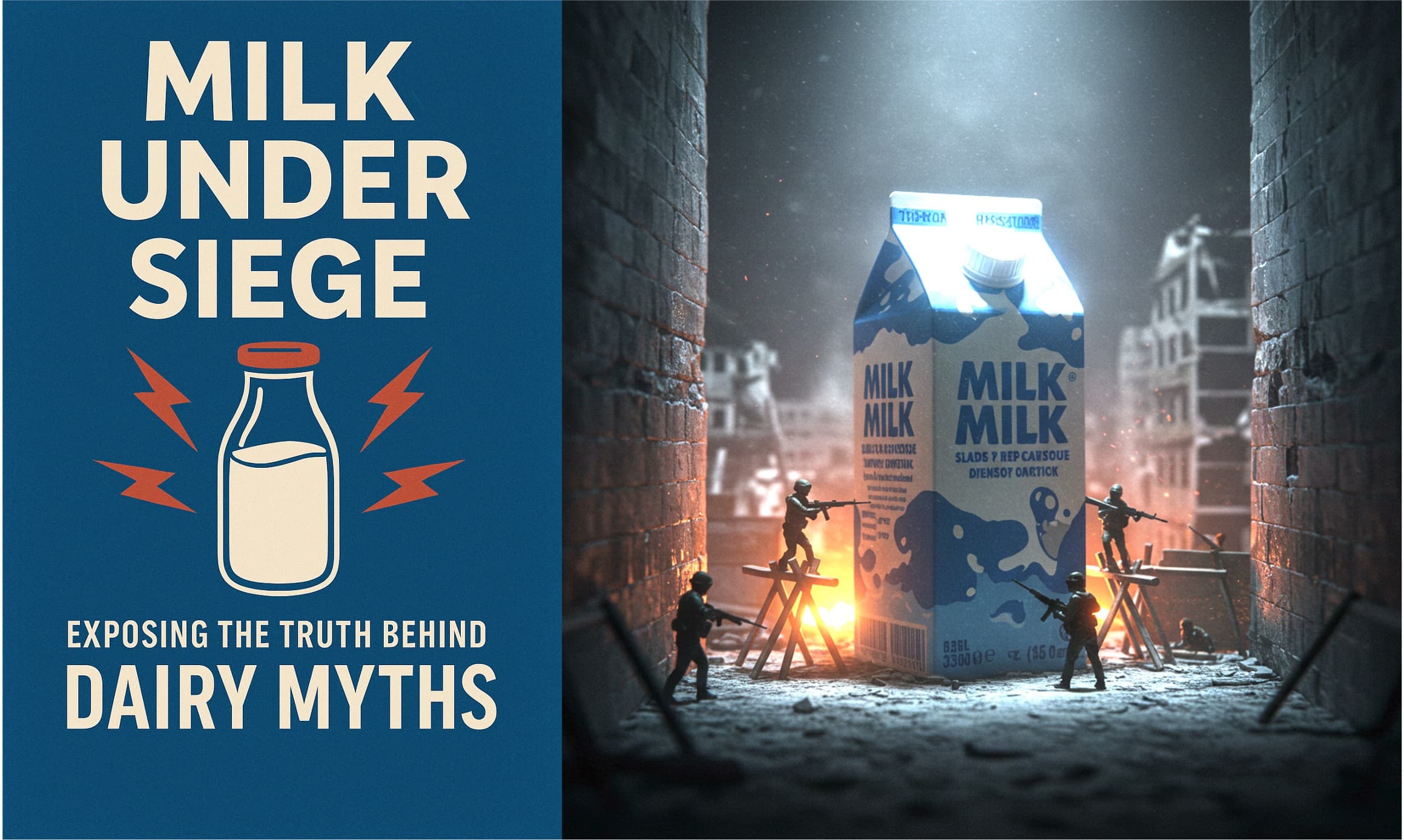
Milk Under Siege: Exposing the Truth Behind Dairy Myths

By Kuldeep Sharma•Published on April 15, 2025

In recent years, a surge of misinformation targeting dairy products has emerged, often propagated by self-proclaimed health experts and even some qualified medical professionals through social media platforms. This paper aims to critically examine these claims, fact-check popular myths, and present scientifically validated insights into the nutritional value of dairy products. It also addresses the negligible use of preservatives in the organised dairy sector, clarifying regulatory practices and highlighting the socio-economic impact of such misinformation in India.

Introduction

Dairy products have historically held a crucial place in the Indian diet, both nutritionally and culturally. However, with the proliferation of health fads and viral social media narratives, dairy has increasingly come under unfounded scrutiny. Some qualified doctors, particularly those aligned with the Insta-influencer trend, along with self-proclaimed medical professionals, have publicly advised against the consumption of milk and dairy products, alleging that they contain harmful preservatives and pose health risks. These claims often lack empirical support and deviate from established nutritional science.

Preservatives in Dairy: Facts and Regulations

A common myth circulating on digital platforms suggests that milk and dairy products in the organised sector are loaded with harmful preservatives. Contrary to these claims, data from the Food Safety and Standards Authority of India (FSSAI) confirms that preservatives are used in less than 1% of dairy products, primarily in shelf-stable items such as certain specialised flavored milks and processed cheese spreads (FSSAI, 2022). Most of the dairy beverages are either sterilised or Ultra heat treated and in both the cases thermal preservation is used rather than chemical pereservation. Products like curd and Paneer are also made shelf stable through thermisation processes. The vast majority of fresh dairy products—including pasteurised milk, dahi, paneer, butter, and ghee—are entirely free from preservatives.

Pasteurized milk, for instance, has a natural shelf life of 2-5 days under refrigeration due to the removal of pathogenic bacteria during pasteurization, without the addition of chemicals. UHT (Ultra-High Temperature) milk achieves a longer shelf life through sterilization, not by adding preservatives. FSSAI regulations strictly govern the permissible additives in dairy, ensuring they remain significantly lower than those found in other processed foods like bakery products, sauces, or confectionery (FSSAI, 2022).

Nutritional Supremacy of Milk

Milk is one of nature's most balanced foods, offering a unique combination of macronutrients and micronutrients. It is an excellent source of complete proteins, containing both casein and whey proteins, which include all essential amino acids necessary for human health (FAO, 2013). Dairy fat serves as a carrier for fat-soluble vitamins such as A, D, E, and K, playing vital roles in vision, bone health, immunity, and hormonal functions.

The natural sugar in milk, lactose, aids in calcium absorption and promotes the growth of beneficial gut bacteria, particularly in fermented products like curd and yogurt. Additionally, dairy products are rich in B-vitamins (Riboflavin and B12) and essential minerals including calcium, phosphorus, potassium, and magnesium, contributing to bone strength, metabolic functions, and overall immunity (WHO, 2018).

Sources of Misinformation

Several factors contribute to the spread of anti-dairy misinformation. Firstly, certain medical professionals lack specialised training in food processing and nutrition science, leading to superficial or misguided dietary advice. Secondly, the social media environment rewards sensationalism, with fear-based narratives often attracting greater attention. Finally, the influence of global dietary trends, such as the anti-dairy movement linked to veganism, disregards the socio-cultural and nutritional significance of dairy in Indian diets.

Fact-Checking Incidents and Legal Rebuttals

In multiple instances, regulatory bodies have addressed and debunked false claims regarding dairy products. The National Dairy Development Board (NDDB) and FSSAI have clarified through official statements that fresh dairy products in India are free from harmful preservatives. Notably, in 2023, the Press Information Bureau (PIB) Fact Check and FSSAI dismissed widespread social media allegations of preservative use in branded milk as baseless.

In July 2023, the Gujarat Cooperative Milk Marketing Federation (GCMMF), which owns the Amul brand, filed a First Information Report (FIR) against a man from Gandhinagar. The individual had posted a Facebook video alleging that Amul milk contained urea and claimed that a government laboratory had confirmed this. The complaint, filed by a senior sales manager at Amulfed (a GCMMF unit), stated that the video aimed to tarnish the brand's reputation. Consequently, the FIR was registered under Indian Penal Code sections 500 (defamation) and 505 (statements conducing to public mischief) www.ndtv.com.​

Similarly, in December 2019, GCMMF lodged a police complaint in Uttar Pradesh against a resident of Prayagraj. The individual had uploaded a misleading video on social media, claiming that Amul Gold milk curdled due to the presence of plastic and could be poisonous. When GCMMF officials requested the removal of the video, the accused allegedly demanded ₹10 lakh. An FIR was registered under sections 386 (extortion) and 499 (defamation) of the Indian Penal Code, as well as relevant sections of the Information Technology Act The Times of India

.​These instances underscore Amul's commitment to protecting its brand integrity and ensuring that consumers receive accurate information about its products.​

The dissemination of misleading information about dairy products by unqualified sources not only jeopardises public health understanding but also undermines the livelihoods of over 8 crore dairy farmers in India. It is imperative that dietary guidance be rooted in validated nutritional science and regulated frameworks. Consumers are encouraged to rely on authentic, science-backed sources for dietary decisions and to appreciate the unmatched nutritional value and safety standards of India’s dairy sector.

The way forward

dont forward before fact check dairynews7x7

We earnestly urge policymakers to issue clear, stringent guidelines against such malicious propaganda. Individuals or organisations spreading baseless, fear-mongering narratives about milk and dairy products should be held legally accountable in the interest of public welfare and consumer trust. It is equally crucial for every milk lover and responsible citizen to refrain from forwarding or endorsing any sensationalised message that undermines the integrity of our dairy sector by propagating negativity about milk, adulteration, or preservatives without verified evidence. By taking this small but impactful step, we can collectively reduce the unnecessary traction these narratives receive, discouraging broadcasters and social media channels from featuring such misleading content. Let us, as a nation, stand together to protect the truth, honour our dairy farmers, and preserve the nutritional treasure that milk represents in our daily lives.


References:

  • FSSAI (2022). Food Safety and Standards (Food Products Standards and Food Additives) Regulations.
  • FAO (2013). Milk and dairy products in human nutrition. Food and Agriculture Organization of the United Nations.
  • WHO (2018). Nutritional requirements and dietary guidelines.
  • PIB Fact Check (2019). Social Media Claims on Milk Preservatives. Government of India.
 

Source : Dairy blog by Kuldeep Sharma Chief editor www.Dairynews7x7.com April 15th 2025


Swipe to continue reading

Previous Article

Next Article