Latest Blogs
See More



Indian Dairy News



DairyNews7x7
Global Dairy News
DairyNews7x7
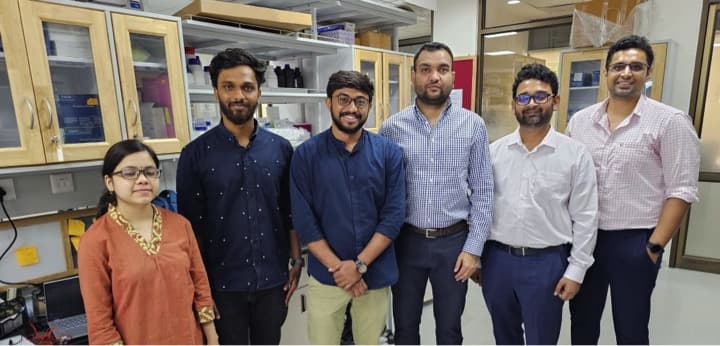
As FaunaTech cofounder Sidhant Jena observed a couple of years ago, the parallels between human and animal diagnostics were brought into sharp relief in the early days of COVID-19.
As governments and healthcare providers were frantically trying to set up the most efficient testing, tracing and isolation protocols to contain the spread of COVID-19, FaunaTech was applying the same thinking to dairy farms dealing with the ongoing challenge of mastitis.
An udder infection that leads to decreased milk yield, discarded milk, high treatment costs, and antibiotic use, mastitis costs dairy farms more than any other disease, says FaunaTech. But by the time cows start presenting visible symptoms, the damage is done, says the Bangalore-based startup, which is tackling the problem with a novel smartphone-based diagnostics platform for rapid testing of milk and bovine health at the farmgate.
FaunaTech CEO Rajat Pandya, who teamed up with Jena to create FaunaTech in early 2021, caught up with AgFunderNews (AFN) to discuss the value of early testing, the most efficient way to reach the market, and the ‘quantified cow.’
Sidhant went to the US to study at Georgia Institute of Technology and at Harvard Business School before coming back to India to start Jana Care in Bangalore, which is the best location for biotechnology and diagnostics.
I met him through a common friend and in early 2021 we founded FaunaTech.
What some farmers are currently using is the California mastitis test, which is convenient in that you take the solution [reagent] and mix it with fresh milk for 10-15 seconds and see if there is gel formation [if there is a high number of white blood cells, indicative of infection/injury, they will react with the reagent to form a gel] and a color change.
The problem is that it’s not very accurate if you’re looking for subclinical mastitis, plus you might see the results as dark purple but to me it looks navy blue, so it’s very subjective and you can get very high false negative results.
So right now, farmers can use a crude mechanism like the California mastitis test or they can send samples to the lab, which can take a couple of days and you can’t do it on a regular basis because it’s expensive.
There are benchtop models like the DeLavel cell counter, but they cost thousands of dollars and each test can cost $4-5, so what we see is that many farmers tend to find out that their cows have mastitis only at the clinical stage, which is really too late.
Without early testing, farmers only get to know there’s a problem when the SCC [somatic cell count] values [a high number indicates infection] are already beyond 1 million or 1.5 million whereas the threshold for good quality of milk is below 200,000. So there’s a need to detect mastitis at a subclinical stage between 300,000 to 700,000 SCC when farmers can’t visibly detect it because they don’t see any changes in the udder.
It’s only after you get to 1.5 million that they see swelling in the udder and the thickening of milk and they are forced to use antibiotics.
Mastitis easily travels through the herd and as soon as farmers know there’s a problem, they have to pull out the infected animals and put them separately on treatment. Treatment costs are heavy and the loss in milk production is huge, 20 to 25 days of milking is lost for the farmer, so we’ve seen almost $100-$120 loss per animal per farmer in India.
If you detect it early, you’ll still have to keep the animals under observation for a few days and use medications—although not necessarily antibiotics—but you’re not going to lose 20+ days on the milking cycle. And when you’re talking about HF [Holstein Friesian] cows, when production can be 15-20 liters per day, that’s substantial.
Our system can be used by any farmer and it provides a quantitative reading, followed by guidance on the smartphone application on next steps regarding treatment.
If you look at ROI, the first benefit is decreasing mastitis cases. In our early deployments in India, we’ve seen a decrease in mastitis cases by 55% by just detecting early at the subclinical stage. The second is an increase in milk production, where we’ve seen a 22% increase just by early detection [so the cows are not out of the milk supply for so long]. Number three is a decrease in antibiotic use and in turn a reduction in antibiotic residues.
So all this lead to overall savings to farmers, especially on veterinary costs. If you detect at a late stage, you have to involve a veterinarian.
On your mobile, you will see the basic result of somatic cell counts and the basic reports, but once it’s connected with the dashboard on the cloud, that’s where you see all the data analysis and you can see detailed reports because we have time stamps and geo-tagging on all of our testing.
In the application, we’re also punching in farmer names, numbers, and animal IDs, so eventually, you will have at least eight columns on the dashboard, where you will be able to see the number of farmers, number of animals, and then a map that will be able to provide insights for veterinarians to see where spikes are happening and manage cases early on.
We have very strong IP for our hardware and the strip chemistry and we have filed patents for our platform, the device, the strips and the entire tech stack in India, Europe and the US so far.
But we are not selling the device to farmers directly, which would be very inefficient. We are partnering with large dairy companies such as Nestlé, Lactalis and Parmalat, the big milk cooperatives such as Amul, and providers of veterinary services, because they work with farmers on a regular basis.
These big partners then provide our solution to the farmers that supply them at subsidized rates because it’s in their interests to keep the animals happy and healthy.
But we also see a need for a host of other biomarkers, especially for fish, meat, poultry, and grains. We see a huge opportunity to test critical biomarkers such as histamine in fish, E. coli for meat and poultry, and aflatoxins and mycotoxins in grains.
Our focus is on tests where you currently need a benchtop or lab level test, and we can offer on-site portable testing. So now we’re in the early stage of development for testing E. coli for meat and poultry and histamine in fish. If the histamine levels go beyond a certain threshold, the fish is no good for human consumption.
The beauty of our platform is that the hardware is the same, you only need one device for all the 25+ biomarkers we can test for, you just need a different test kit and then we basically upgrade the software to add the new biomarker to the menu.
The idea is to provide diagnostic services to these small and medium sized farmers via a pay as you go model so they do not have to invest in the device. We have two partners currently in the north of India that will go to the farm, charge for the tests and provide the results right away. Over time we’re also looking at working with local entrepreneurs that can provide our services but also things like medication, veterinary services, feed and fodder.
On top of that, we will also be adding tele-veterinary services, because it’s not just about diagnostics, it’s also about what to do next if you detect early, so it’s basically a video consultation to help farmers start treatment early.
We’re currently raising $2-3 million for our next round of funding for commercial scale up in the dairy sector in India and internationally and for platform expansion in agri-diagnostics in fish, meat, poultry and grains.
I have entrepreneurial DNA, so I am ‘always on.’ There’s no stopping or rest time, and you have to make time for the team, for talking to customers and investors, but I try to make time to get some exercise, grab a coffee and listen to some good music to ease the stress levels!
But what we’re building is very exciting. Last year was amazing because we were selected for the AgFunder GROW Impact Accelerator, we won the ‘Innovation in Sustainable Farming Practices – Animal Care’ category at the International Dairy Federation (IDF) awards in Chicago, and we were also part of the GROW-NY Food and Agriculture Business Competition. Recognition like this provides a big boost and helps you get up every day and keep moving forward.
The deadline for applications to the fifth cohort of the AgFunder GROW Impact Accelerator is February 25. As part of GROW’s 2024 program, which kicks off in April, 10 founders will receive a $100,000 cash investment from AgFunder, introductions to its global network of co-investors, and mentorship and support from Singapore-based agrifoodtech accelerator, GROW, over a five-month period.
The hybrid program combines virtual components that support founders to grow from their home markets and in-person components connecting entrepreneurs to the vibrant Singapore agrifoodtech ecosystem.