Latest Blogs
See More

Indian Dairy News


DairyNews7x7
Global Dairy News

DairyNews7x7
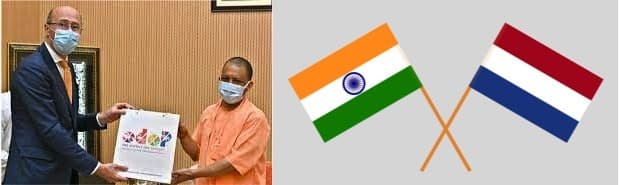
The Dutch government is keen on sharing its expertise in the dairy sector with India and will soon set up a Dairy Trading Centre of Excellence (DTCE) in southern Uttar Pradesh, says Michiel van Erkel, Agriculture Counsellor, Kingdom of the Netherlands.
Holland is willing to set up more than one DTCE in India as also Centres of Excellence (CoE) for horticulture, floriculture and food processing.
In the floriculture, it would help Indian floriculturists in packing and send their products to various parts of the country as well as abroad, the Dutch agriculture counsellor said.
The DTCE will help dairy farmers adopt Dutch technology and improve the quality and quantity of milk. “Farmers will learn about managing dairy farms, including getting insights into marketing and will be provided training. They will be educated on dairy farming. They can also get details on the genetic materials,” he said.
The DTCE will also have a small-scale cheese plant like the one Dutch dairy farms have put up next to their farmgates in Holland and sell these products.
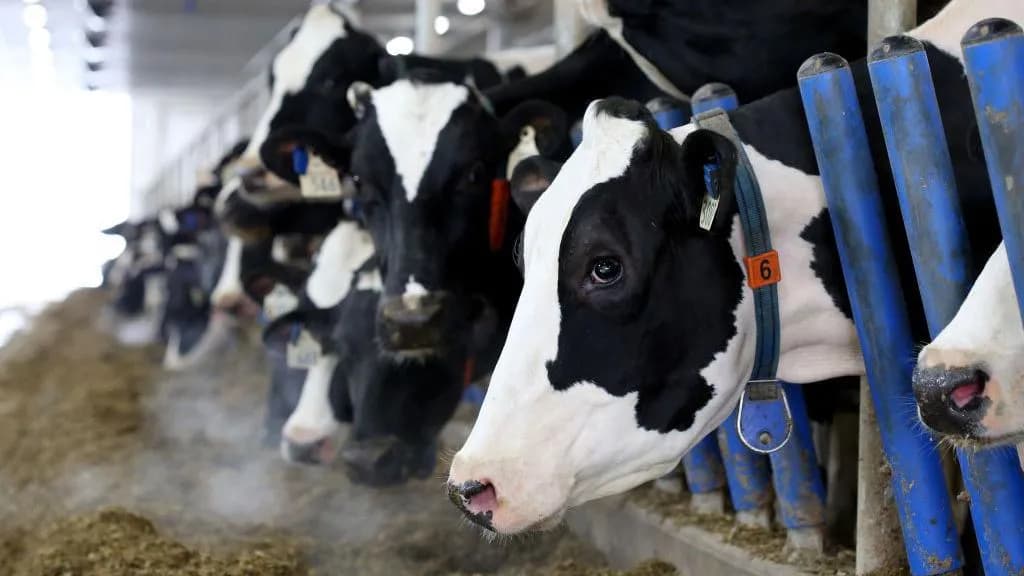
The Netherlands agriculture counsellor said the milk yield per animal in the Netherlands is much higher than in India. Also, 2-3 people manage a farm having about 150 cows, while Indian dairy farmers have 10-20 cows only. “We have huge cooperatives in Holland compared to the ones in Tamil Nadu,” he said.
According to 2019-20 statistics, the per animal milk yield in Holland is at least five times higher at 8,900 kg per year than Indian cattle’s yield of 1,777 kg.
The problem in India is that only a few are 100 per cent dairy farmers and they feel the cost of importing genetic material is high. “We are talking to some of the Dutch companies on the high costs but it is a fact that our firms are expensive. We cannot compete against Israeli firms that are much cheaper. But a business relationship with a firm in the Netherlands is for a long term,” he said.
van Erkel said setting up of CoE was getting delayed, pending bureaucratic clearances. “In the Indian federal set-up, the States have to get permission from the Centre, which also has to allocate funds,” the agriculture commissioner said, adding that the DTCE could become functional in a year’s time.
The prime ministers of India and the Netherlands have met twice in the last couple of years. After their first meeting, both the governments resolved that 25 CoE would be set up by 2025. But after Indian Prime Minister Narendra Modi pointed out that setting up 25 CoE by 2025 was ambitious, they changed their statement to say more CoE would be set up after their second meeting.
The Dutch government is also keen to help produce imported products such as strawberries, blueberries and avocados in India, including through inter-cropping.
Pointing out to the Dutch venture in Sri Lanka to help rejuvenate tea plantations to raise the value and income for farmers, the Netherlands agriculture counsellor said his country could also help in supporting cold storage and links, particularly with Indian firms looking at backward integration.
van Erkel expressed happiness over two Indian agtech start-up firms – CropIn and Innoterra – having entered the Netherlands, the gateway to conquering Europe. He said Holland can learn many things from Indian start-ups, while India can learn about developing climate-smart seeds.
Venture capital firms based in Holland are investing in agtech and innovation start-ups in India. These firms have invested in Ankur Capital, Omnivore and other such start-up investment funds, he said.
A Bengaluru biotech firm was getting help from the Netherlands’ Wageningen University, the top university in plant and animal sciences, for its incubation, the Dutch official said.