Logo
IndianGlobalBlogsPublicationsPodcastsMarketAboutContact
Logo
IndianGlobalBlogsPublicationsPodcasts
7News
India’s Dairy Sector Rethinks Supply Trust & Nutrition StrategyU.S. Dietary Guidelines Overhaul Raises Dairy, MeatYear end review of Animal Husbandry and Dairy for the year 2025Fog & Frost Pose New Risks to Agriculture & Dairy in PunjabNandini Adopts AI-Based Product Counting to Boost Dairy Operations

Indian Dairy News

India’s Dairy Sector Rethinks Supply Trust & Nutrition Strategy
Jan 09, 2026

India’s Dairy Sector Rethinks Supply Trust & Nutrition Strategy

India’s dairy industry — long anchored in high production volumes but thin value realisation — is undergoing strategic recalibration around supply reliability, consumer trust and long-term nutrition v...Read More

Year end review of Animal Husbandry and Dairy  for the year 2025
Jan 09, 2026

Year end review of Animal Husbandry and Dairy for the year 2025

Hon'ble Prime Minister inaugurates Regional Center of Excellence (CoE) for Indigenous Breeds established at Motihari with an investment of Rs 33.80 crore. Genotyping of 75000 animals from the first...Read More

Fog & Frost Pose New Risks to Agriculture & Dairy in Punjab
Jan 08, 2026

Fog & Frost Pose New Risks to Agriculture & Dairy in Punjab

Persistent dense fog and dropping temperatures across Punjab — especially around Ludhiana and surrounding districts — are raising fresh concerns for both agriculture and dairy sectors, as winter weath...Read More

DairyNews7x7
Advertisement

Latest Blogs

See More
From Forecast to Fact: 2025 Lessons, 2026 Dairy Outlook
Jan 01, 2026

From Forecast to Fact: 2025 Lessons, 2026 Dairy Outlook

As we step into 2026, it is worth pausing to reflect on how the Indian dairy sector navigated the challenges of 2025 and how closely reality tracked the forecasts I outlined in the first blog of last...Read More

India–NZ Dairy FTA: Safeguards or Silent Slippages?
Dec 26, 2025

India–NZ Dairy FTA: Safeguards or Silent Slippages?

The recently concluded India–New Zealand Free Trade Agreement (FTA) marks an important milestone in bilateral trade, while carefully ring-fencing India’s sensitive dairy sector. Under the agreement, c...Read More

Vision 2047: India’s Dairy Development Roadmap
Dec 21, 2025

Vision 2047: India’s Dairy Development Roadmap

As India moves steadily toward Vision 2047, the dairy sector stands at a strategic inflection point. From being a food security instrument in the decades following Independence, dairy has evolved into...Read More

Global Dairy Dynamics: Innovation, Sustainability & Inclusion
Dec 18, 2025

Global Dairy Dynamics: Innovation, Sustainability & Inclusion

The International Dairy Processing Conference (IDPC) 2026, organised by the Trade Promotion Council of India (TPCI) at Yashobhoomi Convention Centre, Dwarka, New Delhi on 7 January 2026, will serve as...Read More

Global Dairy News

U.S. Dietary Guidelines Overhaul Raises Dairy, Meat
Jan 09, 2026

U.S. Dietary Guidelines Overhaul Raises Dairy, Meat

The newly released 2025–2030 U.S. Dietary Guidelines, unveiled by Health Secretary Robert F. Kennedy Jr. and the Department of Agriculture, represent a major shift in federal nutrition policy, placing...Read More

Spoiled Dairy Becomes 3D Printing Plastic
Jan 07, 2026

Spoiled Dairy Becomes 3D Printing Plastic

Researchers patent a biomaterial from wasted milk proteins, creating biodegradable 3D printing filament and a potential new revenue stream for dairy. Excess milk that once flowed down farm drains duri...Read More

Milk production declines amid rising water costs
Jan 07, 2026

Milk production declines amid rising water costs

Dairy producers across Victoria are facing a tightening operating environment, with declining milk flows and escalating water and fodder costs, according to the Dairy Australia Situation and Outlook Y...Read More

DairyNews7x7
Advertisement
Dairy News 7x7

Your trusted source for all the latest dairy industry news, market insights, and trending topics.

FOLLOW US
CATEGORIES
  • Global News
  • Indian News
  • Blogs
  • Publications
  • Podcasts
SUBSCRIBE TO OUR NEWSLETTER

Stay informed with the latest updates and trending news in the dairy industry.

No spam, unsubscribe at any time

GET IN TOUCH
C-49, C Block, Sector 65,
Noida, UP 201307
+91 7827405029dairynews7x7@gmail.com

© 2026 Dairy News 7x7. All Rights Reserved.

Terms of ServicePrivacy Policy

Harvesting Health: Revolutionizing Living Spaces with Urban Farming in Delhi NCR

By Kuldeep Sharma•Published on May 15, 2024

Recently we came across numerous media feeds on Delhi High court taking cognisance of providing safe milk to the urban population in Delhi NCR region.

State of Peri-urban dairy farming in Delhi NCR

Observing that “citizens are consuming” milk products “which may not be very safe”, the Delhi High Court said it will set up a “pilot project” in Madanpur Khadar Dairy — one of the nine designated dairies in the city — to address issues such as the use of “spurious” banned drugs like Oxytocin which increases milk production, cattle health, and hygiene at the premises. A division bench led by Acting Chief Justice Manmohan and Justice Manmeet Pritam Singh Arora responded to a petition on the conditions of dairy colonies by pledging to issue an order and establish a team, including the Delhi State Legal Services Authority, to ensure immediate compliance.

The bench noted that the designated dairies in the city lack mandatory licenses from various authorities including the MCD, Delhi government's animal husbandry department, DPCC, and FSSAI.

Delhi's Chief Secretary Naresh Kumar, along with senior officials like the MCD Commissioner, participated in the virtual hearing, committing to file a detailed affidavit outlining a roadmap to address the issues raised. Regarding the relocation of two dairies near Ghazipur and Bhalswa landfills, he expressed land availability constraints and proposed a timeline for legacy waste removal by 2026.

The bench expressed skepticism about the administration's previous inaction, highlighting the existence of unregulated dairies and their potential impact on food safety. It emphasized the need for statutory oversight of these dairies, calling for action from authorities like the MCD and GNCTD.

Functional Plan for Dairy in NCR by NCRPB

It was also observed that the National Capital Region Planning Board (NCRPB) under the Ministry of Housing and Urban Affairs is also developing a functional plan on dairy requirements of this region under NCR regional plan 2041. We must not forget that NCR is expected to be the world‘s most populous capital region by 2030–2031.

The approach to prepare the Functional Plan shall be broadly including

  1. Proposal development, feasibility assessment, and necessary restructuring to enhance Quality of Life and Ease of Doing Business or improve the economy, depending on whether the project is social or economic in nature.
  2. Market analysis, supply chain evaluation, and recommendations for increasing farm incomes in the NCR, exploiting the dairy sector's potential near mega cities, and planning for potential exports after meeting local NCR demand.
In this article we shall examine the plausibility for inclusion of urban farming including animal husbandry in the masterplan 2041 for the Delhi NCR.

Urban farming-emerging trends and scope

In a seminal research paper with the above captioned title, the authors, Maneesha et al in Indian Farmers discussed in detail the importance of creating farming opportunities in Urban areas.

Urban farming involves growing plants and raising animals and fish in urban and peri-urban areas. With 55% of the world's population currently residing in urban areas and projected to reach 68% by 2050, urbanites heavily rely on market food, leading to health issues like malnutrition, diabetes, and obesity. Market produce often contains harmful chemicals, prompting a preference for safe organic options. Urban agriculture, practiced at various scales, utilizes local resources to produce a variety of crops, livestock, fish, and honey. Approximately 800 million urban dwellers worldwide, comprising 10.38% of the total population, engage in urban farming to address these three benefits.

  1. Health and Nutritional Benefits: Urban farming ensures food and nutrition security by providing fresh, organic produce directly to consumers, meeting recommended dietary guidelines. Engaging in agriculture activities promotes physical and mental health, bridging the gap in per capita consumption of fruits and vegetables in India.
  2. Socio-economic Benefits: Urban farming reduces expenses on food and healthcare while contributing to family income. Community farming fosters social bonds among residents, enhancing societal well-being. Community gardens serve as leisure spaces and venues for community events, promoting cohesion.
  3. Environmental Benefits: Urban farming mitigates heat, dust, and pollutants, improving air quality and livability. The presence of pollinating insects and birds enhances biodiversity. Biodegradable waste is recycled into fertilizers, supporting sustainable farming practices and waste management.

Unique dairy farming model in Mexico and Ethiopia

Felix et al.'s paper in Sustainability examines urban dairy production in two areas of Mexico City with differing urbanization levels (east and south). Dairy activities have adapted to urban conditions, with production often serving as the primary income source in the east and more diversified livelihoods in the south. Food waste is utilized in the east, while grass remains important in the south. Direct sales to consumers are common in the east, while intermediaries play a larger role in the south. Herds are larger and more specialized in the east. Both areas utilize local resources for housing and feeding animals, with manure used in agricultural systems. The paper discusses policy options to reduce Mexico City's dependence on imported milk by supporting these urban dairy systems.

As per Eine in Development Southern Africa, demand for dairy products is growing fast in urban areas in Ethiopia. Due to poorly developed rural infrastructure, urban dairy farms are pivotal in making milk available and affordable in towns and cities. Yet current supply fails to meet the increasing demand. In order to formulate fit interventions that can expand urban dairy production, a detailed understanding of urban dairy systems is needed. Large discrepancies were observed in terms of dairy enterprise’s productivity, profitability, and suitability in future urban policy planning. So suitable and sustainable dairy farm structures were needed to be identified for a robust urban dairy production ecosystem.

Urban housing growth in Delhi NCR

As per Economic Survey of Delhi 2022-23, Delhi, with the highest population density of 11,320 persons per sq km in 2011, is predominantly urban, with 75% of its total area falling under urban jurisdiction. The urban population density stands at 14,698 persons per sq km. Approximately 16.37 million people, constituting 98% of Delhi's total population, reside in urban areas. This urban density exerts immense pressure on public service delivery and civic infrastructure, including water supply, sewerage, solid waste management, and housing. Approximately one-third of Delhi's population lives in substandard housing, including slums, unauthorized colonies, and dilapidated areas. Projections indicate a need for 2.4 million new housing units by 2021, with 54% required for economically weaker sections and lower-income groups. Around 42% of these units are needed for residential areas.

The trend of urban expansion in Delhi from 1989 to 2020 can be seen as below.
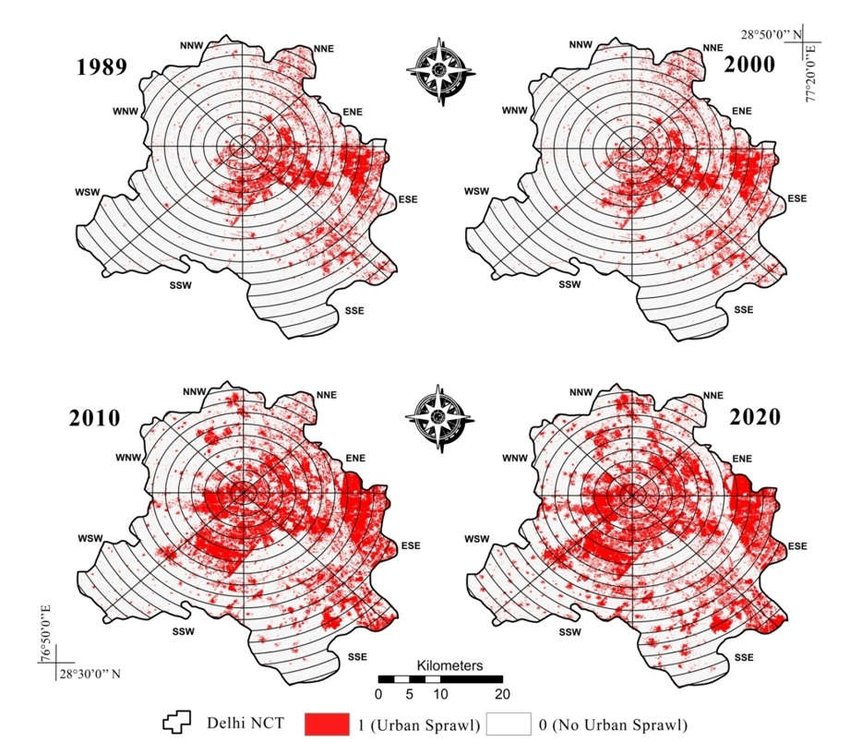
14052024_The-trend-of-urban-expansion-in-Delhi-from-1989-to-2020


Urban Farming the need of the hour

Urban farming has emerged as a promising solution to address food security, environmental sustainability, and community resilience in rapidly expanding urban landscapes of Delhi NCR. In the context of housing societies in India, the integration of dairy farming alongside vegetable cultivation and efficient organic waste management presents a compelling vision for the future.

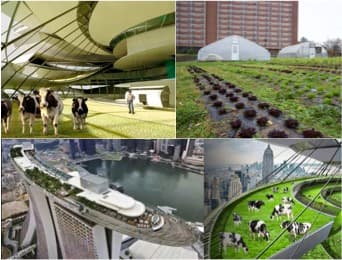
In envisioning the inclusion of dairy farming in urban housing societies, several factors need consideration. First and foremost, space constraints demand innovative solutions such as vertical farming or rooftop installations for dairy operations. Additionally, advancements in urban agriculture technologies, such as automated feeding and milking systems, can streamline operations within limited spaces.

Regulatory frameworks play a pivotal role in shaping the feasibility and sustainability of such initiatives. Policies need to be formulated to address zoning regulations, waste management protocols, and animal welfare standards. Clear guidelines on the disposal of organic waste, particularly dung from dairy operations, are essential to prevent environmental pollution and ensure efficient resource utilization.

Organic aspect of urban farming

Integrating dung into the agricultural cycle as organic fertilizer holds significant potential. By composting dung and other organic waste, housing societies can create nutrient-rich soil amendments for cultivating vegetables and other crops. This closed-loop approach not only reduces reliance on synthetic fertilizers but also mitigates the environmental impact of waste disposal.

Moreover, community engagement and education are crucial for the success of urban farming initiatives. Residents need to be sensitized about the benefits of sustainable farming practices, waste segregation techniques, and the importance of local food production. Collaborative efforts involving residents, local authorities, and agricultural experts can foster a culture of environmental stewardship and self-sufficiency.


Swipe to continue reading

Previous Article

Next Article