Latest Blogs
See More

Indian Dairy News


DairyNews7x7
Global Dairy News

DairyNews7x7
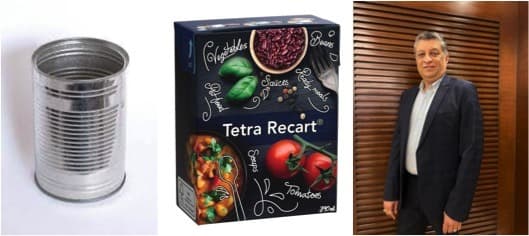
Food and Inns Ltd, a company listed on National and Bombay stock exchanges, has signed an exclusive agreement with Swedish-Swiss multinational firm Tetra Pak to produce Tetrapak Recart, an alternative packaging for food products to replace tin cans.
The Mumbai-based firm is in talks with a food technology partner to produce pectin, a vegetarian alternative to gelatin which is used in medicines, capsules, from mango wastes, top officials of the company told businessline.
The new packaging, which has been in use in Europe over the past five years, can preserve food products for two years. Tin or even Tetra Pak’s cartons, which created a revolution in food packaging years ago, provide a shelf life of six months for milk and one year for juices and edible oils.
The Recart, which can be easily transported and put on shelves, is a smaller version of Tetrapak but 67 per cent of it can be recycled. It can withstand higher temperatures, besides retaining the colour and taste of the products.
It can be refrigerated and sealed more than 10 times for use of the product as and when a consumer likes it. The packaging is also biodegradable.
The difference between the Tetrapak and Tetra Recart is that Tetrapak can be used to pack only basic liquids. In Recart, semi-liquids such as curries and pastes can also be packaged. “Even diced vegetables can be packaged in it,” Dalal said.
“We feel this is a big game-changer given the size of the can market. We have got a good response for this and what we hear is that Europe could ban tin cans from 2024,” said Moloy Saha, the company’s Chief Executive Officer.
The advantage of Tetrapak Recart is that it can help eliminate tin from the food system. “Second, the destruction of cans after using the product is an issue worldwide. There is a sustainability issue on this,” he said.
Tetra Pak is now working on ways to ensure that 100 per cent of the Recart can be recycled, “though it will take some more time”.
“We are in talks with Tetra Pak for a bigger pack size since Food and Inns is not only in the retail segment but in B2B (business-to-business) too where large packages are accepted. We are in talks to get a 1 kg pack from them,” Saha said.
Food and Inns, which entered the fruit pulp business by taking over a mango canning unit of Coca-Cola when the latter was asked to leave the country in the 1980s, at Valsad in Gujarat, has added guava, tomato, papaya and other such agricultural produce to its processing capacity.
“Mango processing is our prime business and we have now converted the spray-dried egg unit into one to produce vegetable and fruit powders and seasoning. These are sold to companies for spraying on, for example, chips,” Dalal said.
Pectin can also be used in jams, jellies and pickles as a bonding agent. “In India, 95 per cent of pectin is imported from countries such as China, Mexico, Brazil and the US,” Krishnan said.
Food and Inns would be the first company producing pectin out of mango and this will help the circular economy, the CFO said.
“Right now, we have lab-tested only mango skins but in the second stage, we would want to convert all the other fruits and vegetables that we process such as papaya, banana and guava to convert their wastes and skins into pectin,” he said.
The company is looking at converting mango kernel into a sort of cocoa butter equivalent, too, which can be used in confectionery, sweet manufacturing and the cosmetic industry.
The company exports parathas, naans and samosas in the frozen food sector. “We are producing natural products, plant-based products like zucchini and butternut squash noodles. These are, at the moment, for exports but soon we will launch it in the domestic market. It’s an vegan substitute to pastas around the world,” Dalal said.
“The Kusum brand is now marketed only in Maharashtra, though we would like to market it across the country,” he said.
Food and Inns is availing of the assistance from the Centre’s production-linked incentive scheme to invest and increase sales besides raising its capital expenditure.
The company has tied up with the Netherlands’ sustainable initiative IDH, to work with farmers to educate them on crop inputs and pesticide-free farming to uplift their economy. The Mumbai-based firm also buys back from farmers.
“We work with a lot of farmers individually, apart from these programmes to help them get higher yields,” Krishnan said.