Logo
IndianGlobalBlogsPublicationsPodcastsMarketAboutContact
Logo
IndianGlobalBlogsPublicationsPodcasts
7News
India’s Dairy Sector Rethinks Supply Trust & Nutrition StrategyU.S. Dietary Guidelines Overhaul Raises Dairy, MeatYear end review of Animal Husbandry and Dairy for the year 2025Fog & Frost Pose New Risks to Agriculture & Dairy in PunjabNandini Adopts AI-Based Product Counting to Boost Dairy Operations

Indian Dairy News

India’s Dairy Sector Rethinks Supply Trust & Nutrition Strategy
Jan 09, 2026

India’s Dairy Sector Rethinks Supply Trust & Nutrition Strategy

India’s dairy industry — long anchored in high production volumes but thin value realisation — is undergoing strategic recalibration around supply reliability, consumer trust and long-term nutrition v...Read More

Year end review of Animal Husbandry and Dairy  for the year 2025
Jan 09, 2026

Year end review of Animal Husbandry and Dairy for the year 2025

Hon'ble Prime Minister inaugurates Regional Center of Excellence (CoE) for Indigenous Breeds established at Motihari with an investment of Rs 33.80 crore. Genotyping of 75000 animals from the first...Read More

Fog & Frost Pose New Risks to Agriculture & Dairy in Punjab
Jan 08, 2026

Fog & Frost Pose New Risks to Agriculture & Dairy in Punjab

Persistent dense fog and dropping temperatures across Punjab — especially around Ludhiana and surrounding districts — are raising fresh concerns for both agriculture and dairy sectors, as winter weath...Read More

DairyNews7x7
Advertisement

Latest Blogs

See More

From Forecast to Fact: 2025 Lessons, 2026 Dairy Outlook
Jan 01, 2026

From Forecast to Fact: 2025 Lessons, 2026 Dairy Outlook

As we step into 2026, it is worth pausing to reflect on how the Indian dairy sector navigated the challenges of 2025 and how closely reality tracked the forecasts I outlined in the first blog of last...Read More

India–NZ Dairy FTA: Safeguards or Silent Slippages?
Dec 26, 2025

India–NZ Dairy FTA: Safeguards or Silent Slippages?

The recently concluded India–New Zealand Free Trade Agreement (FTA) marks an important milestone in bilateral trade, while carefully ring-fencing India’s sensitive dairy sector. Under the agreement, c...Read More

Vision 2047: India’s Dairy Development Roadmap
Dec 21, 2025

Vision 2047: India’s Dairy Development Roadmap

As India moves steadily toward Vision 2047, the dairy sector stands at a strategic inflection point. From being a food security instrument in the decades following Independence, dairy has evolved into...Read More

Global Dairy Dynamics: Innovation, Sustainability & Inclusion
Dec 18, 2025

Global Dairy Dynamics: Innovation, Sustainability & Inclusion

The International Dairy Processing Conference (IDPC) 2026, organised by the Trade Promotion Council of India (TPCI) at Yashobhoomi Convention Centre, Dwarka, New Delhi on 7 January 2026, will serve as...Read More

Global Dairy News

U.S. Dietary Guidelines Overhaul Raises Dairy, Meat
Jan 09, 2026

U.S. Dietary Guidelines Overhaul Raises Dairy, Meat

The newly released 2025–2030 U.S. Dietary Guidelines, unveiled by Health Secretary Robert F. Kennedy Jr. and the Department of Agriculture, represent a major shift in federal nutrition policy, placing...Read More

Spoiled Dairy Becomes 3D Printing Plastic
Jan 07, 2026

Spoiled Dairy Becomes 3D Printing Plastic

Researchers patent a biomaterial from wasted milk proteins, creating biodegradable 3D printing filament and a potential new revenue stream for dairy. Excess milk that once flowed down farm drains duri...Read More

Milk production declines amid rising water costs
Jan 07, 2026

Milk production declines amid rising water costs

Dairy producers across Victoria are facing a tightening operating environment, with declining milk flows and escalating water and fodder costs, according to the Dairy Australia Situation and Outlook Y...Read More

DairyNews7x7
Advertisement
Dairy News 7x7

Your trusted source for all the latest dairy industry news, market insights, and trending topics.

FOLLOW US
CATEGORIES
  • Global News
  • Indian News
  • Blogs
  • Publications
  • Podcasts
SUBSCRIBE TO OUR NEWSLETTER

Stay informed with the latest updates and trending news in the dairy industry.

No spam, unsubscribe at any time

GET IN TOUCH
C-49, C Block, Sector 65,
Noida, UP 201307
+91 7827405029dairynews7x7@gmail.com

© 2026 Dairy News 7x7. All Rights Reserved.

Terms of ServicePrivacy Policy

Challenges of Traceability in the Dairy Industry

By Kuldeep Sharma•Published on October 19, 2024

Introduction

In today's rapidly evolving global food market, ensuring the safety, quality, and integrity of dairy products has become paramount. With consumers demanding greater transparency and accountability from food producers, traceability has emerged as a critical factor in building trust and confidence in the dairy supply chain. Traceability is defined as the ability to track and trace the movement of products and their ingredients throughout the supply chain. This serves as a crucial tool for identifying and addressing food safety concerns, managing product recalls, and meeting regulatory requirements. In recent years, the dairy industry has faced increasing scrutiny over food safety issues, ranging from contamination and adulteration to mislabeling and fraud. These challenges have underscored the need for robust traceability systems that can accurately document the journey of dairy products from farm to table. While traditional traceability methods have provided some level of assurance, they are now facing limitations in capturing accurate data and detecting fraudulent practices.

As a result, there is a growing interest in dynamic traceability solutions that offer real-time visibility and insights into the entire supply chain. Static Traceability Traditionally, traceability in the dairy industry has relied on static methods, where information is captured at specific points in the supply chain. While static traceability provides a basic record of movement, it suffers from limitations such as incomplete data capture and manual entry errors. In the dairy industry, many companies still rely on outdated paper or electronic systems to track milk movement, leading to inefficiencies, inaccuracies, and providing limited information to consumers.

Manual traceability dairynews7x7

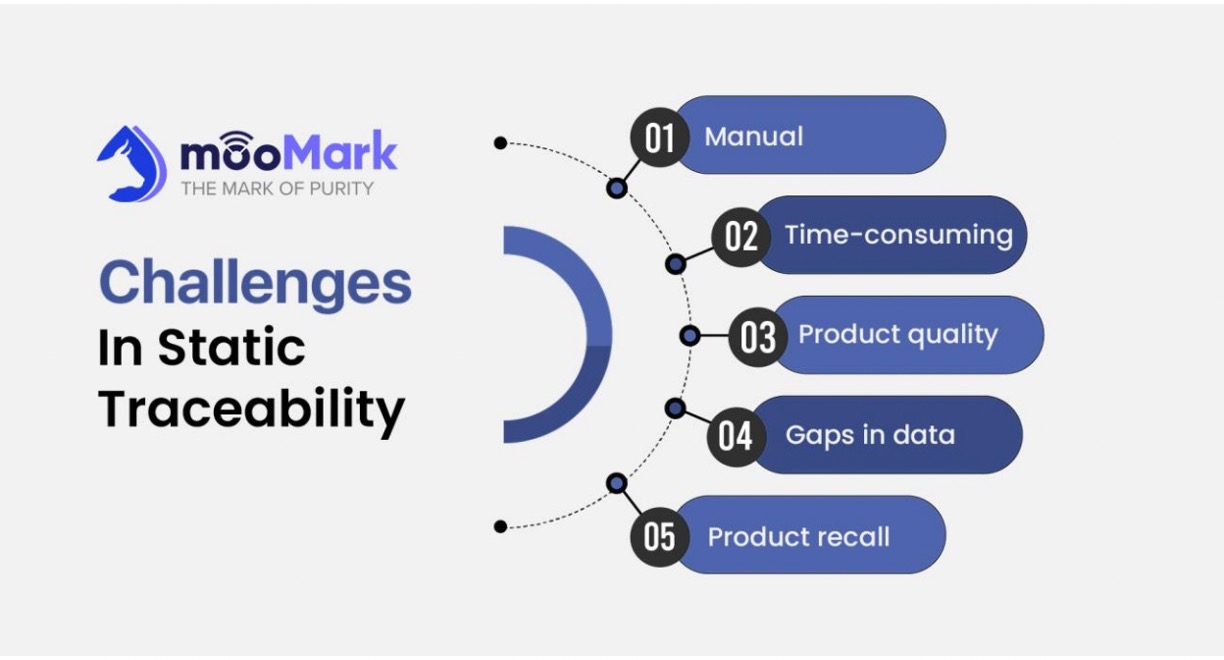
Challenges in Static Traceability

Manual: The dairy industry has come a long way from being more unorganized to relatively organized. However, when it comes to traceability, many retailers and brands still depend on the manual entry of data on paper or electronic systems to track the movement of milk in the milk supply chain.

Time-consuming: With all the digital advancements in the world across industries, this process is not only outdated but has many challenges. This process is very time consuming and prone to data inaccuracies and inefficiency. In addition, data manipulation, loss, or theft are some other common risks associated with paper records. Furthermore, data sharing and analysis have become major challenges across the supply chain.

Product quality: The dairy industry in India is undergoing a transformation, yet certain challenges persist. One such concern is the potential for milk contamination with adulterants sourced from various points in the supply chain, including unhygienic water, chalk powder, or urea. Most of the brands primarily focus on documenting the journey of packaging or containers that hold products using static traceability. Crucial information about the products themselves may be lacking due to this limitation, making it challenging to identify issues or defects at the product level.

Gaps in data: Static traceability cannot capture every step in the supply chain, including quality and quantity. Due to this limitation, the data may not provide insights into efficiency and performance. The lack of comprehensive and accurate data on the milk supply chain can lead to inefficient processes and wasted resources. This could be a missed opportunity to optimize production and minimize costs for brands.

Product recall: Data collection and analysis can be slow and prone to errors due to the manual nature of collecting data in a static traceability system. In times of crisis, such as product recalls, the need to access critical information about the supply chain may be very important. However, this system may cause delays in accessing critical information, hampering quick decision-making. Such delays can result in missed delivery deadlines, loss of revenue, and reputational damage. Overall, the static method of collecting manual or digital data is not only time consuming but also introduces inaccuracy and inefficiency in the supply chain.

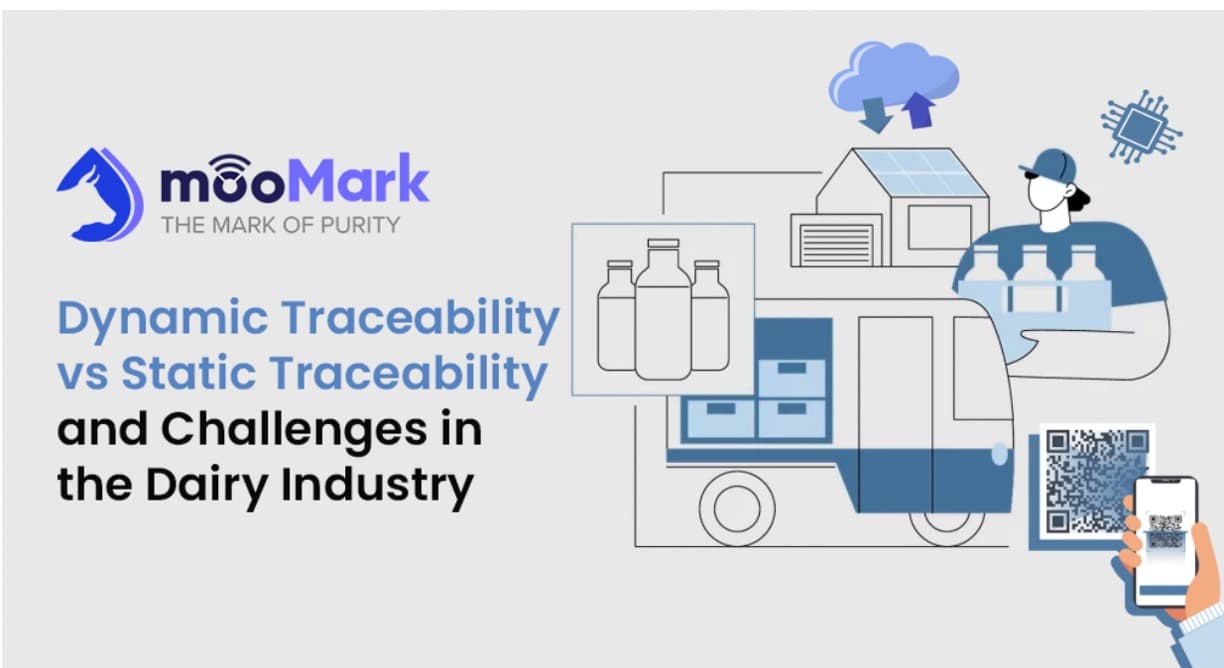
Dynamic Traceability : Dynamic traceability represents a more advanced approach to traceability, leveraging technologies such as sensors, IoT, RFID, QR codes, and blockchain to continuously collect and record data throughout the supply chain. Unlike static methods, dynamic traceability offers real-time visibility into product movement from farm to processing plant, environmental conditions, and handling practices, providing a more comprehensive and granular picture.

Opportunities in Dynamic traceability

Automatic data collection: Dynamic traceability presents an opportunity for automatic data collection throughout the dairy supply chain. By leveraging technologies such as sensors, IoT, RFID, QR codes, and blockchain, companies can seamlessly collect and record data in real time. This eliminates the need for manual data entry, reduces the risk of errors, and ensures the accuracy and reliability of the information captured.

Enhanced time savings: With dynamic traceability, companies can streamline their operations and save valuable time in data collection, processing, and analysis. Realtime data insights enable prompt decision-making, facilitating faster responses to supply chain disruptions, product recalls, and quality issues. By minimizing delays and inefficiencies, dynamic traceability helps companies improve their overall operational efficiency and agility.

Improved product quality: One of the key advantages of dynamic traceability is its ability to ensure and maintain product quality throughout the supply chain. By continuously monitoring critical parameters such as temperature, humidity, and handling practices, companies can proactively identify and address potential issues that may affect product quality. This not only enhances consumer confidence but also helps companies maintain compliance with quality standards and regulatory requirements.

Enhanced data quality and security: Dynamic traceability solutions enable companies to collect, store, and analyze large volumes of data with greater accuracy and security. By centralizing data storage and leveraging advanced encryption techniques, companies can protect sensitive information from unauthorized access, manipulation, or theft. This ensures data integrity and confidentiality, fostering trust among stakeholders, and enhancing the overall security of the supply chain.

Facilitated product recall: In the event of a product recall or quality issue, dynamic traceability enables companies to quickly trace the affected products back to their source. By leveraging real-time data insights and tracking capabilities, companies can identify the root cause of the issue, contain its spread, and implement corrective measures more efficiently. This not only minimizes the impact on consumers but also helps companies mitigate reputational damage and financial losses associated with recalls. Overall, dynamic traceability offers a range of opportunities for companies in the dairy industry to improve operational efficiency, product quality, and supply chain transparency. By embracing dynamic traceability solutions and leveraging advanced technologies, companies can gain a competitive edge in the market while meeting the evolving needs and expectations of consumers.
Implementation of dynamic traceability in the dairy supply chain

To establish a reliable traceability system to collect comprehensive data, businesses must first identify key points in the physical processes involved in milk production, collection, chilling, processing, and delivery. Once these points have been identified, they must figure out how to digitize them by implementing tools and technologies such as radio frequency identification (RFID) tags, the Internet of Things (IoT), quick response (QR) codes, or lot IDs to gather data from each point in the chain. This will ensure that the data flows seamlessly across the entire supply chain, from the cattle and farmers to the collection centers, chilling centers, tankers, and finally to the processing plants. Further, the business has to establish a centralized database or traceability system to store this information digitally. The system should be designed to capture and update data at various points along the supply chain.

static traceability challenges dairynews7x7

Conclusion

Dynamic traceability offers significant advantages over static systems in terms of realtime monitoring and data visibility. However, it also presents challenges that must be addressed to realize its full potential, especially in the dairy industry. By investing in advanced sensor technology, data analytics solutions, and collaborative partnerships, stakeholders can overcome these challenges and harness the transformative power of dynamic traceability to ensure the safety, quality, and integrity of dairy products.

Article by Team Moomark

Swipe to continue reading

Previous Article

Next Article