Logo
IndianGlobalBlogsPublicationsPodcastsMarketAboutContact
Logo
IndianGlobalBlogsPublicationsPodcasts
7News
World Pays More, Demands More: New Frontier of Dairy TradeIndia-EU Carbon Trade Talks: Why Dairy Is Watching CloselyDairy Demand to Spike for Makar Sankranti FestivalSouthern Dairy & Food Conclave Ends, Blending Technology with TraditionFarm Economy Seen Stabilizing in 2026; Costs & Policy Still Key Constraints

Indian Dairy News

India-EU Carbon Trade Talks: Why Dairy Is Watching Closely
Jan 11, 2026

India-EU Carbon Trade Talks: Why Dairy Is Watching Closely

India and the European Union (EU) are intensifying negotiations on a long-pending Free Trade Agreement (FTA), with the EU’s Carbon Border Adjustment Mechanism (CBAM) at the centre of climate and trade...Read More

Dairy Demand to Spike for Makar Sankranti Festival
Jan 11, 2026

Dairy Demand to Spike for Makar Sankranti Festival

As Makar Sankranti approaches, India’s dairy industry — especially in Bihar and neighbouring regions — is gearing up for a significant seasonal surge in demand for milk, curd and related dairy product...Read More

Southern Dairy & Food Conclave Ends, Blending Technology with Tradition
Jan 11, 2026

Southern Dairy & Food Conclave Ends, Blending Technology with Tradition

The Southern Dairy & Food Conclave 2026 (SDFC-2026) — organised by the Indian Dairy Association’s South Zone under the banner of the Southern Dairy Summit — concluded in Calicut (now Verghese Kurien N...Read More

DairyNews7x7
Advertisement

Latest Blogs

See More
From Forecast to Fact: 2025 Lessons, 2026 Dairy Outlook
Jan 01, 2026

From Forecast to Fact: 2025 Lessons, 2026 Dairy Outlook

As we step into 2026, it is worth pausing to reflect on how the Indian dairy sector navigated the challenges of 2025 and how closely reality tracked the forecasts I outlined in the first blog of last...Read More

India–NZ Dairy FTA: Safeguards or Silent Slippages?
Dec 26, 2025

India–NZ Dairy FTA: Safeguards or Silent Slippages?

The recently concluded India–New Zealand Free Trade Agreement (FTA) marks an important milestone in bilateral trade, while carefully ring-fencing India’s sensitive dairy sector. Under the agreement, c...Read More

Vision 2047: India’s Dairy Development Roadmap
Dec 21, 2025

Vision 2047: India’s Dairy Development Roadmap

As India moves steadily toward Vision 2047, the dairy sector stands at a strategic inflection point. From being a food security instrument in the decades following Independence, dairy has evolved into...Read More

Global Dairy Dynamics: Innovation, Sustainability & Inclusion
Dec 18, 2025

Global Dairy Dynamics: Innovation, Sustainability & Inclusion

The International Dairy Processing Conference (IDPC) 2026, organised by the Trade Promotion Council of India (TPCI) at Yashobhoomi Convention Centre, Dwarka, New Delhi on 7 January 2026, will serve as...Read More

Global Dairy News

World Pays More, Demands More: New Frontier of Dairy Trade
Jan 12, 2026

World Pays More, Demands More: New Frontier of Dairy Trade

Higher prices, tighter rules and an uncomfortable truth for the industry: without compliance, there is no market The start of 2026 has delivered a signal the global dairy industry cannot afford to ign...Read More

Midan’s Top 10 Meat & Dairy Trends to Watch in 2026
Jan 10, 2026

Midan’s Top 10 Meat & Dairy Trends to Watch in 2026

Midan Marketing has published its annual Top 10 meat and dairy industry trends for 2026, highlighting the forces likely to shape consumer behaviour, product development and value-chain strategies in t...Read More

U.S. Dietary Guidelines Overhaul Raises Dairy, Meat
Jan 09, 2026

U.S. Dietary Guidelines Overhaul Raises Dairy, Meat

The newly released 2025–2030 U.S. Dietary Guidelines, unveiled by Health Secretary Robert F. Kennedy Jr. and the Department of Agriculture, represent a major shift in federal nutrition policy, placing...Read More

DairyNews7x7
Advertisement
Dairy News 7x7

Your trusted source for all the latest dairy industry news, market insights, and trending topics.

FOLLOW US
CATEGORIES
  • Global News
  • Indian News
  • Blogs
  • Publications
  • Podcasts
SUBSCRIBE TO OUR NEWSLETTER

Stay informed with the latest updates and trending news in the dairy industry.

No spam, unsubscribe at any time

GET IN TOUCH
C-49, C Block, Sector 65,
Noida, UP 201307
+91 7827405029dairynews7x7@gmail.com

© 2026 Dairy News 7x7. All Rights Reserved.

Terms of ServicePrivacy Policy

90% of milk in India is A2 , Charging Premium is a gimmick : R S Sodhi

By DairyNews7x7•Published on January 23, 2021

More Indians now prefer buffalo milk over cow milk with many farmers opting to engage in buffalo milk production, and nearly all of this milk comprises the A2 protein, dairy cooperative Amul managing director Rupinder Singh Sodhi said.

Sodhi dismissed worries that Indian milk comprises the less healthy A1 protein.

“A2 milk marketing gimmick came from New Zealand as the market was saturated there so they brought this term to bring exclusivity to their product. Be assured that in India what you are drinking is A2 milk as all buffalo and indigenous cow milk is 100 per cent A2 milk,” Sodhi said in a virtual Off the Cuff conversation with ThePrint Editor-in-Chief Shekhar Gupta.

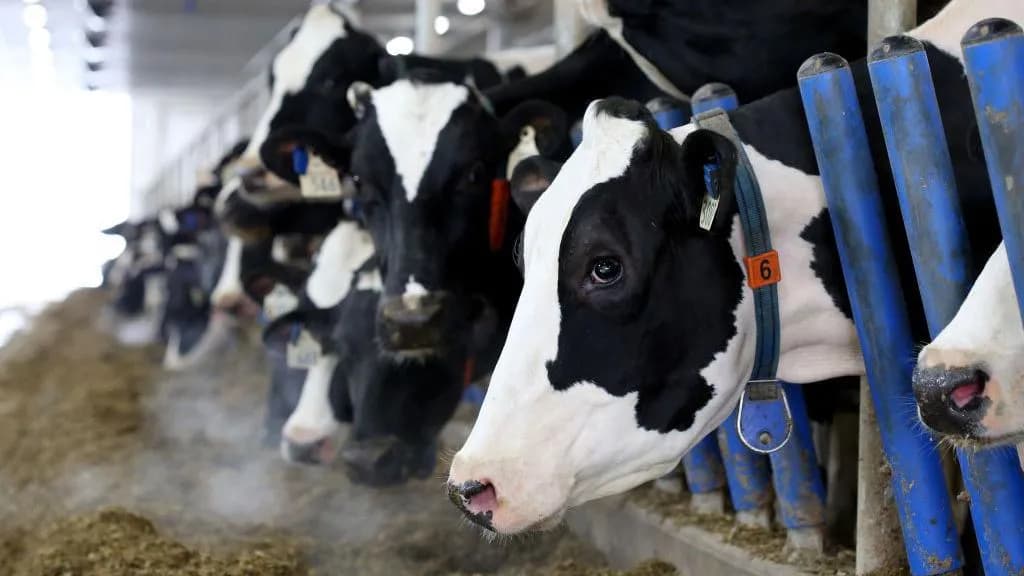
“All HF (Holstein-Friesian) crossbred cows produce 50 per cent A2 milk and 50 per cent A1 milk. So 90 per cent of milk in India is A2 milk,” he said, adding that the premium on A2 milk is just “marketing genius” without additional “health or nutritious benefit”.

A1 and A2 are two types of beta-casein, a sub-group of casein that is the largest protein found in milk. All cows originally produced only A2 protein. However, over time due to genetic mutation, many cows started producing both A1 and A2 proteins, with some producing A1 only.

The increase in A2 milk production in India has been led by a rise in buffalo milk as all the indigenous buffalo — and even cow breeds — produce 100 per cent A2 milk, unlike the pure or exotic foreign breed cows, like popular HF and Jersey.

Crossbred cows, which have a high yield and ushered a white revolution in India, produce A1-A2 milk.

Buffalo milk rise and profitability

Sodhi noted that the production and consumption of buffalo milk have risen over the last few years, adding that it is more nutritious and has more calcium than cow milk.

“In 1982, when I joined Amul, we used to get 80 per cent buffalo milk and 20 per cent cow milk. Then, over 30 years, buffalo milk reduced to 55-56 per cent, with 40 per cent cow milk. In the last few years, buffalo milk has again increased gradually to 58-59 per cent. Even the sale of buffalo milk is three-four times that of cow milk,” said Sodhi.

In 244 ml of buffalo and cow milk, the former has 237 calories as compared to 149 calories in the latter.

Moreover, buffalo milk has more vitamins and minerals as it provides 41 per cent phosphorus, 32 per cent calcium, 19 per cent magnesium, and 14 per cent vitamin A, compared with respective elements at 29 per cent, 21 per cent, 6 per, and 12 per cent in cow milk.

Buffalo milk is lower in water content but higher in fat, with a thicker texture that’s suitable in the production of fat-based dairy products like butter, ghee, cheese, and ice cream.

Buffalo population in India

According to the 20th Livestock Census of 2019, the buffalo population in India has grown from 10.5 crore in 2007 to 10.9 crore in 2019. Its population makes up for 20.47 per cent of the country’s livestock.

This rise comes at a time when cow slaughter bans have been implemented in many states in a bid to conserve indigenous cow breeds.

“We are propagating ‘sexed semen’ where there is a 95 per cent chance that we will get cows. When religious sentiments over slaughter are in play, then there can be no debate,” said Sodhi.

According to Guru Prasad Singh, a professor in the animal husbandry and dairying department in the Banaras Hindu University, if a farmer wishes to undertake commercial milk production, only buffalo milk is profitable.

“Buffalo milk has a fat percentage of 8-9 per cent against 3.5-5 per cent of cow milk and most of the milk business is done in terms of fat content in milk. So, at present, buffalo milk captures almost 60 percent of the milk and dairy product market,” Singh told ThePrint.

“Buffalo also requires less maintenance as compared to cows as it is less prone to disease too. This makes buffalo most viable for a farmer who wants to trade in milk production,” he added.

The A1 and A2 issue

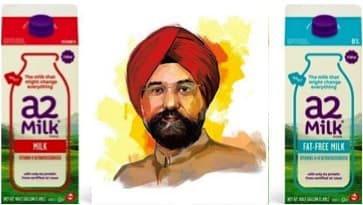
This debate gained prominence after Corran McLachlan, a New Zealand-based scientist and entrepreneur, who founded A2 Corporation (later rebranded as The A2 Milk Company), claimed in 2000 that more A1 protein in milk over A2 could lead to type 1 diabetes, autism, cardiovascular disease and digestive issues.

This claim was based on the fact that BCM-7, an opioid peptide released when digesting A1, adversely affects immune and other human body functioning.

In 2003, McLachlan petitioned Food Standards Australia New Zealand to print health warnings on the packages of A1 milk. Not only was this rejected, but A2 Corporation was also asked to even withdraw claims on A2 milk.

In 2009, the European Food Safety Authority declared that no cause and effect relationship could be established between BCM-7 released by dietary intake of A1 milk and various diseases. However, A2 milk continued to sell at a premium price in markets in India and across worlds.

Many surveys, however, show frequency of A1 and A2 milk-producing cows to be more area-specific than breed-specific. Around 50-65 per cent of HF cows in North America produce A1 milk. But over 90 per cent cows of the same breed in Germany produce A2 milk.

Experts, however, favour A2 milk consumption.

Dr Ranvir Singh, principal scientist, division of animal genetics, Indian Veterinary Research Institute (IVRI), told ThePrint, “A1 milk produced by foreign cows doesn’t have as much nutritional value in iron and taste as compared to A2 milk produced by our desi cows.”

He added: “The foreign breeds have also introduced many diseases for cows and livestock in India which is a menace for us. Both A1 milk and foreign breed must be done away with and indigenous cows must be promoted.”

Indigenous cow population fell from 15.1 crore in 2012 to 14.2 crore in 2019, whereas exotic crossbred cows rose to 5.13 crore from 3.97 crore in the same period.

Swipe to continue reading

Previous Article

Next Article