Latest Blogs
See More

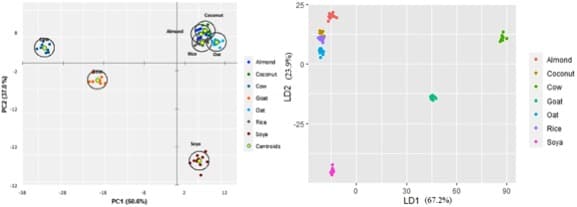
The decline in fresh milk in the Western world has in part been substituted by an increased consumption of plant-based beverages (PBB). These are often marketed as healthy and sustainable alternatives to milk and dairy foodstuff, although studies have suggested PBB to be of lower nutrient quality. The current study considered different brands of almond-, oat-, rice-, coconut- and soya-based beverages for a comparative analysis and found that they indeed presented lower contents of total protein, lipids, amino acids, and minerals than cow and goat milk. The only exception was given by soya-based beverages which approximated the protein content (3.47% vs. 3.42 and 3.25% in cow and goat milk, respectively) and amino acid composition of animal milk, and also demonstrated high mineral content. The natural presence of phyto-compounds in PBB characterised as antinutrients and their potential to exacerbate the issue of low nutrient quality by lowering bioavailability have been discussed.
The recent expansion of non-dairy alternatives has largely been driven by issues concerning lactose intolerance and milk protein allergies7. The growing prevalence of veganism, awareness of animal welfare, and the perceived idea of lower environmental impact and improved health has further encouraged the growth of PBB on the mainstream market8. The most popular PBB are of almond, oat, soya, cashew and coconut origin, or a mixture of these9, but the innovative nature of this market allows for continues expansion of new products. As such, the nutritional content of PBB vary markedly depending on their plant origin, fortification, and industrial processing. Beyond the quantity of the major nutrients, i.e. lipids, carbohydrates, and proteins, the fractional profiles also greatly differ between animal milk and PBB, to which evidence suggest PBB to have a poorer nutritional profile10. Among micronutrients, PBB have demonstrated particularly poor in the mean content of the mineral I10. Iodine is a rate-limiting element for the synthesis of thyroid hormones that play a central role in growth and neurological development, especially in children11. Indeed, I deficiency represents the first preventable cause of brain damage worldwide and its recommended intake vary during lifespan12. Iodine is obtained almost exclusively from diets constituting seafood and dairy products as the main dietary components13,14. Salt iodisation and I fortification of common house-hold food products have therefore become frequent practices to avoid deficiency15.
To address other common micronutrient deficiencies associated with vegan and vegetarian diets, and to thereby be considered as appropriate substitutes to bovine milk, many PBB are often fortified with other minerals beyond I as well as with vitamins, appealing to perceived consumer health benefits. However, despite the growing demand and capitalization of PBB, research into the nutritional aspects of these beverages remains limited, with the exception given by the culturally important soya, whose culinary use has been documented for centuries in many diverse countries. Such research, however, is commonly conducted based on the declared nutrition content on the packaging rather than on composition measurements of actual contents. Indeed, studies have shown nutrient composition declared on food packaging does not always align with actual contents16,17. As milk is, above all, a precious source of high-quality protein and minerals, and its substitution for PBB may thus promote deficiencies of these nutrients, the present study aimed to (i) quantify the gross composition and the amino acids, fatty acids, and minerals in different PBB and animal milk (Table 1), and (ii) carry out a comparative analysis to elucidate which PBB types approximate the nutritional profile of animal milk. The present study applied the detailed FA and amino acid composition as well as gross composition and mineral content of several PBB and milk to identify which nutritive components best discriminate between the beverage types.
Source : Nature Sep 16th 2023 A Research Paper