Latest Blogs
See More



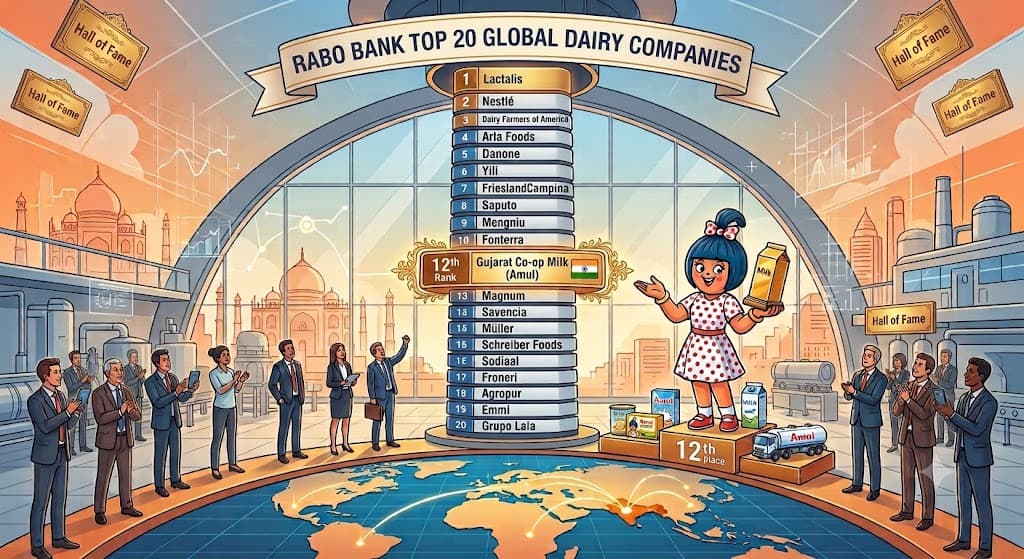
Global dairy trade is becoming more competitive as export leadership gradually shifts, according to Rabobank’s latest World Dairy Map 2026. Between 2017 and 2025, global dairy trade expanded 11%, rising from 91.1 billion kg to 101.2 billion kg in liquid milk equivalents (LME), averaging 2% annual growth despite disruptions such as New Zealand’s nearly 4% milk production decline in 2022.
Trade rebounded strongly in 2025 with 5% growth, offsetting weaker performance in 2024. The EU remains the largest dairy exporter with 27.5 billion kg LME and a 27% global export share (down from nearly 30% in 2017), while New Zealand continues as the largest single-country exporter with a 22% share.
The US increased its export share from 11.3% to 13.5%, and Argentina and Uruguay together expanded from 3.0% to 4.3%, intensifying global competition. On the demand side, China, Hong Kong and Macau remain the largest import market with 11.7 billion kg LME, but imports have declined steadily since peaking in 2021, with purchases of liquid milk, cream and milk powders falling by half due to stronger domestic production and weaker demand.
As China reduces imports, exporters are increasingly targeting emerging growth markets such as Brazil, Southeast Asia and the Middle East, reshaping global dairy trade flows for the years ahead. (dairybusinessmea.com)
Source: Dairynews7x7 9 July, 2026 Read full story here
#DairyIndustry #GlobalDairyTrade #MilkExports #Rabobank #DairyMarket #CheeseTrade #DairyNews