Latest Blogs
See More

Global Dairy News
DairyNews7x7

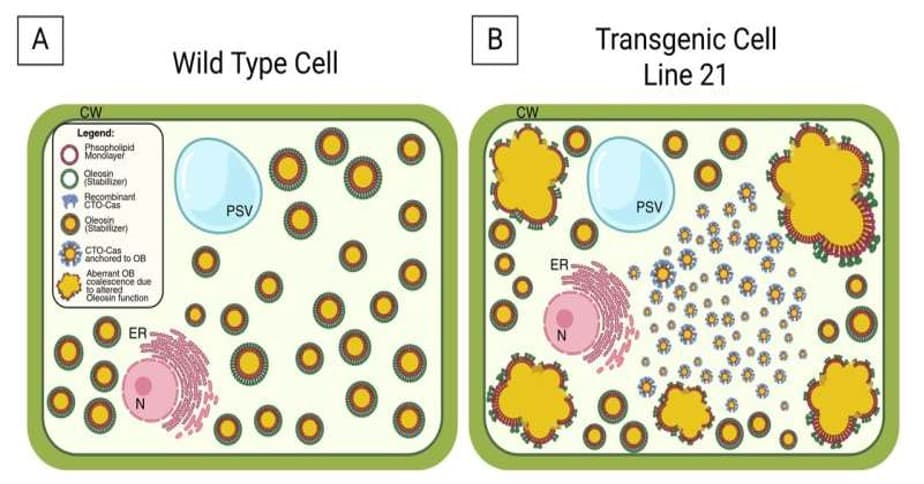
Once upon a time, dairy proteins were made exclusively by lactating mammals. These days, you can produce them in genetically engineered plants or microbes, or even lactating mammary cells grown in a bioreactor.
But is there a market for ‘animal-free’ dairy? Is making whey and casein via precision fermentation—the most advanced of the three methods outlined above—commercially viable? And how do you talk to consumers about dairy… without cows?
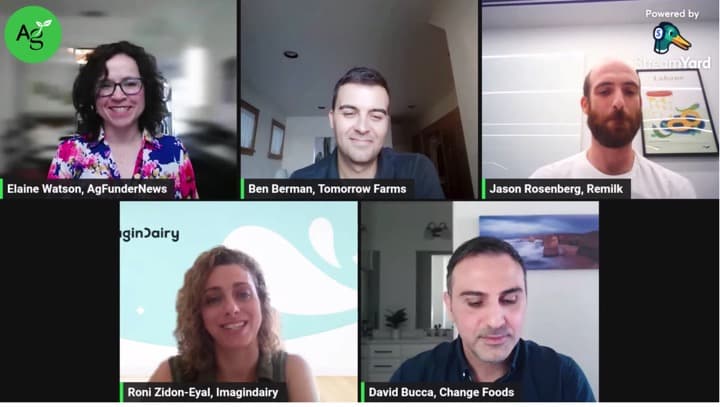
To discuss some of the challenges and opportunities in the nascent space, AgFunderNews caught up with five startups in the field:
In our 45-minute round table event, recorded above, we discussed:
“And then of course, we had the SVB [Silicon Valley Bank] crash at the start of the year that caused a lot of concern. But it’s cyclic, so in the next 12 to 18 months, I think there’ll be some type of rebound in the markets, which will then change the sentiment, but it’s about survival right now.
“It’s a case of cutting back, extending your runway, and finding investors that are deploying, or finding sources of funding that are driven by different incentives. And then there is government support as well. So for example we’re part of the NextGen FDI initiative [an initiative launched by the United Arab Emirates’ Ministry of Economy designed to help high-tech businesses launch and scale from the UAE].”
Roni Zidon-Eyal, Imagindairy: “If you have to bet on an industry that will prevail, I would say it’s the food tech industry, because this is a necessity. The past years and the pandemic really highlighted the fact that the future is not going to be a walk in the park in terms of supply chain, climate, and we have to do everything to make sure that we have supply of food around the globe.
“That’s why I think we’ll see more funding going into this, [albeit] with more caution, which is actually good, because if companies are built on healthy foundations and deep technology, I hope they will withstand these difficult times. But CPGs definitely have a role to play. You have to put your money where your mouth is if you want to change the world and fix broken food systems. And in terms of government funding, governments subsidize dairy, so why not subsidize green technologies as well?”
“The second is the customer base that I fall into, which is folks who have not made the switch to plant-based but are searching for better alternatives to the foods they love.
“The final one is the core dairy milk drinker. And transparently… they are not going to switch over to animal free dairy right out of the gate…. but long term we have the promise of being able to replace dairy by continuing to improve these products, getting to price parity, and offering people a more nutritious product.
“People are choosing Bored Cow [now in 1,200 stores in the US] for three main reasons. Number one it tastes a lot better than any milk alternative on the market today. Number two is functionality. It froths and foams and cooks and bakes like real dairy milk. And finally, nutrition [Bored Cow milk has 8g protein, 3g sugar vs 12g in dairy milk, no lactose, plus vitamin A, D2, B12 and B2].”
“Another piece of the puzzle is that dairy is an extremely volatile commodity and when we look down the road, there is a huge benefit in [being able to offer] stability over time, without fluctuations based on season, a pandemic, or supply chain problems.”
Christian Poppe, Formo: “If there are residual amounts [of the genetically modified host microorganisms in the final product] at a level that would be relevant, then you would have a [regulatory] problem [in the EU]. Thankfully [companies making animal-free dairy via precision fermentation] will end up in the novel food drawer. There is also the GMO drawer [regulation 1829/2003] that Impossible Foods have found themselves in [with heme proteins made by genetically engineered yeast], so at least to that extent, we will have an easier time [making purified dairy proteins].
“While the EU novel food process should take around 18 months, we’re probably talking about, let’s say three years.”
“From a creative standpoint we’re also telling a story that says cows have been working for us for tens of thousands of years and more recently, they’ve been forced into factory farming. What if instead, we let them retire and roam free and pursue their passions, and maybe even be a little bit bored?”
Source: Agfundernews Aug 29th 2023