Latest Blogs
See More

The program hopes to increase Thai farmers’ competitive edge in order to address the looming threat of the Free Trade agreement (FTA) that will go into full effect in 2025 and reduce the economic impacts of the COVID-19 pandemic. Farmers have the opportunity to generate more income by producing high-quality raw milk and enhancing their farm’s production efficiency. This will provide an alternative for more than 16,000 Thai dairy farmers who need to be prepared for the impacts of the threat when dairy products from Australia, New Zealand, the United States and Japan flood the market in 2025 when tariffs are taken away by the FTA.
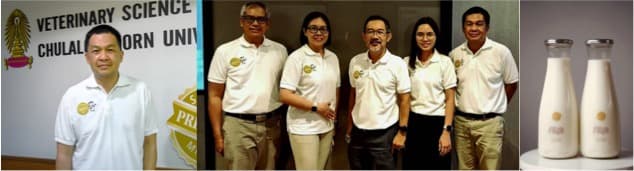
Production acceleration and diversification of marketing channels of fresh and high-quality milk are the key. So, the research project “the Development of Model Dairy Business and Premium Dairy products, Saraburi Province” was initiated. Funded by the Program Management Unit on Area Based Development (PMUA), Office of Higher Education, Science Research and Innovation Policy Council (NXPO) since 2021, the research team has been serving as mentor to the dairy farmers in upgrading milk quality, and developing their entrepreneurial skills, while creating prototype dairy farm business model and branding. As a result, three local brands were selected,” says Associate Professor Dr. Kittisak Ajariyakhajorn, Department of Veterinary Medicine, Faculty of Veterinary Science (CUVET), Chulalongkorn University.
“This is one of the viable ways Thai dairy farmers can survive. As the major milk-producing countries see the potential of the premium milk market in Asia, with the People’s Republic of China having as high as 26% of premium milk consumers, followed by the United States and Australia, we should also move into the premium milk market in both Thailand and neighboring countries. Production capability, the freshness of the products, and the ability for fast delivery to consumers will raise our competitiveness compared to the competitions from abroad.”
According to Assoc. Prof. Dr. Kittisak, Chulalongkorn University is well equipped academically to support dairy farmers — from farm management to product processing technology, marketing, and related research. This research project has been supported by the Dairy Research and Technology Transfer for Tropical Dairy Development of CUVET located at the Centre of Learning Network for Region (CLNR), Kaeng Khoi District, Saraburi Province, which serves as the main agency in the dissemination of industry knowledge in farm management, and construction of premium raw milk quality grading and sorting system. In terms of premium product development, the project partnered with the Chula Faculty of Science to develop product prototypes, and the Chula Business School in business model and marketing.
“Saraburi Province” was chosen for this prototype research location, not only for Chula’s learning and research center, but also because it was the origin of dairy cow farming, as well as the country’s leading milk producer. Currently, there are more than 4,000 dairy cow farmers, or a quarter of the country’s total who can produce about 20 percent of Thailand’s cow milk.
“Dairy farmers in Saraburi suffer from high production costs. The hot weather also reduces milk yields. In addition, the dairy farms in Saraburi are medium-sized farms that cannot sell raw milk directly to the factory,” Assoc. Prof. Dr. Kittisak revealed. So, the research project assisted the farmers with Precision Dairy Farm Management techniques, a heat reduction system that allow the dairy cows to have better appetites, hence higher milk yields, and quality control of raw milk according to the standards.
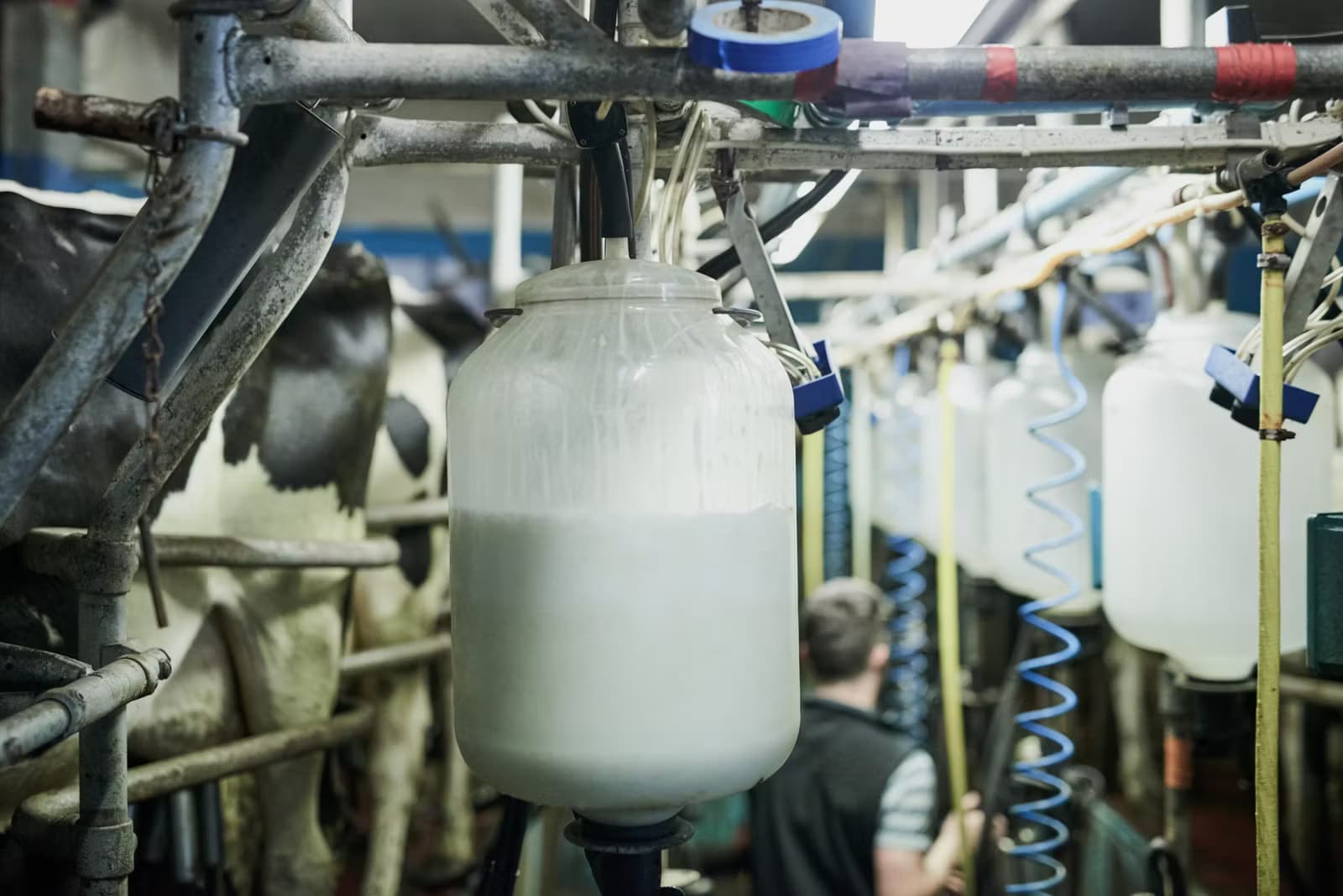
Assistant Professor Thanasak Boonserm, Department of Veterinary Medicine, CUVET stressed that “collectors of raw milk had no way to separate excellent-quality raw milk from average lower grade milk, so they pour everything together at milk collection centers or dairy cooperatives before it is sold to processing facilities.
“Farmers who produce premium quality whole milk thus lose the opportunity to fetch a better price for their premium output. Milk processing companies do not have access to premium quality raw milk to process into higher value-added dairy products, while consumers miss the opportunity to acquire premium milk.”
The project selected target farmers from among the 12 members of milk collection centers and dairy cooperatives. Based on the results of the six-month retrospective milk quality review, 114 dairy farmers (out of 4,008) were found to produce premium raw milk. However, they still lacked the ability to do so consistently. So, the team worked with these farmers to improve the quality of raw milk, and the farmers’ thinking process through various learning processes, to enhance their confidence in becoming premium dairy entrepreneurs.
The project has selected 3 model farms under the “Saraburi Premium Milk” umbrella. The 3 brands have their uniqueness, namely, Petchpana Milk farm raises their cows with fresh and quality grass, NP Dairy is a zero-waste farm with Bio-Circular-Green (BCG) management, and Be More Milk operates a certified organic dairy farm. Most recently, the pasteurized milk and Greek yogurt from these 3 farms have been test-launched at CUVET, Chula Sports Center, Lido Connect Siam Square, and distributed through the Line application.
“The market test results are satisfactory and consumers got a new experience of consuming fresh milk, and they can feel the difference from the milk they had consumed before,” Assist. Prof. Thanasak said.
“The challenge lies in the farmers’ readiness to start new businesses. Each farmer and cooperative have different policies. The project, therefore, provides support to the farmers with promising potential to start a premium milk business to be a model and provide reassurance and confidence to other farmers.”
Assoc. Prof. Dr. Kittisak adds that the project is currently studying prototypes of small factories using inexpensive but efficient machinery, that can offer sustainability and expansion into the distribution channels through modern trade and online marketing channels. He also stressed that the sustainable success of the research project requires government support to formulate a clear policy and push this into the strategic plan of Saraburi Province.
The research project is looking for partners, investors, or farmers who are interested in developing a premium dairy business. For project updates, follow the Facebook page: the Dairy Research and Technology Transfer for Tropical Dairy Development, CUVET.