Logo
IndianGlobalBlogsPublicationsPodcastsMarketAboutContact
Logo
IndianGlobalBlogsPublicationsPodcasts
7News
Australian Dairy Robots Meet Cows’ First Day ResistanceMilk Producers in Coimbatore dissatisfied Over Rs1/L IncentiveStrengthening Agriculture and Allied Sector and Market AccessIndia’s Dairy Climate Paradox: Production Triumph Meets Methane Time-BombDairy sector contributes 85% of methane emission in HP

Indian Dairy News

Milk Producers in Coimbatore dissatisfied Over Rs1/L Incentive
Mar 02, 2026

Milk Producers in Coimbatore dissatisfied Over Rs1/L Incentive

Milk producers supplying to cooperative networks in and around Coimbatore have expressed dissatisfaction with the government’s recent decision to provide only an additional ₹1 per litre incentive for...Read More

Strengthening Agriculture and Allied Sector and Market Access
Mar 02, 2026

Strengthening Agriculture and Allied Sector and Market Access

Transforming India’s Livestock and Fisheries Sector Introduction India’s agricultural progress is increasingly supported by the expansion of allied sectors such as livestock, dairy, poultry,...Read More

Dairy sector contributes 85% of methane emission in HP
Mar 01, 2026

Dairy sector contributes 85% of methane emission in HP

The livestock and dairy production sector in Himachal Pradesh accounts for more than 85 per cent of the state’s annual methane emissions, a new scientific assessment has warned, cautioning that the si...Read More

DairyNews7x7
Advertisement

Latest Blogs

See More
India’s Dairy Climate Paradox: Production Triumph Meets Methane Time-Bomb
Mar 02, 2026

India’s Dairy Climate Paradox: Production Triumph Meets Methane Time-Bomb

India’s rise to the top of the global dairy league board has been one of the most remarkable agricultural success stories of the 21st century. With milk production surpassing 247 million tonnes per ye...Read More

India’s First Cow Culture Museum in Mathura
Feb 16, 2026

India’s First Cow Culture Museum in Mathura

India’s first national “Cow Culture Museum” is set to be established in Mathura, Uttar Pradesh, on the campus of Pandit Deendayal Upadhyaya Veterinary Science University, announced the Uttar Pradesh B...Read More

Why India’s Dairy Needs a National Fodder Grid ?
Feb 15, 2026

Why India’s Dairy Needs a National Fodder Grid ?

Recently, I moderated the Farmer's session at 52nd DIC. While deliberating on pathways for Kerala to move towards milk self-reliance, K S Mani, Chairman of Milma, articulated a compelling thought: jus...Read More

Coliform in Milk -Look Beyond Brands to Cold Chain Gaps
Feb 12, 2026

Coliform in Milk -Look Beyond Brands to Cold Chain Gaps

Recent independent lab tests have triggered alarm over coliform bacteria and high total plate counts (TPC) in popular pouch milk brands — Amul Taaza, Amul Gold, Mother Dairy and Country Delight...Read More

Global Dairy News

Australian Dairy Robots Meet Cows’ First Day Resistance
Mar 02, 2026

Australian Dairy Robots Meet Cows’ First Day Resistance

On a southwest Victorian dairy farm transitioning to fully automated systems, farmers discovered a rudimentary truth of automation in agriculture: cows don’t immediately take to technology. As one far...Read More

US Dietary Guidelines Put Full-Fat Dairy in Spotlight
Mar 01, 2026

US Dietary Guidelines Put Full-Fat Dairy in Spotlight

The 2025–2030 Dietary Guidelines for Americans — jointly issued by the **US Departments of Health and Human Services and Agriculture — have elevated full-fat dairy products (like whole milk, fu...Read More

Ukraine Dairy in Deepest Crisis, Producers Urge Rescue Plan
Mar 01, 2026

Ukraine Dairy in Deepest Crisis, Producers Urge Rescue Plan

Ukraine’s dairy industry is currently experiencing the deepest crisis in recent years, with industry representatives warning that without swift government action up to 20 % of industrial milk producti...Read More

DairyNews7x7
Advertisement
Dairy News 7x7

Your trusted source for all the latest dairy industry news, market insights, and trending topics.

FOLLOW US
CATEGORIES
  • Global News
  • Indian News
  • Blogs
  • Publications
  • Podcasts
SUBSCRIBE TO OUR NEWSLETTER

Stay informed with the latest updates and trending news in the dairy industry.

No spam, unsubscribe at any time

GET IN TOUCH
C-49, C Block, Sector 65,
Noida, UP 201307
+91 7827405029dairynews7x7@gmail.com

© 2026 Dairy News 7x7. All Rights Reserved.

Terms of ServicePrivacy Policy
Prefer Us
Prefer Us

When Milk Becomes a Mourning by the death of two toddlers

By Kuldeep Sharma•Published on July 16, 2025

When Milk Becomes a Mourning by the death of two toddlers
Prefer on

I feel deeply saddened by the death of two innocent children ( 11 months and  2 years)—lives lost not to disease or fate, but to something as ordinary and trusted as milk. It's hard to imagine the grief their families must be going through, and even harder to accept that such a tragedy could happen in today’s India.

Two children are no more. Not because of a rare illness or a tragic accident, but because of something as basic, as sacred in Indian households, as milk. Adulterated milk. The same milk meant to nourish their growing bodies became the reason their hearts stopped beating. It’s a heartbreak no parent should face—and a moment of reckoning for all of us.

India is quietly battling a silent public health crisis, not born out of viruses or bacteria alone, but out of something deeper—neglect. According to a study by ICMR’s FoodNet program, the country witnessed over 3,000 food-borne outbreaks between 2009 and 2018, with nearly 400 recorded deaths and lakhs falling ill. And yet, the urgency to act seems missing.

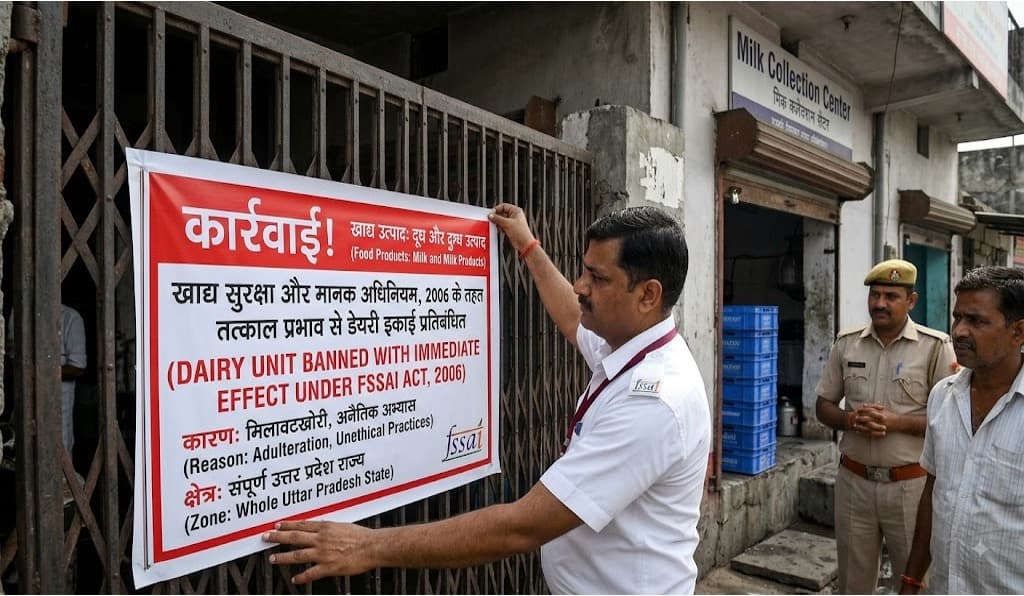
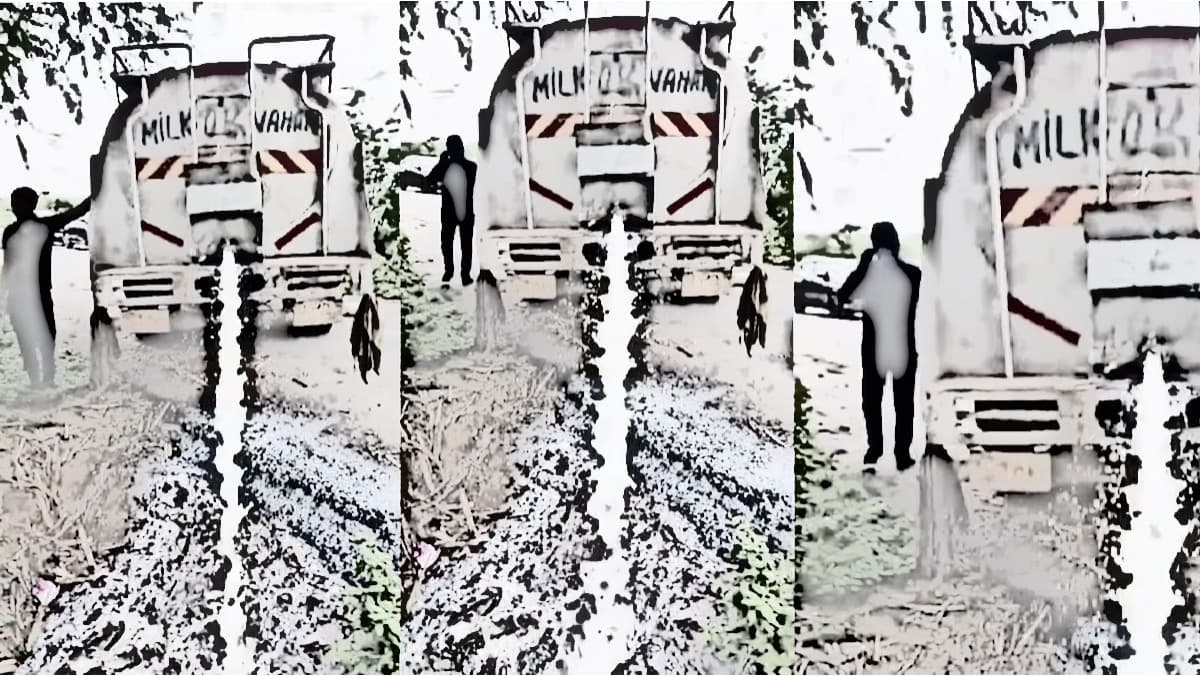
The recent deaths of these two children should have shaken our food safety system into immediate action. Yes , there was action. Tankers were stopped. Milk was drained. Raids were conducted. A racket was exposed. Everything being  hailed as a big win. But in truth, it was too late. Corrective action makes headlines. Preventive action saves lives. India’s dairy sector found itself in the crosshairs again.

While dairy products are occasionally implicated in food-borne outbreaks, data doesn’t support the claim that they are the primary culprits. Still, each such tragedy prompts sections of media and social media to hastily condemn Indian milk. In doing so, the real issues get buried, and the livelihoods of over 70 million dairy farmers, many of them women, come under threat.

We’ve seen how other countries responded differently. China’s infamous melamine milk crisis in 2008 led to six infant deaths and over 300,000 children falling sick. The Chinese government didn’t hesitate—it cracked down with over 2,000 arrests, factory closures, and even death penalties. That tragedy prompted sweeping reforms in food safety protocols.

Closer to the corporate world, there’s the haunting example of the Ford Pinto case—where a known design flaw in the car's fuel system led to fatal crashes. Internal memos revealed that the company chose to pay damages for deaths rather than fix the defect—because the cost of a human life, on paper, was cheaper than a recall.

Is our food system drifting down the same path?

India’s food safety enforcement suffers from a chronic shortage of capacity. A single Food Safety Officer (FSO) is often responsible for monitoring nearly 50,000 or more food business operators in a district. The infrastructure is thin. Labs are under-equipped. Officers lack vehicles for field checks. Even if a case is detected, the process drags on. Experts now recommend that Sub-Divisional Magistrates (SDMs) be once again empowered as adjudicating officers to expedite legal actions.

These are not abstract policy suggestions. They are urgent necessities. Because time, in food safety, can cost lives.

The Food Safety and Standards Authority of India (FSSAI) is meant to be our watchdog. Yet, too often, it behaves like a sleepy bystander—issuing advisories, forming committees, and moving on. Enforcement should mean more than paperwork. It should mean presence, accountability, and most of all, prevention.

This is not an article against the system. It’s a quiet call from a place of pain. A plea. If the deaths of children don't move us to act faster, what will?

Food safety cannot remain a distant regulatory checklist. It has to become a national priority, rooted in compassion, vigilance, and a shared responsibility. Because the question is no longer just about who mixed the poison—it’s about who looked away when it reached a child’s lips.

Source : A blog by Kuldeep Sharma Chief Editor Dairynews7x7 July 16th 2025

Stay Updated

Get the latest dairy industry news directly in your feed.

Prefer Us on Google Search

Swipe to continue reading

Previous Article

Next Article