Logo
IndianGlobalBlogsPublicationsPodcastsMarketAboutContact
Logo
IndianGlobalBlogsPublicationsPodcasts
7News
Feed Inflation Now Top Stress for India’s Dairy FarmersIndia’s Dairy Sector Rethinks Supply Trust & Nutrition StrategyU.S. Dietary Guidelines Overhaul Raises Dairy, MeatYear end review of Animal Husbandry and Dairy for the year 2025Fog & Frost Pose New Risks to Agriculture & Dairy in Punjab

Indian Dairy News

Feed Inflation Now Top Stress for India’s Dairy Farmers
Jan 09, 2026

Feed Inflation Now Top Stress for India’s Dairy Farmers

Dairy farmers across the country are facing intensifying economic stress as feed cost inflation emerges as the greatest pressure point for milk producers, with prices of all key inputs rising sharply,...Read More

India’s Dairy Sector Rethinks Supply Trust & Nutrition Strategy
Jan 09, 2026

India’s Dairy Sector Rethinks Supply Trust & Nutrition Strategy

India’s dairy industry — long anchored in high production volumes but thin value realisation — is undergoing strategic recalibration around supply reliability, consumer trust and long-term nutrition v...Read More

Year end review of Animal Husbandry and Dairy  for the year 2025
Jan 09, 2026

Year end review of Animal Husbandry and Dairy for the year 2025

Hon'ble Prime Minister inaugurates Regional Center of Excellence (CoE) for Indigenous Breeds established at Motihari with an investment of Rs 33.80 crore. Genotyping of 75000 animals from the first...Read More

DairyNews7x7
Advertisement

Latest Blogs

See More
From Forecast to Fact: 2025 Lessons, 2026 Dairy Outlook
Jan 01, 2026

From Forecast to Fact: 2025 Lessons, 2026 Dairy Outlook

As we step into 2026, it is worth pausing to reflect on how the Indian dairy sector navigated the challenges of 2025 and how closely reality tracked the forecasts I outlined in the first blog of last...Read More

India–NZ Dairy FTA: Safeguards or Silent Slippages?
Dec 26, 2025

India–NZ Dairy FTA: Safeguards or Silent Slippages?

The recently concluded India–New Zealand Free Trade Agreement (FTA) marks an important milestone in bilateral trade, while carefully ring-fencing India’s sensitive dairy sector. Under the agreement, c...Read More

Vision 2047: India’s Dairy Development Roadmap
Dec 21, 2025

Vision 2047: India’s Dairy Development Roadmap

As India moves steadily toward Vision 2047, the dairy sector stands at a strategic inflection point. From being a food security instrument in the decades following Independence, dairy has evolved into...Read More

Global Dairy Dynamics: Innovation, Sustainability & Inclusion
Dec 18, 2025

Global Dairy Dynamics: Innovation, Sustainability & Inclusion

The International Dairy Processing Conference (IDPC) 2026, organised by the Trade Promotion Council of India (TPCI) at Yashobhoomi Convention Centre, Dwarka, New Delhi on 7 January 2026, will serve as...Read More

Global Dairy News

U.S. Dietary Guidelines Overhaul Raises Dairy, Meat
Jan 09, 2026

U.S. Dietary Guidelines Overhaul Raises Dairy, Meat

The newly released 2025–2030 U.S. Dietary Guidelines, unveiled by Health Secretary Robert F. Kennedy Jr. and the Department of Agriculture, represent a major shift in federal nutrition policy, placing...Read More

Spoiled Dairy Becomes 3D Printing Plastic
Jan 07, 2026

Spoiled Dairy Becomes 3D Printing Plastic

Researchers patent a biomaterial from wasted milk proteins, creating biodegradable 3D printing filament and a potential new revenue stream for dairy. Excess milk that once flowed down farm drains duri...Read More

Milk production declines amid rising water costs
Jan 07, 2026

Milk production declines amid rising water costs

Dairy producers across Victoria are facing a tightening operating environment, with declining milk flows and escalating water and fodder costs, according to the Dairy Australia Situation and Outlook Y...Read More

DairyNews7x7
Advertisement
Dairy News 7x7

Your trusted source for all the latest dairy industry news, market insights, and trending topics.

FOLLOW US
CATEGORIES
  • Global News
  • Indian News
  • Blogs
  • Publications
  • Podcasts
SUBSCRIBE TO OUR NEWSLETTER

Stay informed with the latest updates and trending news in the dairy industry.

No spam, unsubscribe at any time

GET IN TOUCH
C-49, C Block, Sector 65,
Noida, UP 201307
+91 7827405029dairynews7x7@gmail.com

© 2026 Dairy News 7x7. All Rights Reserved.

Terms of ServicePrivacy Policy

What is PMFME Scheme ? Micro market is sufficient for a micro enterprise

By Kuldeep Sharma•Published on September 16, 2021

PMFME stands for Prime minister Formalisation of Micro Food processing enterprise Scheme. India has over 2.5 million micro food processing enterprises operating in the unorganised or informal sector. This informal sector has only 7% share in investment and 3% in outstanding credit. However this sector generates 74% of the total employment with one third as women and contributing to 12 % of the total output. The unorganised micro food processing sector contributes to 27% of the total value addition done.

This scheme has an outlay of Rs 10000 Crores. This budgetary allocation is for five years. In most of the states and the UTs the central government will cover 60% of the capital outlay while the states will generate a balance 40%. This scheme targets 200000 micro enterprises in the next five years. This scheme unlike others is focussing on market linkages with established supply chains. The scheme will have provisions for capacity building for both entrepreneurial as well as marketing skills of the micro enterprise.

PMFME is a three tier Scheme

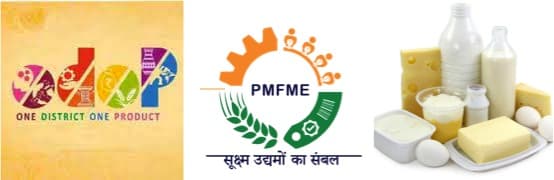
PMFME is a three tier scheme. At the first level it is for an individual enterprise. The individual must be above 18years of age and 8th pass. Only one member from each family will be considered for this scheme. This scheme offers 35% credit linked grant with a maximum limit of Rs 10 lakhs. Banks have been identified for providing collateral free loans. This scheme is also available for existing enterprises also which are being covered under ODOP ( One District One Product) range of products for expansion.

SHG, cooperatives and FPO with members are also entitled under this scheme. A grant of 35% will be given to these groups. These groups must have a turnover of Rs 1 crore and the project cost may not be more than that. A provision of seed capital of Rs 40000.00 per member is also made for these operational groups in the areas covered under ODOP. The group must have 10% margin for project cost as well as working capital margins.

PMFME is also designed for community based activities. It is something similar to earlier schemes for developing SPVs( Special Purpose Vehicles) for the common use by the micro enterprises. It may have common facilities for Cold storage, warehousing, packing station, processing units, preservation facilities, etc.

Market linkage is the key to success

The biggest challenge with micro enterprise is the market. They have to compete with state cooperatives and the private dairies at the time of milk procurement as well as at the marketplace. They do not have enough funds for branding also. The technologies being used at the micro level are not cost effective and packaging not attractive. Such initiatives only make sense if the government provides protection to them. Like earlier Ice cream was an SSI subject and large players were not allowed to enter.

Such protection could be given by GI tagging for their products. Peda from Mathura or ghee from Chandausi could always be linked to the place of origin. Anther way to support this micro enterprise is by setting up Community processing and storage centers. At the time of Covid , I saw a group of farmers set up a Khoa processing unit and a local entrepreneur created cold storage for them. In 2008, we recommended GI tag to 180 small farmers in Mathura region for making Mathura’s peda in Brij region. However local pressure by large players hindered the project. Now Mathura’s peda is manufactured at all corners of the world without much restrictions.

Technology adoption to differentiate

The role of technology is to create cost effective products for masses. I recommend this scheme to be integrated with all the research institutions in the country having low cost technologies for making dairy and food products. IIT Delhi has some technology to preserve milk for even 24 hours without chilling. There may be more technologies for extending shelf life of milk products or making local products using low cost technologies. The promotion of community processing plants will also help these small players to get their milk chilled, pasteurised , bottled/pouched and to add value at the market place. Same could be done for making Khoa , paneer or ghee.

Currently Paneer sold in loose has no gst imposed on it. Such gst benefits may be given to entities registered under FSSAI and PMFMSE only. It will be a big support to the micro enterprises.The capacity building of these micro enterprises may also be extended to food safety , apart from entrepreneurship and marketing.

In the end I have to say that micro means “limited in capacity or scale”. However we have a large number of clusters for micro demands of dairy and food products. A micro enterprise must be developed to work with micro markets through micro planning and using micro finance. We must stop giving them big macro hopes or macro vision. They will only be sustainable by harnessing the huge potential of these micro demand pockets in rural and suburban India. We must not forget that we do not use a telescope to get a micro view and vice versa.

Source : A blog by Kuldeep Sharma Chief editor dairynews7x7.com

Swipe to continue reading

Previous Article

Next Article