Logo
IndianGlobalBlogsPublicationsPodcastsMarketAboutContact
Logo
IndianGlobalBlogsPublicationsPodcasts
7News
India’s Dairy Sector Rethinks Supply Trust & Nutrition StrategyU.S. Dietary Guidelines Overhaul Raises Dairy, MeatYear end review of Animal Husbandry and Dairy for the year 2025Fog & Frost Pose New Risks to Agriculture & Dairy in PunjabNandini Adopts AI-Based Product Counting to Boost Dairy Operations

Indian Dairy News

India’s Dairy Sector Rethinks Supply Trust & Nutrition Strategy
Jan 09, 2026

India’s Dairy Sector Rethinks Supply Trust & Nutrition Strategy

India’s dairy industry — long anchored in high production volumes but thin value realisation — is undergoing strategic recalibration around supply reliability, consumer trust and long-term nutrition v...Read More

Year end review of Animal Husbandry and Dairy  for the year 2025
Jan 09, 2026

Year end review of Animal Husbandry and Dairy for the year 2025

Hon'ble Prime Minister inaugurates Regional Center of Excellence (CoE) for Indigenous Breeds established at Motihari with an investment of Rs 33.80 crore. Genotyping of 75000 animals from the first...Read More

Fog & Frost Pose New Risks to Agriculture & Dairy in Punjab
Jan 08, 2026

Fog & Frost Pose New Risks to Agriculture & Dairy in Punjab

Persistent dense fog and dropping temperatures across Punjab — especially around Ludhiana and surrounding districts — are raising fresh concerns for both agriculture and dairy sectors, as winter weath...Read More

DairyNews7x7
Advertisement

Latest Blogs

See More
From Forecast to Fact: 2025 Lessons, 2026 Dairy Outlook
Jan 01, 2026

From Forecast to Fact: 2025 Lessons, 2026 Dairy Outlook

As we step into 2026, it is worth pausing to reflect on how the Indian dairy sector navigated the challenges of 2025 and how closely reality tracked the forecasts I outlined in the first blog of last...Read More

India–NZ Dairy FTA: Safeguards or Silent Slippages?
Dec 26, 2025

India–NZ Dairy FTA: Safeguards or Silent Slippages?

The recently concluded India–New Zealand Free Trade Agreement (FTA) marks an important milestone in bilateral trade, while carefully ring-fencing India’s sensitive dairy sector. Under the agreement, c...Read More

Vision 2047: India’s Dairy Development Roadmap
Dec 21, 2025

Vision 2047: India’s Dairy Development Roadmap

As India moves steadily toward Vision 2047, the dairy sector stands at a strategic inflection point. From being a food security instrument in the decades following Independence, dairy has evolved into...Read More

Global Dairy Dynamics: Innovation, Sustainability & Inclusion
Dec 18, 2025

Global Dairy Dynamics: Innovation, Sustainability & Inclusion

The International Dairy Processing Conference (IDPC) 2026, organised by the Trade Promotion Council of India (TPCI) at Yashobhoomi Convention Centre, Dwarka, New Delhi on 7 January 2026, will serve as...Read More

Global Dairy News

U.S. Dietary Guidelines Overhaul Raises Dairy, Meat
Jan 09, 2026

U.S. Dietary Guidelines Overhaul Raises Dairy, Meat

The newly released 2025–2030 U.S. Dietary Guidelines, unveiled by Health Secretary Robert F. Kennedy Jr. and the Department of Agriculture, represent a major shift in federal nutrition policy, placing...Read More

Spoiled Dairy Becomes 3D Printing Plastic
Jan 07, 2026

Spoiled Dairy Becomes 3D Printing Plastic

Researchers patent a biomaterial from wasted milk proteins, creating biodegradable 3D printing filament and a potential new revenue stream for dairy. Excess milk that once flowed down farm drains duri...Read More

Milk production declines amid rising water costs
Jan 07, 2026

Milk production declines amid rising water costs

Dairy producers across Victoria are facing a tightening operating environment, with declining milk flows and escalating water and fodder costs, according to the Dairy Australia Situation and Outlook Y...Read More

DairyNews7x7
Advertisement
Dairy News 7x7

Your trusted source for all the latest dairy industry news, market insights, and trending topics.

FOLLOW US
CATEGORIES
  • Global News
  • Indian News
  • Blogs
  • Publications
  • Podcasts
SUBSCRIBE TO OUR NEWSLETTER

Stay informed with the latest updates and trending news in the dairy industry.

No spam, unsubscribe at any time

GET IN TOUCH
C-49, C Block, Sector 65,
Noida, UP 201307
+91 7827405029dairynews7x7@gmail.com

© 2026 Dairy News 7x7. All Rights Reserved.

Terms of ServicePrivacy Policy

“Unveiling Food Safety Quandary: From ‘Tigers’ to Toxic Khoa”

By Kuldeep Sharma•Published on September 01, 2023

Last week, I had the opportunity to watch the movie “Tigers,” starring Emraan Hashmi. This powerful film sheds light on a distressing tale involving infant formula manufactured by a multinational company. The product wreaked havoc on the lives of innocent infants living in the slums of our neighbouring country. The issue at hand was not related to food safety, as the company claimed; rather, it was the unsafe water used to prepare the formula in these slum areas. Regrettably, the media often sensationalised such stories, exemplifying the phenomenon of yellow journalism.

As published in GQ India on November 21st, 2018, the movie “Tigers,” directed by the Oscar-winning Bosnian filmmaker Danis Tanovi?, is based on a true story set in Pakistan, right across our border. It delves into the life of Ayan, a pharmaceutical salesperson who discovers that the baby formula he has been promoting is causing malnourishment and even infant deaths. This true-to-life story is brought to life through the character of Ayan, portrayed by Emraan Hashmi, who takes a stand against the very company that employed him.

Food Poisoning Incidents in India

In addition to watching the movie, I also came across news about recent food poisoning outbreaks linked to the consumption of fermented dairy products from a well-known national dairy brand. Both the company and health authorities issued statements addressing the potential causes of these incidents.

Out of the total daily production of 15,000 kilograms of curd, 3,780 kilograms came from a batch that had received complaints. Of this batch, 3,649 kilograms of curd had been distributed through various retailers and distributors. Interestingly, only 252 kilograms of curd from three specific distributors faced complaints, and these complaints were limited to just 8-10 kilograms of curd. No complaints were received regarding the remaining 3,772 kilograms of curd already in the market.

In a joint statement, it was revealed that samples from the recalled 131 kilograms of curd were thoroughly tested in the dairy’s laboratory, and no quality issues were identified. The quality of curd, particularly the pouches that prompted complaints, depended on factors such as the purchase date, storage conditions, and adherence to the necessary temperature requirements (Source: Indian Express, August 23rd, 2023).

Responsibility for Product Quality Post-Sale

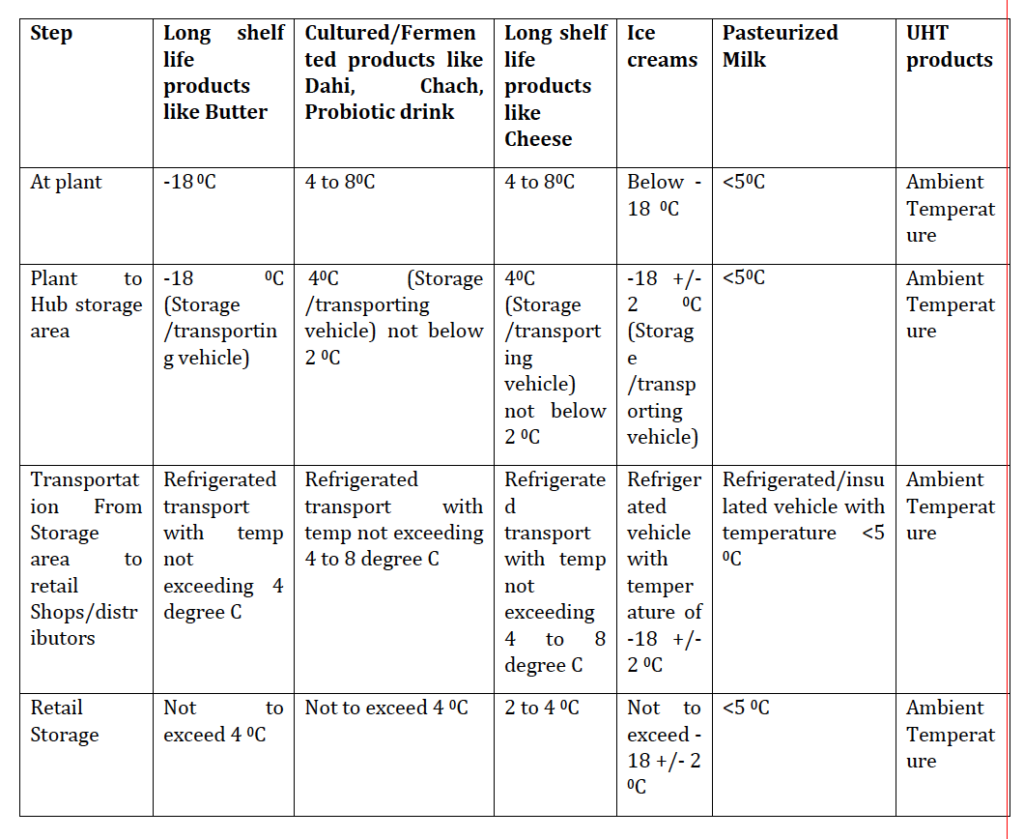
Interestingly, both cases share a common thread. The products in question were manufactured under stringent quality standards in hygienic environments, meeting all regulatory requirements. However, issues arose in the storage, sale, preparation, and consumption environments. India’s hot climate and the absence of a robust cold chain infrastructure create ideal conditions for food deterioration. Milk, being highly perishable, is particularly susceptible to rapid microbial growth under ambient conditions.

Recently, the Food Safety and Standards Authority of India (FSSAI) has implemented a series of measures, including stringent packaging and labeling regulations, the regulation of restaurants and street food vendors, as well as increased inspections and sampling of food products, all aimed at ensuring food quality and safety in India.

However, there remains a significant gap in enforcing these norms in practice. Milk and milk products are frequently transported and sold without proper temperature control, leading to a substantial number of food poisoning cases across the country. The Guidance document on GMP in milk and milk products by FSSAI clearly defines the temperature requirements during storage and distribution. Has there been any check on refrigerated facilities while giving licenses to distributors and retailers to sell milk and milk products ?
The Economic Impact of Unsafe Food

According to a 2018 report by the World Bank, unsafe food continues to impose a significant economic burden on India, costing as much as $15 billion annually, though this is a significant improvement from the previous estimate of $28 billion. This economic burden is considered “unnecessarily high” and is attributed to foodborne diseases. Animal-source foods are responsible for 21% of India’s foodborne disease burden, compared to 59% in China.

Recognizing India’s efforts in streamlining food safety regulations in recent years, the report acknowledges that better health outcomes and commercial success are attainable when public agencies, businesses, and consumers collaborate in ensuring food safety.

The Harsh Reality

Data from the Integrated Disease Surveillance Programme (IDSP) between 2009 and 2022 reveals 9,646 reported cases of food poisoning in India. Shockingly, a 2021 Indiastat report recorded 714 fatalities due to food poisoning. Furthermore, government data reported nearly 979 instances of food poisoning among school students in the first nine months of 2022, primarily linked to mid-day meals.

In 2019, the Comptroller and Auditor General (CAG) discovered that the Food Safety and Standards Authority of India failed to communicate cases of food poisoning to healthcare professionals in Madhya Pradesh. The CAG also noted that the state’s commissioner of food safety lacked information about food poisoning cases from 2014 to 2019. For instance, the CAG highlighted a significant food poisoning incident in August 2014, involving 110 cases at a school in Hoshangabad district.

In the state of Gujarat alone, there have been over 3,000 reported cases of food poisoning since March 2022. These incidents collectively underscore the urgent need for improved food safety measures and enforcement in India to protect the health and well-being of its citizens.

Have we become insensitive ?

I feel that we have become insensitive to news related to Food poisoning or deaths occurring due to Food borne diseases. Kristkova, Grace, and Kuiper (2017), in an analysis of Food Borne Disease in India, estimate these costs at about US$20 per case, implying a total cost of US$2 billion.

One of the major challenge in maintaining food safety in India context could be summarised as follows :

A focus on hazard rather than risk, often leading to the misallocation of resources;

Diwali is coming soon. Every year FSSAI begins its enforcement drive to nab manufacturers of adulterated Khoa and other dairy products. Let’s look at the findings of FSSAI milk product survey 2020 for Khoa.
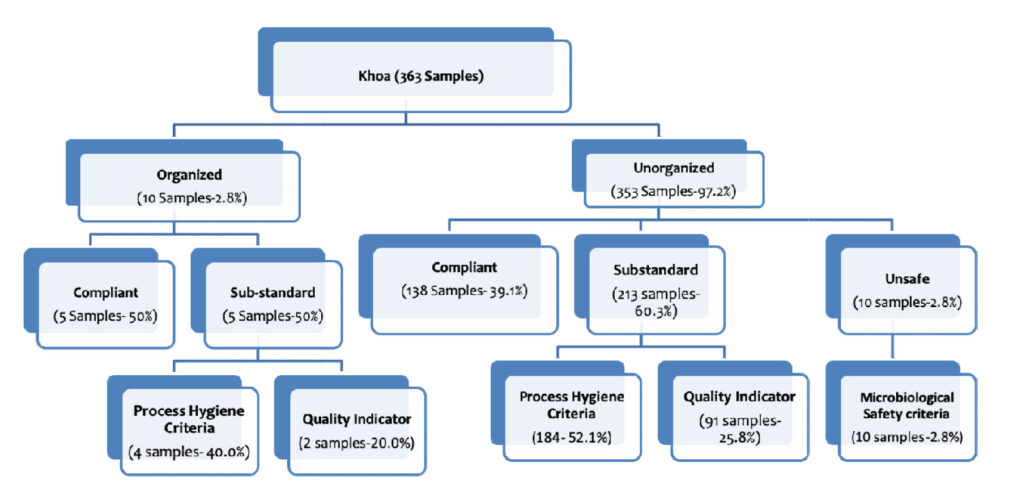
This clearly illustrates a concerning trend, with approximately 55% of Khoa samples displaying microbiological problems, including 3% of samples testing positive for Listeria. Notably, Listeria was also detected in various other dairy products. As previously mentioned, our regulatory approach has not prioritized risk management.

The regulator’s response to this issue involves requiring every Food Business Operator (FBO) to conduct biannual testing of their products across all parameters and submit reports. However, it’s important to note that the Food Safety and Standards Authority of India (FSSAI) has not yet imposed restrictions on the transportation and sale of milk and milk products under non-refrigerated conditions.

It is apparent that loose milk and dairy products are highly vulnerable to microbial contamination and hygiene issues. Nevertheless, the government continues to support the unorganized dairy manufacturing sector by exempting it from the Goods and Services Tax (GST). This policy choice seems to incentivize businesses to operate within the unorganized sector, where maintaining proper hygiene standards may be neglected.

The tipping point

The landscape of food sales and distribution in India is teetering on the edge of transformation. I strongly encourage everyone to watch documentaries like “Poisoned” on Netflix, as they vividly portray the swift and coordinated efforts of all stakeholders in tackling this issue. However, I continue to observe several gaps in our food ecosystem that must be addressed to guarantee the utmost level of food safety.

Safe food is not solely a responsibility of food processors; it is a fundamental right of consumers. Therefore, it is imperative that the regulator extends its oversight beyond the confines of processing plants to encompass the entirety of the food supply chain. True food safety in the country necessitates a holistic approach that leaves no room for compromise.

Source : Dairy Blog by Kuldeep Sharma Sep 1st 2023

Swipe to continue reading

Previous Article

Next Article