Logo
IndianGlobalBlogsPublicationsPodcastsMarketAboutContact
Logo
IndianGlobalBlogsPublicationsPodcasts
7News
Farm Economy Seen Stabilizing in 2026; Costs & Policy Still Key ConstraintsThe FAO Dairy Price Index declined by 4.4% in Dec 2025Heritage Foods MD Wins Outstanding Dairy Professional Award 2025Parag Milk Sharpens Focus on Health & Nutrition with Protein-Led PushMidan’s Top 10 Meat & Dairy Trends to Watch in 2026

Indian Dairy News

Farm Economy Seen Stabilizing in 2026; Costs & Policy Still Key Constraints
Jan 11, 2026

Farm Economy Seen Stabilizing in 2026; Costs & Policy Still Key Constraints

According to the December Ag Economists’ Monthly Monitor, agricultural economists now expect the farm economy to stabilise in 2026 after years of pressure, but high input costs and policy uncertainty...Read More

The FAO Dairy Price Index declined by 4.4% in Dec 2025
Jan 11, 2026

The FAO Dairy Price Index declined by 4.4% in Dec 2025

The FAO Dairy Price Index declined by 5.9 points (4.4 percent) in December. Butter prices fell sharply, driven by seasonally higher cream availability in Europe and stock accumulation following strong...Read More

Heritage Foods MD Wins Outstanding Dairy Professional Award 2025
Jan 11, 2026

Heritage Foods MD Wins Outstanding Dairy Professional Award 2025

Heritage Foods Limited announced that Mrs. N. Bhuvaneswari, Vice Chairperson & Managing Director, received the Outstanding Dairy Professional Award 2025 (Andhra Pradesh) at the Indian Dairy Associatio...Read More

DairyNews7x7
Advertisement

Latest Blogs

See More
From Forecast to Fact: 2025 Lessons, 2026 Dairy Outlook
Jan 01, 2026

From Forecast to Fact: 2025 Lessons, 2026 Dairy Outlook

As we step into 2026, it is worth pausing to reflect on how the Indian dairy sector navigated the challenges of 2025 and how closely reality tracked the forecasts I outlined in the first blog of last...Read More

India–NZ Dairy FTA: Safeguards or Silent Slippages?
Dec 26, 2025

India–NZ Dairy FTA: Safeguards or Silent Slippages?

The recently concluded India–New Zealand Free Trade Agreement (FTA) marks an important milestone in bilateral trade, while carefully ring-fencing India’s sensitive dairy sector. Under the agreement, c...Read More

Vision 2047: India’s Dairy Development Roadmap
Dec 21, 2025

Vision 2047: India’s Dairy Development Roadmap

As India moves steadily toward Vision 2047, the dairy sector stands at a strategic inflection point. From being a food security instrument in the decades following Independence, dairy has evolved into...Read More

Global Dairy Dynamics: Innovation, Sustainability & Inclusion
Dec 18, 2025

Global Dairy Dynamics: Innovation, Sustainability & Inclusion

The International Dairy Processing Conference (IDPC) 2026, organised by the Trade Promotion Council of India (TPCI) at Yashobhoomi Convention Centre, Dwarka, New Delhi on 7 January 2026, will serve as...Read More

Global Dairy News

Midan’s Top 10 Meat & Dairy Trends to Watch in 2026
Jan 10, 2026

Midan’s Top 10 Meat & Dairy Trends to Watch in 2026

Midan Marketing has published its annual Top 10 meat and dairy industry trends for 2026, highlighting the forces likely to shape consumer behaviour, product development and value-chain strategies in t...Read More

U.S. Dietary Guidelines Overhaul Raises Dairy, Meat
Jan 09, 2026

U.S. Dietary Guidelines Overhaul Raises Dairy, Meat

The newly released 2025–2030 U.S. Dietary Guidelines, unveiled by Health Secretary Robert F. Kennedy Jr. and the Department of Agriculture, represent a major shift in federal nutrition policy, placing...Read More

Spoiled Dairy Becomes 3D Printing Plastic
Jan 07, 2026

Spoiled Dairy Becomes 3D Printing Plastic

Researchers patent a biomaterial from wasted milk proteins, creating biodegradable 3D printing filament and a potential new revenue stream for dairy. Excess milk that once flowed down farm drains duri...Read More

DairyNews7x7
Advertisement
Dairy News 7x7

Your trusted source for all the latest dairy industry news, market insights, and trending topics.

FOLLOW US
CATEGORIES
  • Global News
  • Indian News
  • Blogs
  • Publications
  • Podcasts
SUBSCRIBE TO OUR NEWSLETTER

Stay informed with the latest updates and trending news in the dairy industry.

No spam, unsubscribe at any time

GET IN TOUCH
C-49, C Block, Sector 65,
Noida, UP 201307
+91 7827405029dairynews7x7@gmail.com

© 2026 Dairy News 7x7. All Rights Reserved.

Terms of ServicePrivacy Policy

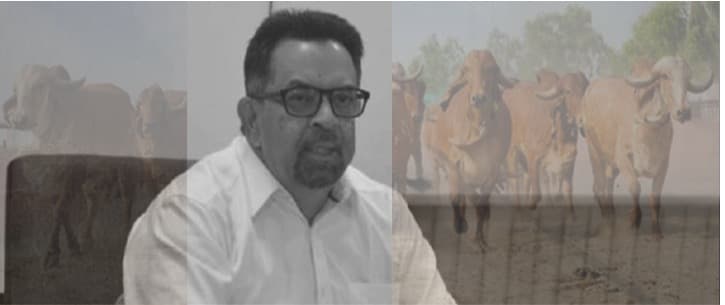
Self reliance is already a part of our national ethos : Dilip Rath , NDDB

By DairyNews7x7•Published on September 12, 2020

The coronavirus pandemic has heavily disrupted global supply chains largely dependent on the Dragon Kingdom. Be it telecom supplies, Rare Earth minerals, Active Pharmaceutical Ingredients (APIs) and other key elements, disruptions in supplies have led to shortages of key items. In turn, varied sectors have had to suspend operations while prices soared due to these disruptions.

It is against this backdrop that Honourable Prime Minister Shri Narendra Modi’s recent announcement about being “vocal for local” needs to be viewed. The PM’s emphasis on self-reliance is already a part of our national ethos. Let’s not forget, it was the Swadeshi Movement that rocked the British in the early 20th Century. Similarly, as the world reels from the devastating repercussions of the coronavirus outbreak, this is the right moment when India can promote its ‘Atmanirbhar Bharat’ and ‘Make in India’ mission by incentivising Indian companies as well as foreign companies seeking to relocate their operations from other countries. Also read Mission Milk has helped India make giant strides in dairying

Moreover, there cannot be a better moment than the present when the country has unveiled a slew of economic and policy reforms. The Centre has opened up all public sector companies in non-strategic domains, permitting private companies to invest in these industries. As per the Central Government’s vision, a self-reliant India or new Atmanirbhar Bharat will be created through the new Public Sector Enterprise Policy. In strategic sectors, however, while private investments will be permitted, at least one public sector enterprise will continue to operate to ensure competition and avoid private monopolies. As the focus shifts to self-reliance as well as domestic production and manufacturing, the Centre is cognizant of the fact that Micro, Small and Medium Enterprises (MSMEs) are India’s largest job creators.

Employment generation

A survey by Confederation of Indian Industry (CII) reveals that in the last four years, MSMEs were the nation’s largest job creators. Backed by 13.9% growth during this period, MSMEs will continue being the top job creators for the next three years too. Titled ‘Survey on Jobs Creation and Outlook in MSME Sector’, it noted that MSMEs needed more handholding since they were yet to fully capitalise on certain beneficial government initiatives. Going by official statistics, MSMEs contributed about 36 million jobs in 2017-18, 4 out of which about 70% where in manufacturing. If one focusses on manufacturing entities, as per another research study, within five years MSMEs can create an additional 7.5 to 10 million employment opportunities through partial import substitution.

Against this backdrop, the Centre has announced a series of steps to help MSMEs withstand the impact of COVID-19 on the Indian economy. Accordingly, MSMEs are eligible for collateral-free automatic loans with a four-year loan tenure. 6 A variety of subordinate debt-based schemes offering liquidity of Rs20,000 crore will benefit stressed MSMEs. Also, MSMEs that are viable and eligible will qualify for a Rs 50,000 crore equity infusion. Besides eventual listing, the measures will assist in capacity expansion. Significantly, the same benefits will be permitted for manufacturing as well as service-based MSMEs for economies of scale. This policy will help in creating a level- playing field for the two segments. Also read Fund for private sector to set up dairy processing plants launched : Giriraj Singh

Furthering the sharpening of its focus on domestic production, the Centre has paid heed to the MSMEs citing unfair competition from foreign entities in government procurement tenders based on the size and strength advantage of these companies. Therefore, global tenders in such schemes up to Rs 200 crore will no longer be allowed. This apart, other incentives to MSMEs – such as doing away with audits for small entities with an annual turnover of Rs 5 crore – should also be helpful.

Promoting Cooperation

Yet, more often in the past, the discourse in the public domain focussed on supporting big companies or MNCs while MSMEs remained largely forgotten or were mentioned in passing. This needs to change if the country seeks to promote greater jobs creation and follow the PM’s “vocal for local” call. Which brings one back to the Swadeshi rationale.

Off and on, there is talk about regional asmita (pride, self-respect) in certain circumstances. Apart from than regional, we should also focus on Bhartiya asmita. It is through the spirit of cooperative federalism that the nation can take faster strides and reach greater heights of prosperity, benefitting all states and Union Territories, big or small.

Remember, it was the concept of dairy cooperatives that made India self-sufficient in milk. Later, this cooperative success led to growth of private sector in the dairy industry, which are doing equally well as they continue adhering to the Indian ethos of cooperation while keeping the societal good in mind.

Finally, it is important to note that, after agriculture, MSMEs are the top job creators, employing 120 million people in various verticals. 7 Fortunately, the top leadership is well aware of the role of MSMEs in employment and economic spheres, and the Finance Minister has already announced a series of measures highlighted earlier.

India needs to follow its own and unique model of development, which can be tweaked across states to reflect local aspirations and ground realities. As the world has been witnessing over the past decade or so, the Western economic model based on unbridled spending and over exploitation of natural resources with disastrous environmental impact can create social, economic and financial fault lines and volatility that could trigger economic disruptions.

When an unexpected pandemic strikes, it only exacerbates any ongoing crises. Therefore, the PM’s call of self-reliance is just what is needed in creating a spirit of cooperation for boosting domestic production and ensuring economic stability and sustainability in the long term.

Dilip Rath is Chairman, National Dairy Development Board. Views expressed are personal . Source The financial express


Swipe to continue reading

Previous Article

Next Article