Logo
IndianGlobalBlogsPublicationsPodcastsMarketAboutContact
Logo
IndianGlobalBlogsPublicationsPodcasts
7News
World Pays More, Demands More: New Frontier of Dairy TradeIndia-EU Carbon Trade Talks: Why Dairy Is Watching CloselyDairy Demand to Spike for Makar Sankranti FestivalSouthern Dairy & Food Conclave Ends, Blending Technology with TraditionFarm Economy Seen Stabilizing in 2026; Costs & Policy Still Key Constraints

Indian Dairy News

India-EU Carbon Trade Talks: Why Dairy Is Watching Closely
Jan 11, 2026

India-EU Carbon Trade Talks: Why Dairy Is Watching Closely

India and the European Union (EU) are intensifying negotiations on a long-pending Free Trade Agreement (FTA), with the EU’s Carbon Border Adjustment Mechanism (CBAM) at the centre of climate and trade...Read More

Dairy Demand to Spike for Makar Sankranti Festival
Jan 11, 2026

Dairy Demand to Spike for Makar Sankranti Festival

As Makar Sankranti approaches, India’s dairy industry — especially in Bihar and neighbouring regions — is gearing up for a significant seasonal surge in demand for milk, curd and related dairy product...Read More

Southern Dairy & Food Conclave Ends, Blending Technology with Tradition
Jan 11, 2026

Southern Dairy & Food Conclave Ends, Blending Technology with Tradition

The Southern Dairy & Food Conclave 2026 (SDFC-2026) — organised by the Indian Dairy Association’s South Zone under the banner of the Southern Dairy Summit — concluded in Calicut (now Verghese Kurien N...Read More

DairyNews7x7
Advertisement

Latest Blogs

See More
From Forecast to Fact: 2025 Lessons, 2026 Dairy Outlook
Jan 01, 2026

From Forecast to Fact: 2025 Lessons, 2026 Dairy Outlook

As we step into 2026, it is worth pausing to reflect on how the Indian dairy sector navigated the challenges of 2025 and how closely reality tracked the forecasts I outlined in the first blog of last...Read More

India–NZ Dairy FTA: Safeguards or Silent Slippages?
Dec 26, 2025

India–NZ Dairy FTA: Safeguards or Silent Slippages?

The recently concluded India–New Zealand Free Trade Agreement (FTA) marks an important milestone in bilateral trade, while carefully ring-fencing India’s sensitive dairy sector. Under the agreement, c...Read More

Vision 2047: India’s Dairy Development Roadmap
Dec 21, 2025

Vision 2047: India’s Dairy Development Roadmap

As India moves steadily toward Vision 2047, the dairy sector stands at a strategic inflection point. From being a food security instrument in the decades following Independence, dairy has evolved into...Read More

Global Dairy Dynamics: Innovation, Sustainability & Inclusion
Dec 18, 2025

Global Dairy Dynamics: Innovation, Sustainability & Inclusion

The International Dairy Processing Conference (IDPC) 2026, organised by the Trade Promotion Council of India (TPCI) at Yashobhoomi Convention Centre, Dwarka, New Delhi on 7 January 2026, will serve as...Read More

Global Dairy News

Midan’s Top 10 Meat & Dairy Trends to Watch in 2026
Jan 10, 2026

Midan’s Top 10 Meat & Dairy Trends to Watch in 2026

Midan Marketing has published its annual Top 10 meat and dairy industry trends for 2026, highlighting the forces likely to shape consumer behaviour, product development and value-chain strategies in t...Read More

U.S. Dietary Guidelines Overhaul Raises Dairy, Meat
Jan 09, 2026

U.S. Dietary Guidelines Overhaul Raises Dairy, Meat

The newly released 2025–2030 U.S. Dietary Guidelines, unveiled by Health Secretary Robert F. Kennedy Jr. and the Department of Agriculture, represent a major shift in federal nutrition policy, placing...Read More

Spoiled Dairy Becomes 3D Printing Plastic
Jan 07, 2026

Spoiled Dairy Becomes 3D Printing Plastic

Researchers patent a biomaterial from wasted milk proteins, creating biodegradable 3D printing filament and a potential new revenue stream for dairy. Excess milk that once flowed down farm drains duri...Read More

DairyNews7x7
Advertisement
Dairy News 7x7

Your trusted source for all the latest dairy industry news, market insights, and trending topics.

FOLLOW US
CATEGORIES
  • Global News
  • Indian News
  • Blogs
  • Publications
  • Podcasts
SUBSCRIBE TO OUR NEWSLETTER

Stay informed with the latest updates and trending news in the dairy industry.

No spam, unsubscribe at any time

GET IN TOUCH
C-49, C Block, Sector 65,
Noida, UP 201307
+91 7827405029dairynews7x7@gmail.com

© 2026 Dairy News 7x7. All Rights Reserved.

Terms of ServicePrivacy Policy

Is dairy farming cruel to the cows ? Story from US dairy Farms

By DairyNews7x7•Published on January 04, 2021

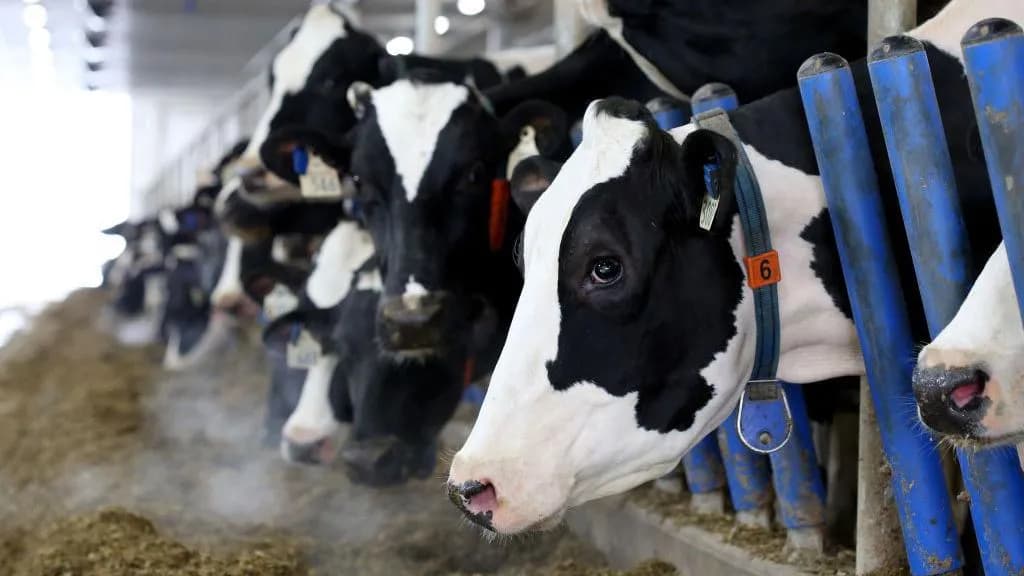
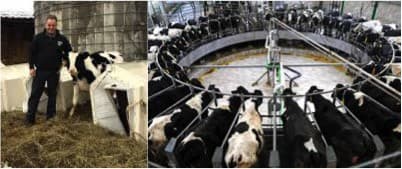
The 1,500 Jersey cows that Nathan Chittenden and his family raise in upstate New York seem to lead carefree lives. They spend their days lolling around inside well-ventilated barns and eating their fill from troughs. Three times a day, they file into the milking parlor, where computer-calibrated vacuums drain several gallons of warm milk from their udders, a process that lasts about as long as a recitation of “The Farmer in the Dell.”

Mr. Chittenden, 42, a third-generation dairy farmer whose family bottle-feeds each newborn calf, expresses affection for his animals. It’s a sentiment they appeared to return one recent afternoon as pregnant cows poked their heads through the enclosure to lick his hand.

“I’m in charge of this entire life from cradle to grave, and it’s important for me to know this animal went through its life without suffering,” he said, stroking the head of one especially insistent cow. “I’m a bad person if I let it suffer.”

Animal right activism

Animal rights activists have a markedly different take on farms like Mr. Chittenden’s that satiate the nation’s appetite for milk, cheese and yogurt. To them, dairy farmers are cogs in an inhumane industrial food production system that consigns these docile ruminants to a lifetime of misery. After years of successful campaigns that marshaled public opinion against other long-accepted farming practices, they have been taking sharp aim at the nation’s $620 billion dairy industry.

Some of their claims are beyond dispute: Dairy cows are repeatedly impregnated by artificial insemination and have their newborns taken away at birth. Female calves are confined to individual pens and have their horn buds destroyed when they are about eight weeks old. The males are not so lucky. Soon after birth, they are trucked off to veal farms or cattle ranches where they end up as hamburger meat.

The typical dairy cow in the United States will spend its entire life inside a concrete-floored enclosure, and although they can live 20 years, most are sent to slaughter after four or five years when their milk production wanes.

Happy Cows

“People have this image of Old MacDonald’s farm, with happy cows living on green pastures, but that’s just so far from reality,” said Erica Meier, the president of the activist organization Animal Outlook. “Some farms might be less cruel than others, but there is no such thing as cruelty-free milk.”

The effort to demonize dairy as fundamentally cruel has been fanned by undercover farm footage taken by groups like Animal Outlook that often are widely viewed on social media. In October, the organization released a short video filmed undercover on a small, family-owned farm in Southern California that revealed workers casually kicking and beating cows with metal rods, and a newborn male calf, its face covered with flies, left to die in the mud. One segment showed an earth-moving bucket hoisting an injured Holstein into the air by its hindquarters.

Stephen Larson, a lawyer for the Dick Van Dam Dairy, described the images as staged or are taken out of context. Earlier this month, a judge dismissed a law suit against the farm filed by another animal rights organization, saying it lacked standing. “The accusation that they mistreated their cows is something that cuts the Van Dam family very deeply, because the truth is that they have always, for generations, cared about and cared for all of their cows,” Mr. Larson said.

Abuses are not the norms

Dairy industry experts and farmers who have viewed the footage expressed revulsion and said the abuses depicted were not the norm. “These videos make every dairy farmer and veterinarian sick to their stomach because we know the vast majority of farmers would never do such things to their cows,” said Dr. Carie Telgen, president of the American Association of Bovine Practitioners.

The effort to turn Americans against dairy is gaining traction at a time when many of the nation’s farms are struggling to turn a profit. Milk consumption has dropped by 40 percent since 1975, a trend that is accelerating as more people embrace oat and almond milk. Over the past decade, 20,000 dairy farms have gone out of business, representing a 30 percent decline, according to the Department of Agriculture. And the coronavirus pandemic has forced some producers to dump unsold milk down the drain as demand from school lunch programs and restaurants dried up.

During his Academy award speeches last February for best actor, Joaquin Phoenix drew rousing applause when he urged viewers to reject dairy products.

“We feel entitled to artificially inseminate a cow and when she gives birth we steal her baby, even though her cries of anguish are unmistakable,” he said, his voice cracking with emotion. “And then we take her milk that’s intended for the calf and we put it in our coffee and cereal.

Animal welfare is the reality

The National Milk Producers Federation, which represents most of the country’s dairy 35,000 dairy farmers, has been trying to head off the souring public sentiment by promoting better animal welfare among its members. That means encouraging more frequent veterinarian farm visits, requiring low-wage workers to undergo regular training on humane cow handling, and the phasing out of tail docking — the once-ubiquitous practice of removing a cow’s tail.

“I don’t think you’ll find farmers out there who are not trying their best to enhance the care and welfare of their animals,” said Emily Yeiser Stepp, who runs the federation’s 12-year-old animal care initiative. “That said, we can’t be tone-deaf to consumers’ values. We have to do better, and give them a reason to stay in the dairy aisle.”

Swipe to continue reading

Previous Article

Next Article