Logo
IndianGlobalBlogsPublicationsPodcastsMarketAboutContact
Logo
IndianGlobalBlogsPublicationsPodcasts
7News
Australian Dairy Robots Meet Cows’ First Day ResistanceMilk Producers in Coimbatore dissatisfied Over Rs1/L IncentiveStrengthening Agriculture and Allied Sector and Market AccessIndia’s Dairy Climate Paradox: Production Triumph Meets Methane Time-BombDairy sector contributes 85% of methane emission in HP

Indian Dairy News

Milk Producers in Coimbatore dissatisfied Over Rs1/L Incentive
Mar 02, 2026

Milk Producers in Coimbatore dissatisfied Over Rs1/L Incentive

Milk producers supplying to cooperative networks in and around Coimbatore have expressed dissatisfaction with the government’s recent decision to provide only an additional ₹1 per litre incentive for...Read More

Strengthening Agriculture and Allied Sector and Market Access
Mar 02, 2026

Strengthening Agriculture and Allied Sector and Market Access

Transforming India’s Livestock and Fisheries Sector Introduction India’s agricultural progress is increasingly supported by the expansion of allied sectors such as livestock, dairy, poultry,...Read More

Dairy sector contributes 85% of methane emission in HP
Mar 01, 2026

Dairy sector contributes 85% of methane emission in HP

The livestock and dairy production sector in Himachal Pradesh accounts for more than 85 per cent of the state’s annual methane emissions, a new scientific assessment has warned, cautioning that the si...Read More

DairyNews7x7
Advertisement

Latest Blogs

See More
India’s Dairy Climate Paradox: Production Triumph Meets Methane Time-Bomb
Mar 02, 2026

India’s Dairy Climate Paradox: Production Triumph Meets Methane Time-Bomb

India’s rise to the top of the global dairy league board has been one of the most remarkable agricultural success stories of the 21st century. With milk production surpassing 247 million tonnes per ye...Read More

India’s First Cow Culture Museum in Mathura
Feb 16, 2026

India’s First Cow Culture Museum in Mathura

India’s first national “Cow Culture Museum” is set to be established in Mathura, Uttar Pradesh, on the campus of Pandit Deendayal Upadhyaya Veterinary Science University, announced the Uttar Pradesh B...Read More

Why India’s Dairy Needs a National Fodder Grid ?
Feb 15, 2026

Why India’s Dairy Needs a National Fodder Grid ?

Recently, I moderated the Farmer's session at 52nd DIC. While deliberating on pathways for Kerala to move towards milk self-reliance, K S Mani, Chairman of Milma, articulated a compelling thought: jus...Read More

Coliform in Milk -Look Beyond Brands to Cold Chain Gaps
Feb 12, 2026

Coliform in Milk -Look Beyond Brands to Cold Chain Gaps

Recent independent lab tests have triggered alarm over coliform bacteria and high total plate counts (TPC) in popular pouch milk brands — Amul Taaza, Amul Gold, Mother Dairy and Country Delight...Read More

Global Dairy News

Australian Dairy Robots Meet Cows’ First Day Resistance
Mar 02, 2026

Australian Dairy Robots Meet Cows’ First Day Resistance

On a southwest Victorian dairy farm transitioning to fully automated systems, farmers discovered a rudimentary truth of automation in agriculture: cows don’t immediately take to technology. As one far...Read More

US Dietary Guidelines Put Full-Fat Dairy in Spotlight
Mar 01, 2026

US Dietary Guidelines Put Full-Fat Dairy in Spotlight

The 2025–2030 Dietary Guidelines for Americans — jointly issued by the **US Departments of Health and Human Services and Agriculture — have elevated full-fat dairy products (like whole milk, fu...Read More

Ukraine Dairy in Deepest Crisis, Producers Urge Rescue Plan
Mar 01, 2026

Ukraine Dairy in Deepest Crisis, Producers Urge Rescue Plan

Ukraine’s dairy industry is currently experiencing the deepest crisis in recent years, with industry representatives warning that without swift government action up to 20 % of industrial milk producti...Read More

DairyNews7x7
Advertisement
Dairy News 7x7

Your trusted source for all the latest dairy industry news, market insights, and trending topics.

FOLLOW US
CATEGORIES
  • Global News
  • Indian News
  • Blogs
  • Publications
  • Podcasts
SUBSCRIBE TO OUR NEWSLETTER

Stay informed with the latest updates and trending news in the dairy industry.

No spam, unsubscribe at any time

GET IN TOUCH
C-49, C Block, Sector 65,
Noida, UP 201307
+91 7827405029dairynews7x7@gmail.com

© 2026 Dairy News 7x7. All Rights Reserved.

Terms of ServicePrivacy Policy
Prefer Us
Prefer Us

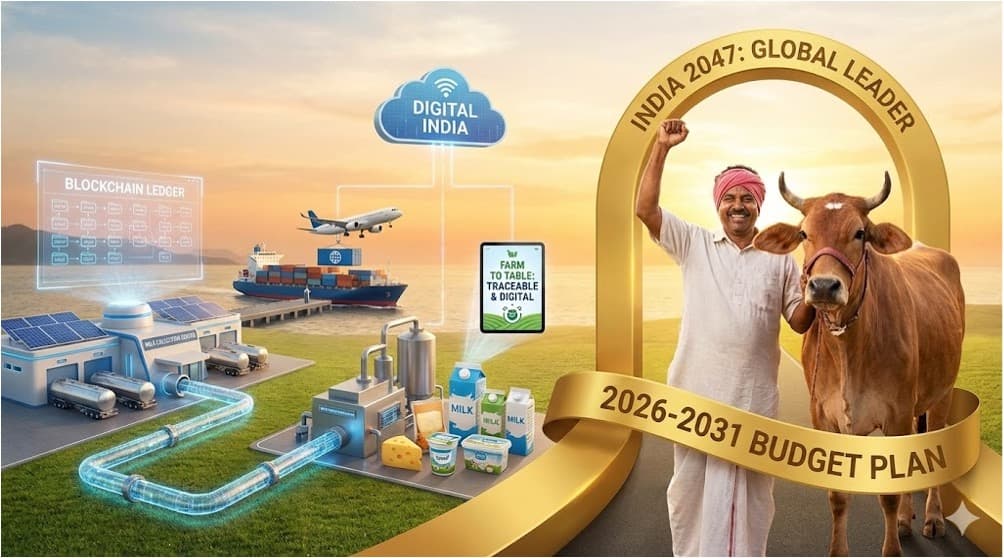
5 Year Budget Plan to Make Indian Dairy Global Leader in 2047

By Kuldeep Sharma•Published on January 15, 2026

5 Year Budget Plan to Make Indian Dairy Global Leader in 2047
Prefer on

I recently moderated a key session on India Dairy Vision 2047 at the TPCI's International Dairy Processing Conference 2026, gaining valuable insights from panellists. This led to me developing policy recommendations for the upcoming Budget 2026-2027. 

Hard Realities faced by dairy even after 78 years of independence

India’s dairy journey in the 20th century, under the visionary leadership of Dr Verghese Kurien, was anchored in two transformative pillars: inclusion of millions of smallholder farmers and large-scale institution-building through cooperatives and infrastructure. This model converted milk into a national food-security movement. However, as India approaches Vision 2047, three hard realities confront the sector. Despite becoming the world’s largest milk producer, India’s per-animal productivity remains among the lowest globally. Even as the dairy economy has expanded to nearly USD 225 billion, inflation-adjusted farm-gate milk prices have seen limited real growth. Most strikingly, while India produces nearly 25% of the world’s milk, its share in global dairy trade remains below 0.5%, exposing a deep disconnect between production scale and global value capture.

Apart from these three, challenges like lack of cold chain, adulteration and contaminants in milk, dairy being not given Agriculture status, Primary production of dairy and agriculture not covered under FSSAI and weak enforcement by the regulator, etc. So I have tried to cover these major points with certain policy recommendations and possible budget allocation for at least 5 years to sustain the interventions.

Introduction to Indian Dairy Sector

India’s dairy sector is a cornerstone of rural livelihoods, supporting over 8 crore farmers and contributing significantly to nutritional security and the rural economy. Despite being the world’s largest milk producer, the sector faces deep structural challenges that limit farmer incomes, compromise quality assurance, and constrain India’s participation in global dairy trade. The Union Budget FY 2027 presents a crucial opportunity to address these issues through a sustained five-year reform and investment framework.

The foremost challenge is India’s low dairy productivity. While aggregate milk production is high, per-animal productivity remains among the lowest globally due to gaps in genetics, breeding services, fodder availability, and veterinary care. A National Dairy Productivity Mission with multi-year budgetary commitment is essential to address these gaps through breed improvement, genomic selection, balanced feeding programs, fodder banks, and performance-linked incentives. Improving productivity is the most sustainable way to enhance milk output while conserving land and water resources. The productivity mission must also prioritise climate-resilient and environment-friendly breeds, along with promotion of methane-reducing fodder and balanced feeding practices, to sustain milk yields while reducing the environmental footprint of dairying under increasing climate stress.

Farmer remuneration is another critical concern. Inflation-adjusted farm-gate milk prices have remained stagnant for nearly a decade, eroding farm viability and discouraging investment. Unlike crops, milk lacks a transparent price discovery and protection mechanism. Introduction of a structured Cost plus  Support Price framework for milk, backed by a Price Stabilisation Fund, will ensure income security for farmers. Annual inflation-linked price revisions and quality-based differential pricing should be institutionalised to reward better production practices.

Traceability and cold chain infrastructure continue to be weak links in the dairy value chain. Inadequate chilling capacity, fragmented logistics, and limited digital integration result in quality deterioration, wastage, and safety risks. The Budget should support a National digital dairy traceability platform integrated with investments in bulk milk coolers, refrigerated transport, renewable energy-powered chilling units, and block-level quality testing facilities. This will significantly reduce losses and improve supply chain transparency.

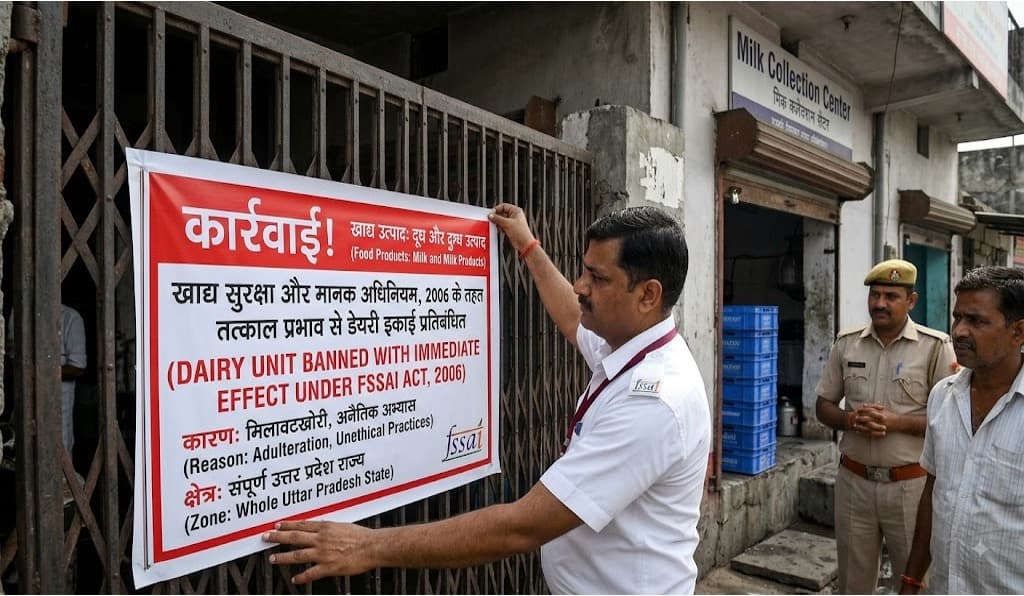
Adulteration and contamination of milk and milk products remain serious threats to public health and consumer confidence. Weak enforcement, limited testing infrastructure, and the absence of regulatory oversight at the primary production level allow malpractices to persist. A National Milk Quality Assurance and Enforcement Programme is required, supported by expanded testing capacity, mobile laboratories, training and development, strict penalties, and mandatory registration of primary milk producers. Bringing primary production under a formal regulatory framework, while incentivising compliance, will strengthen quality governance across the sector.

India’s dairy exports currently account for less than 0.5 percent of global dairy trade, reflecting inadequate policy support, limited market development, and challenges in meeting international standards. A dedicated Dairy Export Promotion and Competitiveness Scheme is required to support value-added dairy products, improve logistics, facilitate global market access, and align domestic quality systems with international benchmarks. Establishment of dairy export parks and enhanced export credit support will help Indian dairy products gain global acceptance.

A fundamental policy gap that needs urgent correction is the exclusion of dairy from the formal definition of agriculture. As a result, dairy farmers are denied access to priority agri-credit, comprehensive risk mitigation instruments, income tax exemptions, and social security benefits available to crop farmers. Recognising dairy as an agricultural activity and extending parity in benefits is essential for long-term sustainability. A comprehensive dairy risk management framework covering price volatility, animal health, and feed cost inflation should be introduced.

 Consolidated Financial Outlay (FY 2027–31)

Component Five-Year Outlay (₹ crore)
 

National Dairy Productivity Mission


15,000

Price Stabilisation Fund 6,000
National digital dairy traceability platform and Cold Chain 7,000
A National Milk Quality Assurance and Enforcement Programme 4,000
Dairy Export Promotion and Competitiveness Scheme 8,000
Risk Mitigation & Agriculture Status Policy-based
Total ₹40,000+ crore
With a coordinated five-year budgetary push encompassing productivity enhancement, price stability, quality assurance, infrastructure development, export promotion, and policy parity, Indian dairying can be transformed into a globally competitive, farmer-centric, and quality-driven sector. The Union Budget FY 2027 can lay the foundation for this transformation and enable Indian dairy to lead global dairy markets with pride.

Co-investment Model

In conclusion, it is neither necessary nor desirable that the entire financial outlay be borne by the Government alone. A structured co-investment model, wherein the private sector and cooperative institutions contribute equity alongside public funding, will accelerate outcomes and ensure accountability. Such blended financing will leverage industry expertise, strengthen governance, and multiply the impact of public resources. This partnership-led approach can deliver a globally competitive, farmer-centric dairy ecosystem without imposing undue fiscal strain on the exchequer.

Source : Dairynews7x7 Jan 15th blog by Kuldeep Sharma Chief Editor Dairynews7x7

Stay Updated

Get the latest dairy industry news directly in your feed.

Prefer Us on Google Search

Swipe to continue reading

Previous Article

Next Article