Latest Blogs
See More
Indian Dairy News

DairyNews7x7
Global Dairy News


DairyNews7x7
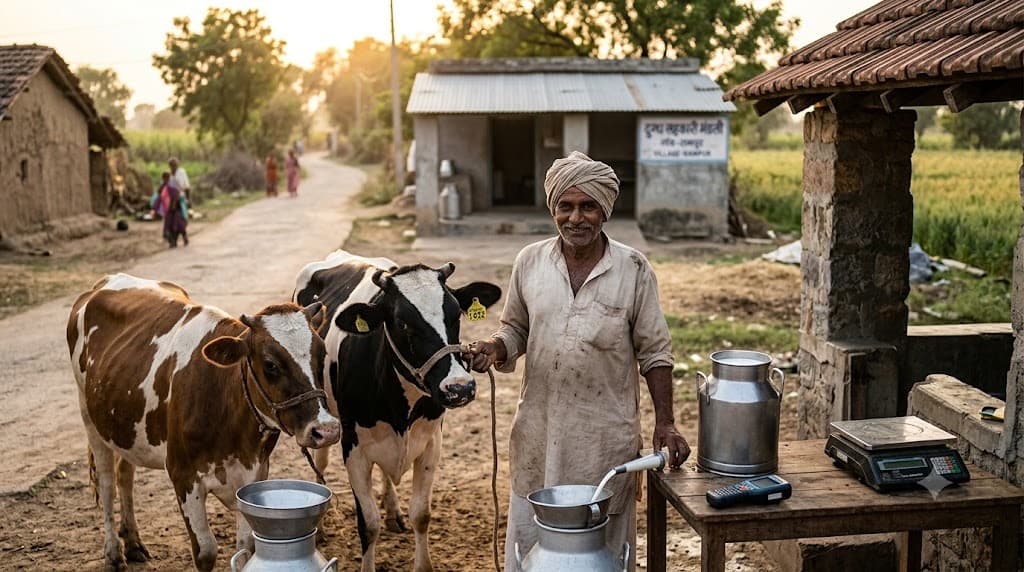
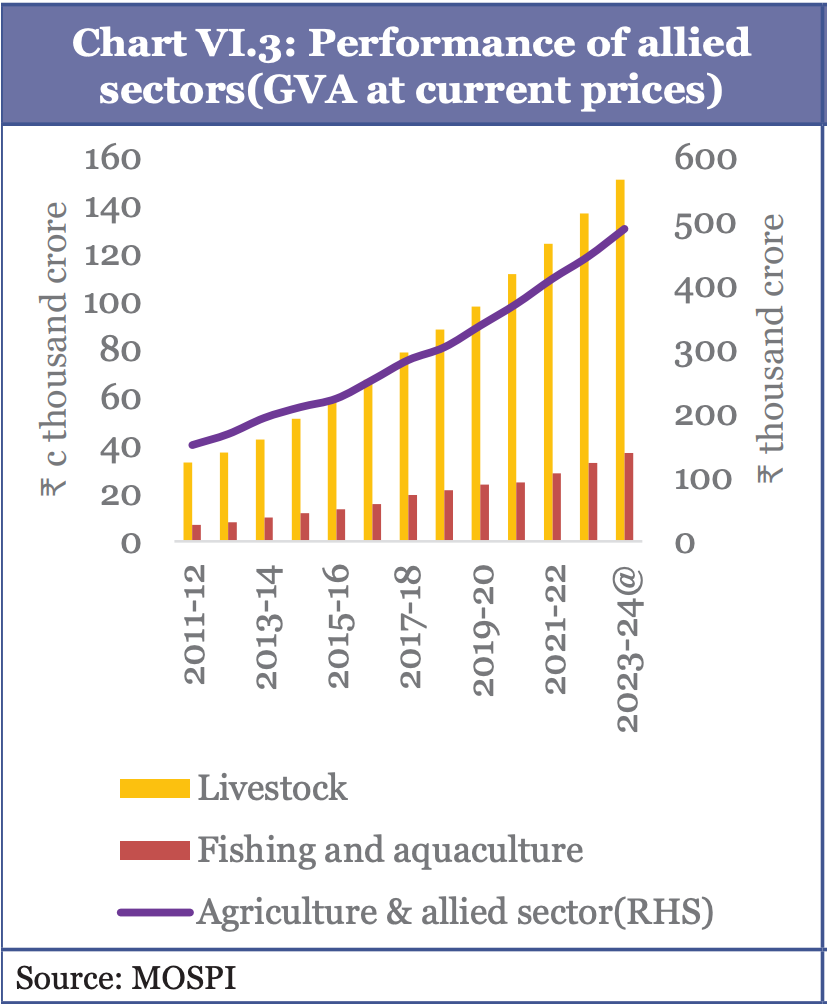
The Economic Survey 2025–26 quietly but clearly reinforces a reality that those working closely with rural India already know: dairy is no longer just a subsidiary activity to agriculture, it is the backbone of income security for millions of small and marginal farmers. As crop agriculture becomes increasingly vulnerable to climate variability, market volatility and rising input costs, dairying has emerged as the most resilient source of regular cash flow, particularly for landless households and women-led families. The Survey’s treatment of livestock reflects this shift, acknowledging that growth in agricultural GVA is now increasingly driven by livestock rather than crops, with dairy accounting for the largest share of that momentum.
At the same time, the Survey draws attention to an uncomfortable contradiction. While India continues to post impressive growth in total milk production, productivity at the animal level remains stubbornly low when compared to global benchmarks. This growth has largely been volume-led rather than efficiency-led, driven by animal numbers rather than improvements in yield. The Survey implicitly signals that this pathway has reached its limits. Low genetic potential, inadequate access to quality feed and fodder, rising heat stress, and uneven veterinary outreach are now structural constraints that cannot be ignored. The message is subtle but firm: the future of Indian dairying depends not on more animals, but on better animals and better systems.
Also read :5 Year Budget Plan to Make Indian Dairy Global Leader in 2047
For dairy farmers, however, the most immediate concern highlighted by the Survey is not production but profitability. Input costs—particularly feed, fodder, labour and energy—have risen sharply across regions, often outpacing growth in milk procurement prices. This cost-price squeeze has quietly eroded real incomes, even in years when milk output has increased. The Survey’s broader analysis of agricultural credit and subsidy flows also hints at uneven institutional support, with certain regions and farmer groups receiving disproportionate access to formal finance and risk mitigation tools. For dairy farmers operating outside strong cooperative ecosystems, delayed payments and price volatility remain persistent risks.
The role of institutions therefore becomes central to the dairy story. The Survey acknowledges the stabilising influence of cooperatives in ensuring assured procurement and relatively transparent price discovery, while also recognising the expanding footprint of private dairies and organised players. What it stops short of saying explicitly—but strongly implies—is that unbalanced growth in private procurement without adequate safeguards could expose farmers to new vulnerabilities. Strengthening producer institutions, improving quality-linked pricing, and ensuring timely payments emerge as quiet policy priorities embedded within the broader rural economy narrative.
Importantly, the Economic Survey also places dairy firmly within India’s nutrition and public health discourse. At a time when the country is grappling with both undernutrition and lifestyle-related diseases, milk and milk products are positioned as accessible, high-quality protein sources. The Survey’s emphasis on value addition—curd, paneer, fermented products, whey-based nutrition and fortified dairy—signals an opportunity to move farmers up the value chain while simultaneously improving dietary outcomes. This is a critical pivot: value-led dairy growth has the potential to align farmer incomes, consumer health and industry sustainability in a way that liquid milk alone cannot.
For perhaps the first time with this degree of clarity, the Survey also links dairy development with climate responsibility. Heat stress, water scarcity, fodder stress and methane emissions are no longer treated as peripheral concerns. Instead, the Survey nudges policymakers and industry towards climate-smart dairying—better feed practices, improved animal management, efficient water use and integration of manure management with renewable energy solutions like biogas. The underlying signal is clear: future dairy expansion must internalise environmental costs if it is to remain socially and economically viable.
Also Read : Cattle rearers prioritise manure and draught power over milk
Taken together, the Economic Survey 2026 offers a measured but meaningful vote of confidence in India’s dairy farmers, while also issuing a warning. Dairy will continue to be central to rural livelihoods, but only if policy moves decisively from volume to value, from expansion to efficiency, and from short-term procurement to long-term resilience. The challenge now lies not in recognising the importance of dairy—this is already well established—but in designing farmer-first reforms that ensure dairying remains sustainable, remunerative and climate-resilient in the years ahead.
Download The Economic Survey 2026 here
Source : Blog by Kuldeep Sharma Chief Editor Dairynews7x7 Jan 31st 2026