Logo
IndianGlobalBlogsPublicationsPodcastsMarketAboutContact
Logo
IndianGlobalBlogsPublicationsPodcasts
7News
India’s Dairy Sector Rethinks Supply Trust & Nutrition StrategyU.S. Dietary Guidelines Overhaul Raises Dairy, MeatYear end review of Animal Husbandry and Dairy for the year 2025Fog & Frost Pose New Risks to Agriculture & Dairy in PunjabNandini Adopts AI-Based Product Counting to Boost Dairy Operations

Indian Dairy News

India’s Dairy Sector Rethinks Supply Trust & Nutrition Strategy
Jan 09, 2026

India’s Dairy Sector Rethinks Supply Trust & Nutrition Strategy

India’s dairy industry — long anchored in high production volumes but thin value realisation — is undergoing strategic recalibration around supply reliability, consumer trust and long-term nutrition v...Read More

Year end review of Animal Husbandry and Dairy  for the year 2025
Jan 09, 2026

Year end review of Animal Husbandry and Dairy for the year 2025

Hon'ble Prime Minister inaugurates Regional Center of Excellence (CoE) for Indigenous Breeds established at Motihari with an investment of Rs 33.80 crore. Genotyping of 75000 animals from the first...Read More

Fog & Frost Pose New Risks to Agriculture & Dairy in Punjab
Jan 08, 2026

Fog & Frost Pose New Risks to Agriculture & Dairy in Punjab

Persistent dense fog and dropping temperatures across Punjab — especially around Ludhiana and surrounding districts — are raising fresh concerns for both agriculture and dairy sectors, as winter weath...Read More

DairyNews7x7
Advertisement

Latest Blogs

See More
From Forecast to Fact: 2025 Lessons, 2026 Dairy Outlook
Jan 01, 2026

From Forecast to Fact: 2025 Lessons, 2026 Dairy Outlook

As we step into 2026, it is worth pausing to reflect on how the Indian dairy sector navigated the challenges of 2025 and how closely reality tracked the forecasts I outlined in the first blog of last...Read More

India–NZ Dairy FTA: Safeguards or Silent Slippages?
Dec 26, 2025

India–NZ Dairy FTA: Safeguards or Silent Slippages?

The recently concluded India–New Zealand Free Trade Agreement (FTA) marks an important milestone in bilateral trade, while carefully ring-fencing India’s sensitive dairy sector. Under the agreement, c...Read More

Vision 2047: India’s Dairy Development Roadmap
Dec 21, 2025

Vision 2047: India’s Dairy Development Roadmap

As India moves steadily toward Vision 2047, the dairy sector stands at a strategic inflection point. From being a food security instrument in the decades following Independence, dairy has evolved into...Read More

Global Dairy Dynamics: Innovation, Sustainability & Inclusion
Dec 18, 2025

Global Dairy Dynamics: Innovation, Sustainability & Inclusion

The International Dairy Processing Conference (IDPC) 2026, organised by the Trade Promotion Council of India (TPCI) at Yashobhoomi Convention Centre, Dwarka, New Delhi on 7 January 2026, will serve as...Read More

Global Dairy News

U.S. Dietary Guidelines Overhaul Raises Dairy, Meat
Jan 09, 2026

U.S. Dietary Guidelines Overhaul Raises Dairy, Meat

The newly released 2025–2030 U.S. Dietary Guidelines, unveiled by Health Secretary Robert F. Kennedy Jr. and the Department of Agriculture, represent a major shift in federal nutrition policy, placing...Read More

Spoiled Dairy Becomes 3D Printing Plastic
Jan 07, 2026

Spoiled Dairy Becomes 3D Printing Plastic

Researchers patent a biomaterial from wasted milk proteins, creating biodegradable 3D printing filament and a potential new revenue stream for dairy. Excess milk that once flowed down farm drains duri...Read More

Milk production declines amid rising water costs
Jan 07, 2026

Milk production declines amid rising water costs

Dairy producers across Victoria are facing a tightening operating environment, with declining milk flows and escalating water and fodder costs, according to the Dairy Australia Situation and Outlook Y...Read More

DairyNews7x7
Advertisement
Dairy News 7x7

Your trusted source for all the latest dairy industry news, market insights, and trending topics.

FOLLOW US
CATEGORIES
  • Global News
  • Indian News
  • Blogs
  • Publications
  • Podcasts
SUBSCRIBE TO OUR NEWSLETTER

Stay informed with the latest updates and trending news in the dairy industry.

No spam, unsubscribe at any time

GET IN TOUCH
C-49, C Block, Sector 65,
Noida, UP 201307
+91 7827405029dairynews7x7@gmail.com

© 2026 Dairy News 7x7. All Rights Reserved.

Terms of ServicePrivacy Policy

Building a Culture of Consistency in Dairy

By Kuldeep Sharma•Published on February 16, 2025

Consistency in dairy products is not just a technical challenge—it is a strategic necessity. Consumers expect the same taste, texture, and quality every time they buy milk, butter, cheese, or yogurt. However, delivering uniformity in dairy products is far more complex than in many other industries. It requires managing multiple variables, from breed and feeding practices to processing, packaging, and distribution. Despite these challenges, some dairy brands have mastered the art of consistency. The key to their success lies not just in strict quality control measures but in building an overarching culture of excellence.

The Role of Leadership in Setting a Quality-First Vision

Every great transformation begins with leadership. In the dairy industry, where thousands of small farmers, processing plants, and distribution networks work together, the vision set by leadership plays a defining role. Companies that have achieved long-term success in dairy consistency, such as Amul, Mother Dairy,  Hatsun, Nestlé, and many more, have done so by establishing non-negotiable quality benchmarks. Their leadership does not treat consistency as a mere operational goal but as a core value embedded across all levels of the organization.

When dairy executives and plant managers set clear, ambitious targets for quality, it filters down to every level—from farmworkers and plant operators to logistics teams and retailers. A commitment to zero deviation in product standards ensures that every decision, from sourcing raw milk to selecting packaging materials, aligns with the larger vision of consistency. In contrast, companies that lack this clarity often struggle with fluctuating product quality, resulting in consumer distrust and brand erosion.

Aligning the Entire Supply Chain with Quality Goals

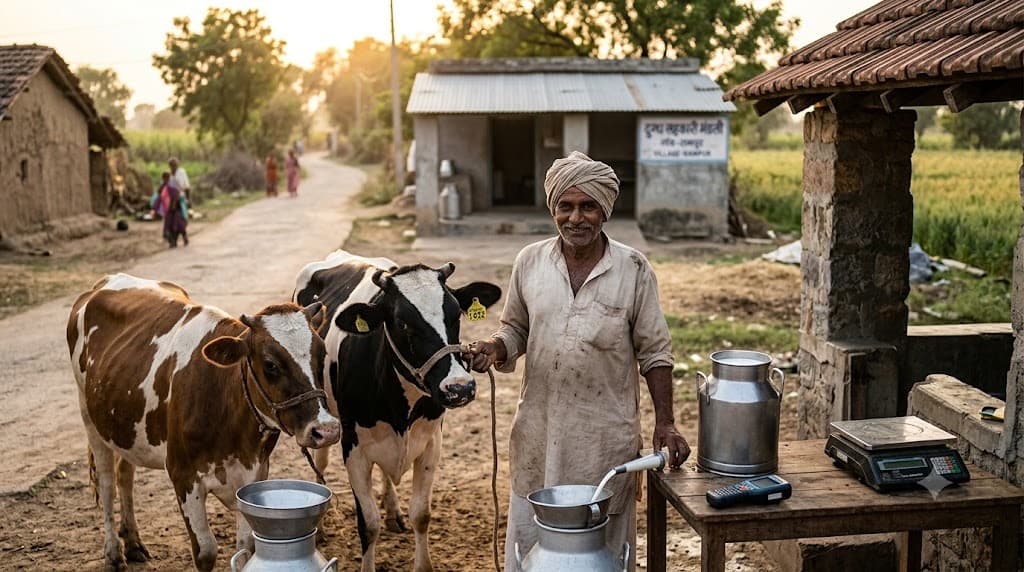
Ensuring consistency in dairy products is not just the responsibility of processing plants—it begins at the very source of milk production. With millions of small and medium-scale dairy farmers contributing to India’s milk supply, achieving standardization at the farm level is challenging. However, companies that prioritize farmer education and engagement have seen remarkable improvements in milk consistency.

When farmers receive training on best milking practices, hygiene standards, and rapid cooling techniques, the variability in raw milk composition reduces significantly. Brands that invest in milk collection infrastructure, such as bulk milk chillers and automated quality testing at procurement centers, create a first line of defense against inconsistencies. By implementing digital tracking of milk parameters, companies can map quality deviations back to specific suppliers, ensuring corrective actions are taken at the root level.

Beyond farming, dairy brands must work closely with fodder suppliers, logistics partners, and equipment manufacturers to maintain uniformity. The quality of dairy products is influenced by factors as small as variations in cattle feed to larger logistical challenges such as fluctuating cold chain efficiency. Brands that cultivate long-term supplier relationships, rather than just transactional partnerships, are better positioned to achieve consistency.

Quality is Free

This reminds me of a seminal book on TQM, Quality Is Free, by Philip Crosby, published in 1979. In this book, Crosby emphasizes that quality is not a cost but a strategic advantage. He argues that preventing defects through a strong organizational culture is far cheaper than fixing mistakes later. His "Zero Defects" philosophy highlights that quality should be built into processes rather than inspected at the end. Crosby stresses that a culture of quality—where employees take ownership, follow clear standards, and continuously improve—ensures long-term success. By embedding quality into the organization’s mindset, businesses can reduce waste, enhance efficiency, and ultimately, achieve excellence at no extra cost.

Quality is free dairynews7x7

In the Indian context, many companies prioritize cost-cutting when sourcing raw materials, ingredients, and packaging, often opting for the lowest-priced vendors. They hesitate to invest in effective chemicals and sanitizers or to use them at the validated frequencies outlined in their quality systems. Manpower for hygiene and quality assurance is often minimized, and training costs are seen as an avoidable expense. Internal audits are neglected, while management review meetings are reduced to mere annual retreats or award functions. However, this short-term saving is an illusion. The money saved today ultimately turns into the cost of non-conformance—manifesting as rejections, rework, wastage, and, most critically, irreversible damage to the company’s brand image. True cost efficiency lies in embedding quality into the culture, ensuring long-term sustainability and success.

Transforming Employees into Custodians of Quality

A company's commitment to consistency is only as strong as the people who execute it. While technological advancements like automated standardization units, AI-driven quality monitoring, and blockchain traceability have improved dairy processing, the human element remains irreplaceable. Plant operators, quality inspectors, and production managers must not just follow SOPs (Standard Operating Procedures) but also take ownership of the product's uniformity.

Building this culture requires structured training programs, skill enhancement initiatives, and a strong reward system. When employees understand how their role directly impacts brand reputation and consumer trust, they become proactive in identifying and addressing potential inconsistencies before they escalate. Leading dairy companies conduct frequent internal audits, real-time process monitoring, and factory-wide quality competitions to instill a sense of accountability among workers. A team that takes pride in its consistency will naturally deliver superior products.

Consumer Trust: The Ultimate Measure of Consistency

Ultimately, the most critical test for consistency comes from consumers. If the same brand of cheese, yogurt, or butter tastes different in different batches, consumer confidence declines. Brands that actively engage with consumers, gather real-time feedback, and make data-driven adjustments to production are more likely to retain customer loyalty.

Digital transformation has enabled companies to integrate consumer insights into their quality control frameworks. AI-driven sentiment analysis, online reviews, and direct consumer panels offer real-time insights into product perception. Leading brands use this data not just to fix inconsistencies but also to refine recipes, enhance packaging, and improve sensory appeal based on evolving consumer preferences.

In addition, companies must educate consumers on proper storage, handling, and usage of dairy products. Many perceived inconsistencies in taste and texture arise not from production errors but from improper refrigeration or transportation issues at the retailer’s end. By providing clear guidelines and empowering consumers with knowledge, brands can further strengthen the perception of consistency.

Shifting from Quality Control to Quality Culture

Most companies approach consistency as a reactive process, identifying quality issues after they occur and then implementing corrective actions. However, truly successful dairy brands embed consistency into their DNA by shifting from a quality control mindset to a quality culture. This means that every person, process, and policy in the organization aligns with the goal of delivering the same exceptional product every time.

Dairy brands that have achieved this transformation have done so by:

  • Creating a leadership-driven vision for consistency
  • Standardizing farming practices and milk procurement methods
  • Strengthening supplier partnerships and cold chain management
  • Investing in employee training and accountability systems
  • Integrating consumer feedback into quality frameworks
By embracing this culture of excellence, dairy companies can build stronger brands, drive higher consumer loyalty, and elevate India’s reputation in global dairy markets. The road to consistency is not just about fixing processes—it is about creating an ecosystem where quality is an uncompromising standard at every stage.

Source : Dairynews7x7 Feb 16th 2025 Blog by Kuldeep Sharma Chief editor

Swipe to continue reading

Previous Article

Next Article