Logo
IndianGlobalBlogsPublicationsPodcastsMarketAboutContact
Logo
IndianGlobalBlogsPublicationsPodcasts
7News
Feed Inflation Now Top Stress for India’s Dairy FarmersIndia’s Dairy Sector Rethinks Supply Trust & Nutrition StrategyU.S. Dietary Guidelines Overhaul Raises Dairy, MeatYear end review of Animal Husbandry and Dairy for the year 2025Fog & Frost Pose New Risks to Agriculture & Dairy in Punjab

Indian Dairy News

Feed Inflation Now Top Stress for India’s Dairy Farmers
Jan 09, 2026

Feed Inflation Now Top Stress for India’s Dairy Farmers

Dairy farmers across the country are facing intensifying economic stress as feed cost inflation emerges as the greatest pressure point for milk producers, with prices of all key inputs rising sharply,...Read More

India’s Dairy Sector Rethinks Supply Trust & Nutrition Strategy
Jan 09, 2026

India’s Dairy Sector Rethinks Supply Trust & Nutrition Strategy

India’s dairy industry — long anchored in high production volumes but thin value realisation — is undergoing strategic recalibration around supply reliability, consumer trust and long-term nutrition v...Read More

Year end review of Animal Husbandry and Dairy  for the year 2025
Jan 09, 2026

Year end review of Animal Husbandry and Dairy for the year 2025

Hon'ble Prime Minister inaugurates Regional Center of Excellence (CoE) for Indigenous Breeds established at Motihari with an investment of Rs 33.80 crore. Genotyping of 75000 animals from the first...Read More

DairyNews7x7
Advertisement

Latest Blogs

See More
From Forecast to Fact: 2025 Lessons, 2026 Dairy Outlook
Jan 01, 2026

From Forecast to Fact: 2025 Lessons, 2026 Dairy Outlook

As we step into 2026, it is worth pausing to reflect on how the Indian dairy sector navigated the challenges of 2025 and how closely reality tracked the forecasts I outlined in the first blog of last...Read More

India–NZ Dairy FTA: Safeguards or Silent Slippages?
Dec 26, 2025

India–NZ Dairy FTA: Safeguards or Silent Slippages?

The recently concluded India–New Zealand Free Trade Agreement (FTA) marks an important milestone in bilateral trade, while carefully ring-fencing India’s sensitive dairy sector. Under the agreement, c...Read More

Vision 2047: India’s Dairy Development Roadmap
Dec 21, 2025

Vision 2047: India’s Dairy Development Roadmap

As India moves steadily toward Vision 2047, the dairy sector stands at a strategic inflection point. From being a food security instrument in the decades following Independence, dairy has evolved into...Read More

Global Dairy Dynamics: Innovation, Sustainability & Inclusion
Dec 18, 2025

Global Dairy Dynamics: Innovation, Sustainability & Inclusion

The International Dairy Processing Conference (IDPC) 2026, organised by the Trade Promotion Council of India (TPCI) at Yashobhoomi Convention Centre, Dwarka, New Delhi on 7 January 2026, will serve as...Read More

Global Dairy News

U.S. Dietary Guidelines Overhaul Raises Dairy, Meat
Jan 09, 2026

U.S. Dietary Guidelines Overhaul Raises Dairy, Meat

The newly released 2025–2030 U.S. Dietary Guidelines, unveiled by Health Secretary Robert F. Kennedy Jr. and the Department of Agriculture, represent a major shift in federal nutrition policy, placing...Read More

Spoiled Dairy Becomes 3D Printing Plastic
Jan 07, 2026

Spoiled Dairy Becomes 3D Printing Plastic

Researchers patent a biomaterial from wasted milk proteins, creating biodegradable 3D printing filament and a potential new revenue stream for dairy. Excess milk that once flowed down farm drains duri...Read More

Milk production declines amid rising water costs
Jan 07, 2026

Milk production declines amid rising water costs

Dairy producers across Victoria are facing a tightening operating environment, with declining milk flows and escalating water and fodder costs, according to the Dairy Australia Situation and Outlook Y...Read More

DairyNews7x7
Advertisement
Dairy News 7x7

Your trusted source for all the latest dairy industry news, market insights, and trending topics.

FOLLOW US
CATEGORIES
  • Global News
  • Indian News
  • Blogs
  • Publications
  • Podcasts
SUBSCRIBE TO OUR NEWSLETTER

Stay informed with the latest updates and trending news in the dairy industry.

No spam, unsubscribe at any time

GET IN TOUCH
C-49, C Block, Sector 65,
Noida, UP 201307
+91 7827405029dairynews7x7@gmail.com

© 2026 Dairy News 7x7. All Rights Reserved.

Terms of ServicePrivacy Policy

Blood coming in milk is responsible for 70% losses in milk production : IITR study

By DairyNews7x7•Published on July 24, 2020

The steep rise in bovine mastitis, a disease in which blood gets mixed with milk, is responsible for nearly 70 per cent of the losses in milk production in India and also poses a significant public health risk, says a study. The situation will deteriorate if livestock farmers are not trained to detect the progression of the infection, Indian Institute of Technology-Roorkee researchers warn in their recent study.

The study, titled ‘Milk protein for the progression of bovine mastitis disease’, estimates that the nearly 70 per cent loss incurred in milk production due to the infection costs the country over Rs 7,165 crore annually.

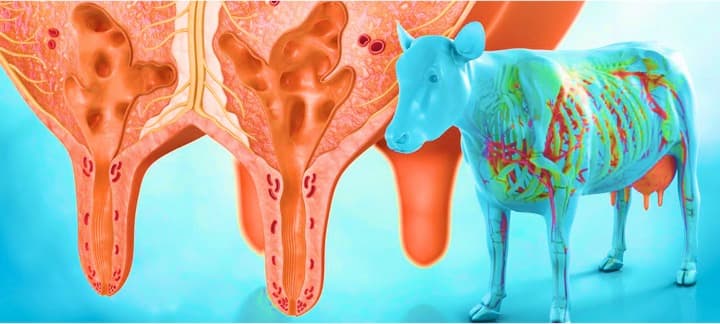
Bovine mastitis is a lethal infection of the mammary glands in cattle and results in huge reduction in milk yield and quality. It has two variants — clinical mastitis, with observable symptoms, and sub-clinical mastitis, which is asymptomatic and typically diagnosed several days to weeks after the infection sets in.

Half of the farmers in India are unaware about this problem

“Sub-clinical mastitis is more devastating and causes substantial economic losses with clinical mastitis considered just the tip of the iceberg,” explained Kiran Ambatipudi, assistant professor, department of biotechnology, IIT-Roorkee. According to her, 50 per cent of livestock farmers don’t have enough awareness of the disease and hence fail to see the signs of an infection that can also find a route to humans.

“Bovine mastitis is cut-by-cut torture to animals, public health and to the global economy. Inside the mammary gland, harmful enzymes and reactive oxygen species break down the extracellular matrix, which leads to the death of epithelial cells,” Ambatipudi told PTI in an email interview. “Blood-milk barriers are breached and blood gets mixed with milk as it comes off the teat. There are reports which showed these pathogens break across specie barriers and find routes to be transmitted to humans through infected quarters,” added the lead researcher of the study.

Unpasteurised milk is unsafe for consumption

She said milk from “infected quarters” can cause severe food borne illnesses such as brucellosis if consumed raw or unpasteurised. Brucellosis is a bacterial infection that affects thousands of people worldwide. Avoiding unpasteurised dairy products and taking precautions when working with animals or in a laboratory can help prevent brucellosis.

Ambatipudi stressed on the need to train farmers so they are able to understand the progress of such a chronic infection, In India, marginal producers and small-scale farmers own over 60 per cent of all milch animals and form the core of the milk production sector.

“The negative impact can be a huge constraint on the development of profitable dairy. This is particularly relevant in developing countries like India because the dairy industry has a strong role in the livelihood of poor people and contributes significantly to alleviating poverty by providing regular income for the household,” she said.

Subclinical mastitis also needs attention

“Another important issue is the lack of awareness among farmers for sub-clinical cases. This is of fundamental importance because of the possibility of spreading the disease through the herd and posing a public health risk due to consumption of unsafe milk,” she added. Ambatipudi said the level of occurrence of bovine mastitis varies all over the country.

“In Gujarat, for instance, over 50 per cent of 400 cows were found to be affected by sub-clinical mastitis. Similarly, in the rest of Asia, the incidence rate for clinical ranges between 1-8 per cent where as sub-clinical mastitis is about 55-60 per cent.” In her view, there is no one-step solution to control the problem and what is needed is grassroots management strategies.

It can be prevented by eliminating sources of infection. This would include maintenance of hygiene standards and reducing the amount of bacteria in the environment, she said. IIT-Roorkee’s three-year research, funded by the Department of Science and Technology, got published in the Journal of Proteomics and won the Science Engineering Research Board (SERB) award.

News as shared with PTI by IITR

Swipe to continue reading

Previous Article

Next Article