Latest Blogs
See More


Indian Dairy News


DairyNews7x7
Global Dairy News
DairyNews7x7
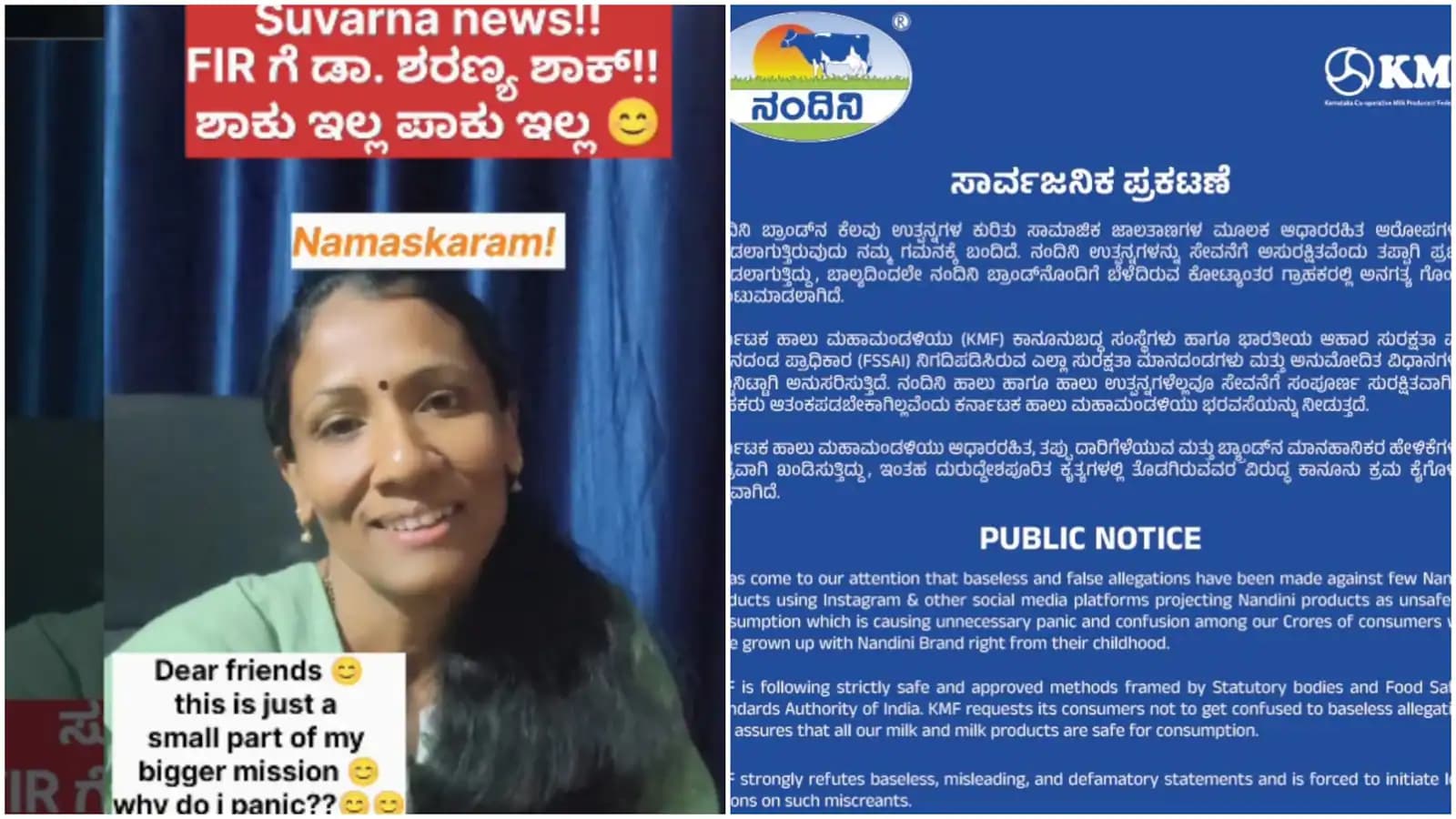
A Bengaluru doctor has been booked for allegedly sharing defamatory social media posts about Nandini dairy products, prompting a police complaint from the Karnataka Milk Federation (KMF) on grounds of harming brand reputation and consumer trust. The posts — widely circulated on social platforms — reportedly contained unverified claims about product quality and safety, triggering an investigation under penal sections relating to defamation and cyber laws.
KMF officials said the complaint was filed after the alleged posts sparked public confusion and reputational harm for one of the state’s largest dairy cooperatives, which supplies a wide range of milk and milk-based products — including liquid milk, ghee, curd and value-added dairy beverages — under its trusted Nandini brand. The cooperative emphasised that stringent quality checks, food safety audits and laboratory testing are part of its standard operating processes, countering allegations that product quality was compromised.
Authorities registered a case against the doctor at a local police station under relevant sections of the Indian Penal Code and IT Act for spreading misinformation that could tarnish brand reputation and undermine consumer confidence in dairy products. Investigations are underway, with law enforcement citing digital evidence and complaint copies submitted by KMF representatives.
Brand protection experts say that incidents like this highlight broader challenges the dairy sector faces in an era dominated by instant social media narratives, where unverified claims can rapidly go viral and impact market perceptions — even when no factual basis exists. Dairy cooperatives and processors, they note, must both enforce legal protections and proactively communicate credible quality assurance information to counter misinformation effectively.
KMF sources reiterated that Nandini products adhere to established food safety protocols, including periodic third-party laboratory testing and compliance with regulatory standards under FSSAI. They also urged consumers to rely on official quality certifications, batch traceability and authorised communication channels rather than unverified social media claims.
The police action against the alleged defamatory postings sends a strong message about the legal consequences of spreading misinformation about essential food products, particularly in sectors like dairy where consumer trust is foundational. Industry watchers say that while freedom of expression is a democratic right, unfounded narratives about milk quality or safety can have real-world economic impacts on farmer livelihoods, cooperative revenues and public confidence in staple food supplies.
“This should become the standard institutional response of the Indian dairy sector. All dairy players, industry associations, the National Dairy Development Board, and the Ministry of Animal Husbandry and Dairying must act firmly and collectively against any posts, reels or narratives that tarnish the image of milk and milk products without scientific evidence, or by twisting facts and presenting them in a misleading manner.
Milk is not just a consumer product — it is the economic backbone of millions of small and marginal farmers. Irresponsible social media claims, driven by misinformation or half-truths, directly erode consumer trust and farmer incomes. Freedom of expression cannot become a licence to spread unverified fear around a staple food. The dairy sector must draw a clear red line between genuine scientific critique and motivated misinformation
Source : Dairynews7x7 Feb 21st 2026 Read full story here
#DairyDefamationCase #NandiniDairy #KMF #FoodSafetyTrust #SocialMediaMisinformation #MilkQualityNarratives #ConsumerConfidence