Latest Blogs
See More

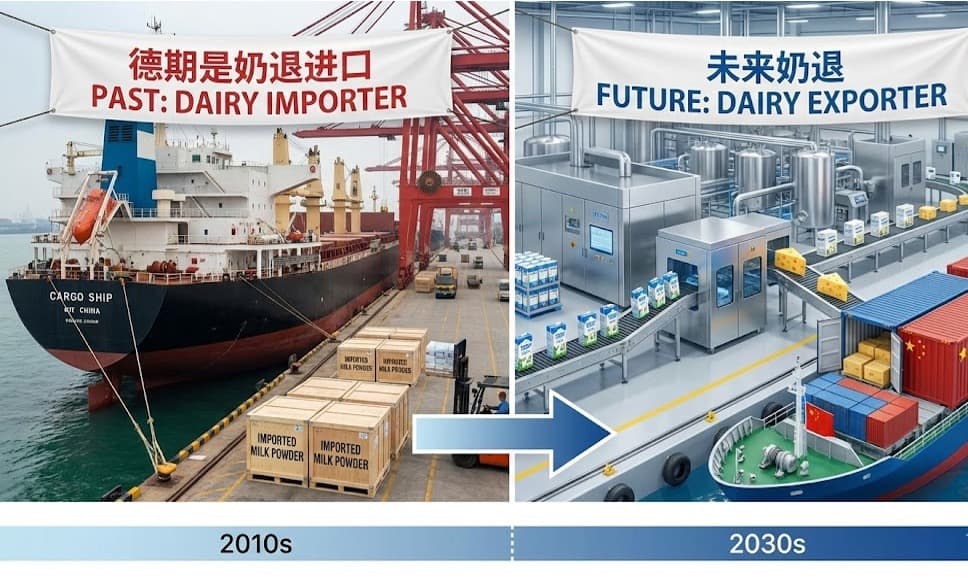
China — once the largest importer of milk powder in the world — is undergoing a deep structural transformation in its dairy sector, reshaping global dairy trade dynamics and challenging long-standing market assumptions. For decades, China’s demand for imported dairy, especially whole milk powder, underpinned global dairy prices and export strategies. But that paradigm is rapidly changing.
Driven by a government push for food self-sufficiency post-pandemic, China has aggressively expanded domestic milk production through industrialisation, larger “mega-farms,” improved genetics, and modern feed systems. This sustained effort has boosted China’s milk output significantly — reaching nearly 42 million tonnes in 2023, surpassing earlier production targets ahead of schedule.
However, this surge in supply has outpaced domestic demand, which has been dampened by changing consumption patterns, slower economic growth, and demographic headwinds such as record-low birth rates that have weakened demand for traditional dairy staples and infant nutrition products. As a result, raw milk prices at times have fallen below production costs, forcing some producers to cull herds or scale back operations.
The tangible impact on global trade has been stark. China’s overall dairy imports — once dominated by products like whole milk powder — fell sharply, with whole milk powder imports plunging by nearly 38% in 2023 compared with previous years. Meanwhile, Chinese dairy exports, although still modest relative to major exporters, have grown by roughly one-third in recent years, particularly in milk powder destined for Hong Kong, Southeast Asia, Africa, the Middle East and parts of Central Asia — signalling China’s intention to emerge as an export competitor.
This shift is generating downward pressure on global dairy commodity prices and prompting exporters from New Zealand, the European Union and the United States to rethink traditional market strategies that were heavily reliant on Chinese demand. At the same time, China continues to import certain high-value dairy segments such as specialty cheeses, whey and premium infant nutrition, where domestic producers have yet to match the product depth and quality perceptions of established foreign brands.
China’s dairy pivot underscores a broader realignment of global dairy markets, where production self-sufficiency, evolving consumption trends and strategic trade repositioning are reshaping competitive dynamics — affecting pricing, export destinations and long-term planning for dairy exporters worldwide.
Source : DAirynews7x7 Feb 2nd 2026 First Published here
#ChinaDairyShift #GlobalDairyTrade #MilkPowderMarkets #DairyExportDynamics #SelfSufficiency #AgricultureTrade