Latest Blogs
See More
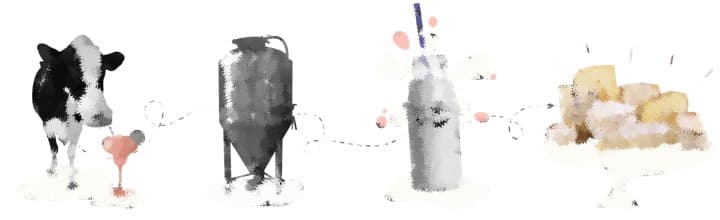
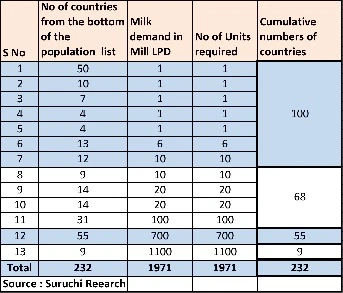
Last week one piece of news made me think deeply and explore the vast impact of this disruption in the future. The news was about Remilk establishing its world’s largest full-scale precision fermentation facility. This center is established in more than 750,000 square feet in Kalundborg, Denmark . At the new facility, Remilk will produce non-animal dairy protein for use in products like cheese, yogurt, and ice cream; in volumes equivalent to that produced by 50,000 cows each year. Considering 10000 Litres per annum of milk production per cow with 65% of them in milk; this plant will have a capacity to produce 1 millions litres per day equivalent to milk proteins.
We have been hearing a lot about many startups entering into the dairy and meat alternative industry using precision fermentation since the last few years. However most of the experts remained skeptical about scaling up of such lab scale endeavours. I thought of exploring the power of such a facility to disrupt the global dairy sector.
Let us understand more about precision fermentation . As per GFI, “Ancient civilizations used microbial cultures to preserve foods, create alcoholic beverages, and improve the nutritional value and bioavailability of foods ranging from kimchi to tempeh. Over the past century, the role of fermentation has expanded far beyond its historical usage to a much broader range of applications.
Fermentation now spans industrial chemistry, biomaterials, therapeutics and medicine, fuels, and advanced food ingredients. The suite of tools developed through fermentation’s evolution is now poised to revolutionize the food sector by accelerating the rise of alternative proteins.
1. Traditional fermentation uses intact live microorganisms to modulate and process plant-derived ingredients.
2. Biomass fermentation leverages the fast growth and high protein content of many microorganisms to efficiently produce large quantities of protein.
3. Precision fermentation uses microbial hosts as “cell factories” for producing specific functional ingredients.
These ingredients typically require greater purity than the primary protein ingredients and are incorporated at much lower levels. These functional ingredients can improve sensory characteristics and functional attributes of plant-based products or cultivated meat.Precision fermentation can produce enzymes, flavoring agents, vitamins, natural pigments, and fats. Examples include Perfect Day’s dairy proteins, Clara Foods’ egg proteins, and Impossible Foods’ heme protein.
Innovations are occurring across all three types of fermentation.
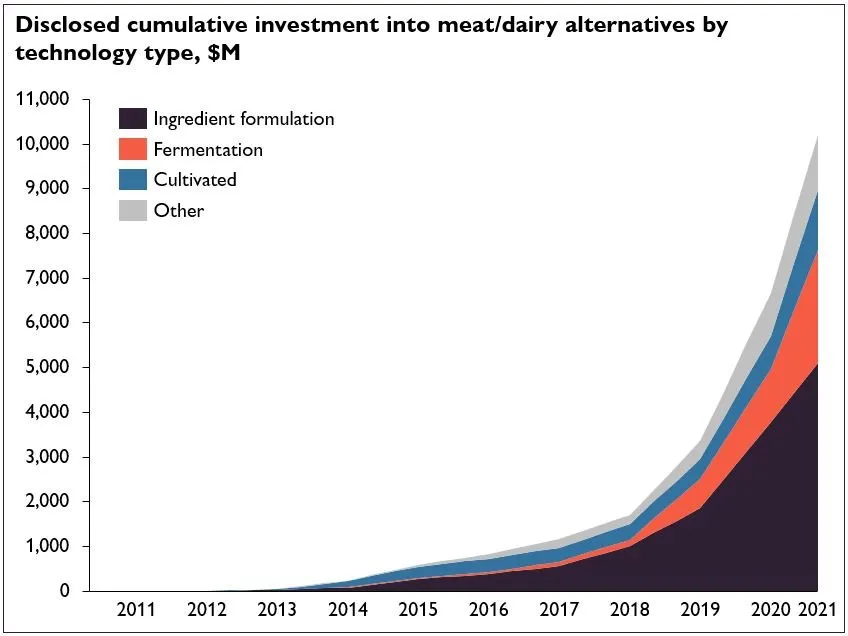
There are three reasons for technologies like precision fermentation to become the first choice of researchers and investors both.

It is projected that by 2030, 50% of auto sales in India will be of electric vehicles. The disruption in food also is likely to follow the same trajectory.
As per the findings in a report by Rethinkx “By 2030, demand for cow products will have fallen by 70%. Before we reach this point, the U.S. cattle industry will be effectively bankrupt. By 2035, demand for cow products will have shrunk by 80% to 90%. The cost of modern foods and other precision fermentation products will be 50%-80% lower than the animal products they replace; which will translate into substantially lower prices and increased disposable incomes. “
This is the right-time for the experts and think-tank of our country to assess the future-scenarios linked to these disruptions. Underestimating these disruptions today may cost too much tomorrow.
Source : A blog by Kuldeep Sharma , Chief editor Dairynews7x7