Latest Blogs
See More


Indian Dairy News


DairyNews7x7
Global Dairy News

DairyNews7x7
Paneer, the soft, creamy cheese at the heart of so many Indian dishes, is undergoing a transformation. From curries to snacks, this protein-packed dairy favourite has been a kitchen staple for generations. However, as demand for paneer soars in India and the global market, traditional methods of production are struggling to keep up.
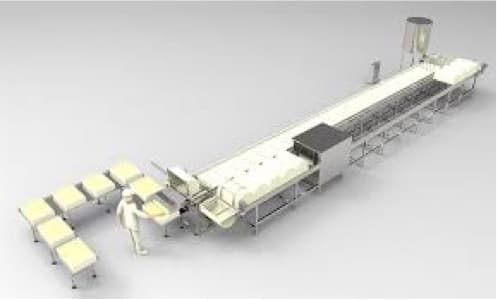
One of the key advancements is the adoption of automated coagulation systems. These systems carefully regulate pH, temperature, and acid addition, delivering a product with perfect texture and yield every time. Continuous whey separation systems, meanwhile, replace the laborious task of manual handling, maintaining optimal moisture in the curd with high precision. Fully automated heating systems ensure uniform pasteurisation at 90°C, eliminating the inefficiencies of traditional batch processes and enabling seamless, high-throughput production, according to industry experts participating in the three-day Southern Dairy Summit-2025, organised by the Indian Dairy Association (South Zone), which started in the city Thursday.
For decades, paneer production was largely a manual affair. Milk was coagulated with acids like citric acid, whey was separated by hand, and the final product was cut manually. While this hands-on approach worked for small-scale operations, it often led to uneven texture and taste, inconsistent moisture levels, and hygiene concerns owing to direct handling. Labour-intensive and time-consuming, traditional methods also struggled to keep pace with modern market demands.
He highlighted how the paneer market is growing: "Globally, the market was valued at $9.8 billion in 2023 and is projected to grow to $23.2 billion by 2030, with an annual growth rate of 8.7%. India, the largest consumer, has seen its market swell from Rs 570 billion in 2023 to a forecasted Rs 1,848 billion by 2030, growing at an impressive 14% annually. Meeting this demand requires innovation, and automation appears to be the answer."
HJ Shankaralinge Gowda, a dairy safety and management professional at Karnataka Milk Federation, highlighted paneer's growing appeal as a protein source. "Proteins come from two primary sources: Animal-based and plant-based origins. Paneer is nutritionally almost equivalent to animal-based proteins and has become a preferred option for vegetarians. Paneer is carving out a space in both Indian and global markets as a protein-rich alternative to animal-based sources like poultry and eggs," he said.
Source:Dairynews7x7 Jan 11th 2025 TOI
(With inputs from Krishna Meera)