Logo
IndianGlobalBlogsPublicationsPodcastsMarketAboutContact
Logo
IndianGlobalBlogsPublicationsPodcasts
7News
Farm Economy Seen Stabilizing in 2026; Costs & Policy Still Key ConstraintsThe FAO Dairy Price Index declined by 4.4% in Dec 2025Heritage Foods MD Wins Outstanding Dairy Professional Award 2025Parag Milk Sharpens Focus on Health & Nutrition with Protein-Led PushMidan’s Top 10 Meat & Dairy Trends to Watch in 2026

Indian Dairy News

Farm Economy Seen Stabilizing in 2026; Costs & Policy Still Key Constraints
Jan 11, 2026

Farm Economy Seen Stabilizing in 2026; Costs & Policy Still Key Constraints

According to the December Ag Economists’ Monthly Monitor, agricultural economists now expect the farm economy to stabilise in 2026 after years of pressure, but high input costs and policy uncertainty...Read More

The FAO Dairy Price Index declined by 4.4% in Dec 2025
Jan 11, 2026

The FAO Dairy Price Index declined by 4.4% in Dec 2025

The FAO Dairy Price Index declined by 5.9 points (4.4 percent) in December. Butter prices fell sharply, driven by seasonally higher cream availability in Europe and stock accumulation following strong...Read More

Heritage Foods MD Wins Outstanding Dairy Professional Award 2025
Jan 11, 2026

Heritage Foods MD Wins Outstanding Dairy Professional Award 2025

Heritage Foods Limited announced that Mrs. N. Bhuvaneswari, Vice Chairperson & Managing Director, received the Outstanding Dairy Professional Award 2025 (Andhra Pradesh) at the Indian Dairy Associatio...Read More

DairyNews7x7
Advertisement

Latest Blogs

See More
From Forecast to Fact: 2025 Lessons, 2026 Dairy Outlook
Jan 01, 2026

From Forecast to Fact: 2025 Lessons, 2026 Dairy Outlook

As we step into 2026, it is worth pausing to reflect on how the Indian dairy sector navigated the challenges of 2025 and how closely reality tracked the forecasts I outlined in the first blog of last...Read More

India–NZ Dairy FTA: Safeguards or Silent Slippages?
Dec 26, 2025

India–NZ Dairy FTA: Safeguards or Silent Slippages?

The recently concluded India–New Zealand Free Trade Agreement (FTA) marks an important milestone in bilateral trade, while carefully ring-fencing India’s sensitive dairy sector. Under the agreement, c...Read More

Vision 2047: India’s Dairy Development Roadmap
Dec 21, 2025

Vision 2047: India’s Dairy Development Roadmap

As India moves steadily toward Vision 2047, the dairy sector stands at a strategic inflection point. From being a food security instrument in the decades following Independence, dairy has evolved into...Read More

Global Dairy Dynamics: Innovation, Sustainability & Inclusion
Dec 18, 2025

Global Dairy Dynamics: Innovation, Sustainability & Inclusion

The International Dairy Processing Conference (IDPC) 2026, organised by the Trade Promotion Council of India (TPCI) at Yashobhoomi Convention Centre, Dwarka, New Delhi on 7 January 2026, will serve as...Read More

Global Dairy News

Midan’s Top 10 Meat & Dairy Trends to Watch in 2026
Jan 10, 2026

Midan’s Top 10 Meat & Dairy Trends to Watch in 2026

Midan Marketing has published its annual Top 10 meat and dairy industry trends for 2026, highlighting the forces likely to shape consumer behaviour, product development and value-chain strategies in t...Read More

U.S. Dietary Guidelines Overhaul Raises Dairy, Meat
Jan 09, 2026

U.S. Dietary Guidelines Overhaul Raises Dairy, Meat

The newly released 2025–2030 U.S. Dietary Guidelines, unveiled by Health Secretary Robert F. Kennedy Jr. and the Department of Agriculture, represent a major shift in federal nutrition policy, placing...Read More

Spoiled Dairy Becomes 3D Printing Plastic
Jan 07, 2026

Spoiled Dairy Becomes 3D Printing Plastic

Researchers patent a biomaterial from wasted milk proteins, creating biodegradable 3D printing filament and a potential new revenue stream for dairy. Excess milk that once flowed down farm drains duri...Read More

DairyNews7x7
Advertisement
Dairy News 7x7

Your trusted source for all the latest dairy industry news, market insights, and trending topics.

FOLLOW US
CATEGORIES
  • Global News
  • Indian News
  • Blogs
  • Publications
  • Podcasts
SUBSCRIBE TO OUR NEWSLETTER

Stay informed with the latest updates and trending news in the dairy industry.

No spam, unsubscribe at any time

GET IN TOUCH
C-49, C Block, Sector 65,
Noida, UP 201307
+91 7827405029dairynews7x7@gmail.com

© 2026 Dairy News 7x7. All Rights Reserved.

Terms of ServicePrivacy Policy

Relevance of Kurien’s Amul Model for contract farming

By DairyNews7x7•Published on September 25, 2020

An article by Mr Alok Sinha Former Chairman & MD, Food Corporation of India

In Amul’s case, middlemen were effectively replaced by dairy producers through farmers’ cooperatives. These cooperatives were layered up to the state level, where today the huge dairy infrastructure is totally owned by the state and district-level cooperatives, with dairy producers owning them via membership. The corporates do not, in any way, own the huge Gujarat dairy federation.

The farm reform Bills have been witness to topsy-turvy politics. The Opposition’s job is to oppose, even by U-turns. What was adopted in the 2019 Lok Sabha poll manifesto has now been cast aside by the Congress. The Akalis, privy to Cabinet discussions and decisions, made a U-turn too to suddenly find an ‘anti-farmer’ grain in the policies they were unprotestingly party to within the NDA government. But to get some clarity, let us try to address the questions posed by the Opposition.

Emerging Fears from the current bill

The first fear raised is that the Minimum Support Price (MSP) system is being secretly and conspiratorially sabotaged. The government has now clarified that the MSP will continue, that the past six years have seen a rise of over 30% in the MSP of wheat and paddy, and that the farmer still has the continued facility of MSP, but with the choice of not having to sell only to commission agents in the mandi.

A second fear being expressed is that hereafter, with the farmers now allowed to sell outside the limits of the mandis, the corporate sector will move in sharply and swiftly to subjugate the hapless farmer.

The facts, however, are different. For example, basmati rice, being outside the purview of MSP, was exported to the tune of almost 45 lakh tonnes last year. This is done via open market competition by rice millers and exporters and no farmer has complained of being exploited and short-changed by the private sector. Contrast this with wheat, mollycoddled by the protection of the MSP system, not being exported at all out of India.

Power of open competition

Open competition of the market has given the farmer the best prices due to the export of basmati rice, or horticultural crops like mangoes, spices or tea, with no price complaints from the producer.

Before we look into the present agitation, we must bear in mind that the middleman in Punjab not only collects 2% as commission rate, but his profits are also hiked each time the MSP goes up, without any additional services being given to the farmer. Similarly, the state government levies 8% mandi tax on MSP rates, hence, automatically raising its revenue whenever the MSP is hiked. In Punjab, the mandi taxes alone gave the state government almost Rs 3,500 crore from wheat/paddy MSP last year.

The fear then is that if the farmers start selling outside the mandis and directly to the purchasers, the present hold of the commission agents gets reduced. This is a genuine fear. But while middlemen are agitating in the name of farmers, the government too is not entirely blameless. It has long been felt, and rightly so, that whenever retail prices shoot up, successive regimes have sought to soothe urban discontent by suddenly banning the export of sugar, onions etc. It never mattered that a rise in farmer incomes was thereby being arbitrarily curbed.

Second Agricultural Reform 2020

The second agricultural reform of 2020 has been to amend the Essential Commodities Act to authorise an export ban only if there was a 100% price rise of a horticultural crop or a 50% price rise of a non-perishable agri foodstuff like cereals, dal, sugar etc. But as soon as the Bill was drafted, onion exports were banned, even though its price rise was nowhere near the future Act’s upper ceiling. The government itself has overlooked the prospects of farmer incomes rising via onion exports.

The third agricultural reform is to facilitate contract farming. Here is where the feeling is genuine that thereby the corporate sector, by binding the willing farmers into a contractual relationship, will acquire a hold over the rural land by occupying it.

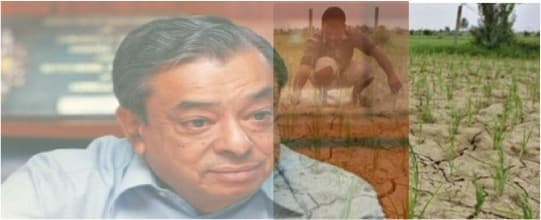
And this is where the Verghese Kurien model of Gujarat’s Amul is recalled for good effect. Middlemen were then effectively replaced by dairy producers themselves through farmers’ cooperatives. These cooperatives were layered up to the state level, where today, the huge dairy infrastructure is totally owned by the state and district-level cooperatives, with dairy producers owning them via membership. The corporates do not, in any way, own the huge Gujarat dairy federation.

Contract farming would lead to sustainable agri modernisation in India if the ownership, leading to large economies of scale, were to be in the hands of farmers’ cooperatives. This is a lesson to be learnt — and emulated — from the example of Amul.

90% of farm produce is sold outside MSP regime

About 90% of the farming produce is marketed outside the MSP system. The present agitation is led by only 10% of our farmland owners with a marketable surplus. Only a few states have spontaneously agitated.

But the government must ensure that its Rs 1 lakh crore agri infra plan is expeditiously implemented, that the Essential Commodities Act should be used for farmers’ interests — and not by mindless export bans to cool down the noisy urban consumer — and that contract farming should be done with the farmer holding the reins. Only then would the three agricultural reforms of 2020 begin to look like the resounding successes they really ought to be.

Swipe to continue reading

Previous Article

Next Article