Latest Blogs
See More


Indian Dairy News


DairyNews7x7
Global Dairy News


DairyNews7x7
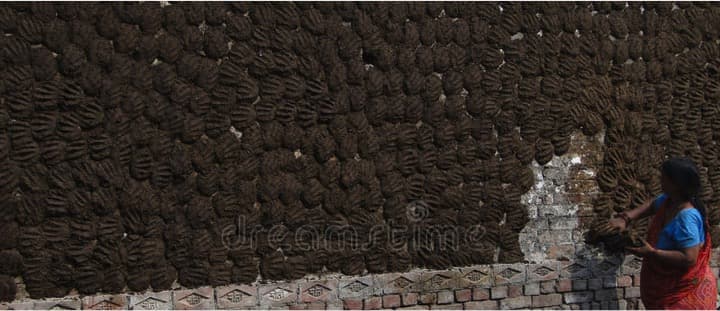
The gross value of output (GVO) of cattle dung estimated at ₹34,825.75 crore is more than the total value of the fodder that the cattle population consumes. Not only fodder but there are also 128 other items including maize, mustard, onion, potato, eggs, soyabean, tea, coffee and cashew nut whose value is lower than dung.
According to the report, ‘Value of Output From Agriculture, Forestry and Fishing’, released by the National Statistical Office (NSO) recently, the GVO of dung increased 6.8 per cent to ₹34,825.75 crore in 2019-20 from ₹32,598.91 crore in 2011-12.
Due to a drop in value for two years between 2019-20 and 2011-12, the pace of growth is lower compared to the previous phase of seven years. The GVO of dung had increased 17 per cent to ₹18,797.75 crore in 2010-11 from ₹16,050.86 crore in 2004-05.
In comparison, the GVO of fodder increased not even half a per cent to ₹32,626.09 crore in 2019-20 from ₹32,494.46 crore in 2011-12. In many northern States, including Uttar Pradesh and Rajasthan, farmers faced an uphill struggle to feed their cattle after fodder prices doubled this year
“If prices of one commodity are depressed for long years, they tend to jump abnormally and that has happened with fodder this time,” said Akash Bahuguna of Kanpur, who tracks local commodities prices.
The agency was paying ₹5/kg to source the dung, which is the same rate a farmer earns from selling ‘upla’ — a dried and round-sized cake made out of dung. But KVIC hopes to pay ₹10/kg when demand for the paints goes up. Under ‘Godhan Nyay Yojana’, the Chhattisgarh government procures dung at ₹2/kg. Even Prime Minister Narendra Modi during ameeting at a farmer conclave on October 17 mentioned the work being done to make bio-CNG from cow dung.
For States which don’t have estimates, NSO has taken the rates of adjoining States along with the annual estimated animal population to arrive at the dung production estimates.
The value of evacuation/droplets from goats and sheep has been estimated by using the results of a 2013 study by of the Central Institute for Research on Goats and the National Centre for Agricultural Economics and Policy Research.
The evacuation rate for goats is 0.3 kg per day and for sheep is 0.8 kg per day. The value of droplets is estimated using the prices of dung and grouped with the estimates of dung.
Rajasthan continues to be the top State in dung production with a GVO of ₹10,041 crore in 2019-20, but it is lower than the record of ₹10,761 crore in 2016-17. The growth in dung GVO in Rajasthan at 7.2 per cent since 2011-12 is marginally higher than the pan-India growth rate.
On the other hand, Tamil Nadu has seen a nearly 50 per cent jump at ₹1,846.76 crore from ₹1,239.98 crore in nine years. Bihar and Jharkhand, too have registered an impressive 40 per cent and 32 per cent growth, respectively, in terms of the value of dung output