Logo
IndianGlobalBlogsPublicationsPodcastsMarketAboutContact
Logo
IndianGlobalBlogsPublicationsPodcasts
7News
India’s Dairy Sector Rethinks Supply Trust & Nutrition StrategyU.S. Dietary Guidelines Overhaul Raises Dairy, MeatYear end review of Animal Husbandry and Dairy for the year 2025Fog & Frost Pose New Risks to Agriculture & Dairy in PunjabNandini Adopts AI-Based Product Counting to Boost Dairy Operations

Indian Dairy News

India’s Dairy Sector Rethinks Supply Trust & Nutrition Strategy
Jan 09, 2026

India’s Dairy Sector Rethinks Supply Trust & Nutrition Strategy

India’s dairy industry — long anchored in high production volumes but thin value realisation — is undergoing strategic recalibration around supply reliability, consumer trust and long-term nutrition v...Read More

Year end review of Animal Husbandry and Dairy  for the year 2025
Jan 09, 2026

Year end review of Animal Husbandry and Dairy for the year 2025

Hon'ble Prime Minister inaugurates Regional Center of Excellence (CoE) for Indigenous Breeds established at Motihari with an investment of Rs 33.80 crore. Genotyping of 75000 animals from the first...Read More

Fog & Frost Pose New Risks to Agriculture & Dairy in Punjab
Jan 08, 2026

Fog & Frost Pose New Risks to Agriculture & Dairy in Punjab

Persistent dense fog and dropping temperatures across Punjab — especially around Ludhiana and surrounding districts — are raising fresh concerns for both agriculture and dairy sectors, as winter weath...Read More

DairyNews7x7
Advertisement

Latest Blogs

See More
From Forecast to Fact: 2025 Lessons, 2026 Dairy Outlook
Jan 01, 2026

From Forecast to Fact: 2025 Lessons, 2026 Dairy Outlook

As we step into 2026, it is worth pausing to reflect on how the Indian dairy sector navigated the challenges of 2025 and how closely reality tracked the forecasts I outlined in the first blog of last...Read More

India–NZ Dairy FTA: Safeguards or Silent Slippages?
Dec 26, 2025

India–NZ Dairy FTA: Safeguards or Silent Slippages?

The recently concluded India–New Zealand Free Trade Agreement (FTA) marks an important milestone in bilateral trade, while carefully ring-fencing India’s sensitive dairy sector. Under the agreement, c...Read More

Vision 2047: India’s Dairy Development Roadmap
Dec 21, 2025

Vision 2047: India’s Dairy Development Roadmap

As India moves steadily toward Vision 2047, the dairy sector stands at a strategic inflection point. From being a food security instrument in the decades following Independence, dairy has evolved into...Read More

Global Dairy Dynamics: Innovation, Sustainability & Inclusion
Dec 18, 2025

Global Dairy Dynamics: Innovation, Sustainability & Inclusion

The International Dairy Processing Conference (IDPC) 2026, organised by the Trade Promotion Council of India (TPCI) at Yashobhoomi Convention Centre, Dwarka, New Delhi on 7 January 2026, will serve as...Read More

Global Dairy News

U.S. Dietary Guidelines Overhaul Raises Dairy, Meat
Jan 09, 2026

U.S. Dietary Guidelines Overhaul Raises Dairy, Meat

The newly released 2025–2030 U.S. Dietary Guidelines, unveiled by Health Secretary Robert F. Kennedy Jr. and the Department of Agriculture, represent a major shift in federal nutrition policy, placing...Read More

Spoiled Dairy Becomes 3D Printing Plastic
Jan 07, 2026

Spoiled Dairy Becomes 3D Printing Plastic

Researchers patent a biomaterial from wasted milk proteins, creating biodegradable 3D printing filament and a potential new revenue stream for dairy. Excess milk that once flowed down farm drains duri...Read More

Milk production declines amid rising water costs
Jan 07, 2026

Milk production declines amid rising water costs

Dairy producers across Victoria are facing a tightening operating environment, with declining milk flows and escalating water and fodder costs, according to the Dairy Australia Situation and Outlook Y...Read More

DairyNews7x7
Advertisement
Dairy News 7x7

Your trusted source for all the latest dairy industry news, market insights, and trending topics.

FOLLOW US
CATEGORIES
  • Global News
  • Indian News
  • Blogs
  • Publications
  • Podcasts
SUBSCRIBE TO OUR NEWSLETTER

Stay informed with the latest updates and trending news in the dairy industry.

No spam, unsubscribe at any time

GET IN TOUCH
C-49, C Block, Sector 65,
Noida, UP 201307
+91 7827405029dairynews7x7@gmail.com

© 2026 Dairy News 7x7. All Rights Reserved.

Terms of ServicePrivacy Policy

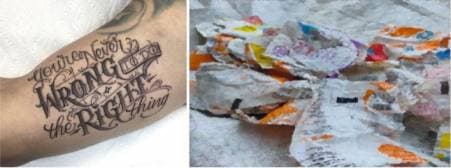
It is never wrong to do the right thing

By Kuldeep Sharma•Published on December 23, 2022

This blog is dedicated to women farmers of our country.

This year brought lots of challenges for the dairy sector. The challenges came in other sectors too. The happenings around us are not a problem. The problem is with how we react to those happenings. It is not action but our knee jerk reaction in both our acts and language.

Dairy industry faced the menace of climate change, fodder shortage, poor milk production, weak demand, Russia-Ukraine war, inflation and cattle pandemic like Lumpy Skin Disease, etc with lots of courage. The sentiment remained a bit down but still bold steps like increasing milk prices multiple times kept the ball rolling. It is fair to protect profits for the sustainability of any business.

The big question remains whether this profit distribution is equitable amongst all stakeholders across the dairy value chain. There are three major stakeholders in the dairy sector. They are farmers, processors and the consumers. The farmers and the processors saw the highest value realisation during this year but the consumers took a beating.

Finally it happened

If it is bound to happen then it will certainly happen. Dairy industry has a long history of not paying the farmer’s their due. A formal audit of farming activity in India will tell the truth. Which of the milk prices is more , Rs 25 in 2012 or Rs 41 in 2020? Considering a paltry inflation at 7% , Rs 25 per kg is more in terms of its value than Rs 41 in 2020.

We are still not debating on whether the farmers were making some profits at Rs 25/kg in 2020. The answer is No if he converts all imputed costs into computed costs. Adding rural women income in the costs will change the whole equation. Exploiting rural women and depriving her of her income rights is no less than human trafficking .

Shrinkflation- A smart strategy to cheat

This year most of the companies came out with very smart solutions. They reduced the volume of most of their packages by maintaining the same price point. This reduction was camouflaged in the batch printing rather than overtly printing it on the package. They consider it to be a marketing disruption. A new term b

Most of the dairy companies adopted the strategy of shrinkflation. The volumes of most of the products are reduced by keeping the same price. Earlier we used to have more volumes at the same price but now we have lesser volumes at the same price. Giving more for less is called a promotion as it modifies the buying attitude positively. What shall we call giving less for more ?

It is less harmful to give less at the same price in case of other FMCG like Soap, shampoo and detergents. In the case of dairy and food products it may be a deterrent as it is depriving the consumers for their right to get enough nutrition. There has been a reduction in milk and curd volumes from 10-150 ml.

The need for disruption

I think this is the time to ensure high nutrition at the same or low prices. There is no harm redesigning milk for tea, coffee or for kids to drink even with less fat but a moderate level of proteins. Reducing volumes at low prices may not serve the purpose. Milk is a healthy food but still may not be considered as nectar. Whatever we do to the milk, it will still remain as a commodity, unless we do some disruption in creating milk high in protein at lower cost. Which may even lead us to exploring possibilities of filled milk.

There is no harm in raising the price of milk provided you are equitable in sharing the profits with the farmers. If the lower price segments are not working on a cost-volume matrix then there is no harm coming out of Rs 5-7-10 segments. 125 ml of DTM at Rs 10 is serving no purpose other than selling DTM at Rs 80 per liter instead of its standard price of Rs 45-48. It is a whooping 65-70% premium but nutritionally it is penalising the customer. I think the government must ban the sale of milk below a certain volumetric level of 150-200 ml .

At the end I recall the words of Mark Twain that it is never wrong to do the right thing. So please increase the price and give the consumers their nutritional dose and women farmers their long time dues.

Source : Blog by Kuldeep Sharma Chief editor Dairynews7x7.com

Swipe to continue reading

Previous Article

Next Article