Logo
IndianGlobalBlogsPublicationsPodcastsMarketAboutContact
Logo
IndianGlobalBlogsPublicationsPodcasts
7News
World Pays More, Demands More: New Frontier of Dairy TradeIndia-EU Carbon Trade Talks: Why Dairy Is Watching CloselyDairy Demand to Spike for Makar Sankranti FestivalSouthern Dairy & Food Conclave Ends, Blending Technology with TraditionFarm Economy Seen Stabilizing in 2026; Costs & Policy Still Key Constraints

Indian Dairy News

India-EU Carbon Trade Talks: Why Dairy Is Watching Closely
Jan 11, 2026

India-EU Carbon Trade Talks: Why Dairy Is Watching Closely

India and the European Union (EU) are intensifying negotiations on a long-pending Free Trade Agreement (FTA), with the EU’s Carbon Border Adjustment Mechanism (CBAM) at the centre of climate and trade...Read More

Dairy Demand to Spike for Makar Sankranti Festival
Jan 11, 2026

Dairy Demand to Spike for Makar Sankranti Festival

As Makar Sankranti approaches, India’s dairy industry — especially in Bihar and neighbouring regions — is gearing up for a significant seasonal surge in demand for milk, curd and related dairy product...Read More

Southern Dairy & Food Conclave Ends, Blending Technology with Tradition
Jan 11, 2026

Southern Dairy & Food Conclave Ends, Blending Technology with Tradition

The Southern Dairy & Food Conclave 2026 (SDFC-2026) — organised by the Indian Dairy Association’s South Zone under the banner of the Southern Dairy Summit — concluded in Calicut (now Verghese Kurien N...Read More

DairyNews7x7
Advertisement

Latest Blogs

See More
From Forecast to Fact: 2025 Lessons, 2026 Dairy Outlook
Jan 01, 2026

From Forecast to Fact: 2025 Lessons, 2026 Dairy Outlook

As we step into 2026, it is worth pausing to reflect on how the Indian dairy sector navigated the challenges of 2025 and how closely reality tracked the forecasts I outlined in the first blog of last...Read More

India–NZ Dairy FTA: Safeguards or Silent Slippages?
Dec 26, 2025

India–NZ Dairy FTA: Safeguards or Silent Slippages?

The recently concluded India–New Zealand Free Trade Agreement (FTA) marks an important milestone in bilateral trade, while carefully ring-fencing India’s sensitive dairy sector. Under the agreement, c...Read More

Vision 2047: India’s Dairy Development Roadmap
Dec 21, 2025

Vision 2047: India’s Dairy Development Roadmap

As India moves steadily toward Vision 2047, the dairy sector stands at a strategic inflection point. From being a food security instrument in the decades following Independence, dairy has evolved into...Read More

Global Dairy Dynamics: Innovation, Sustainability & Inclusion
Dec 18, 2025

Global Dairy Dynamics: Innovation, Sustainability & Inclusion

The International Dairy Processing Conference (IDPC) 2026, organised by the Trade Promotion Council of India (TPCI) at Yashobhoomi Convention Centre, Dwarka, New Delhi on 7 January 2026, will serve as...Read More

Global Dairy News

Midan’s Top 10 Meat & Dairy Trends to Watch in 2026
Jan 10, 2026

Midan’s Top 10 Meat & Dairy Trends to Watch in 2026

Midan Marketing has published its annual Top 10 meat and dairy industry trends for 2026, highlighting the forces likely to shape consumer behaviour, product development and value-chain strategies in t...Read More

U.S. Dietary Guidelines Overhaul Raises Dairy, Meat
Jan 09, 2026

U.S. Dietary Guidelines Overhaul Raises Dairy, Meat

The newly released 2025–2030 U.S. Dietary Guidelines, unveiled by Health Secretary Robert F. Kennedy Jr. and the Department of Agriculture, represent a major shift in federal nutrition policy, placing...Read More

Spoiled Dairy Becomes 3D Printing Plastic
Jan 07, 2026

Spoiled Dairy Becomes 3D Printing Plastic

Researchers patent a biomaterial from wasted milk proteins, creating biodegradable 3D printing filament and a potential new revenue stream for dairy. Excess milk that once flowed down farm drains duri...Read More

DairyNews7x7
Advertisement
Dairy News 7x7

Your trusted source for all the latest dairy industry news, market insights, and trending topics.

FOLLOW US
CATEGORIES
  • Global News
  • Indian News
  • Blogs
  • Publications
  • Podcasts
SUBSCRIBE TO OUR NEWSLETTER

Stay informed with the latest updates and trending news in the dairy industry.

No spam, unsubscribe at any time

GET IN TOUCH
C-49, C Block, Sector 65,
Noida, UP 201307
+91 7827405029dairynews7x7@gmail.com

© 2026 Dairy News 7x7. All Rights Reserved.

Terms of ServicePrivacy Policy

How to rear cows scientifically for better profitability ?

By DairyNews7x7•Published on December 21, 2020

Dairy farmers can earn a lot of money if they take care of their cows scientifically.  We all know animal husbandry has been a profession in India for generations.

Milk is not the only source of income in cow husbandry. Cow dung and cow urine are highly sought-after items in organic farming.  If the dung is dried and sold in bags, the villagers get up to Rs. 150 per sack.  Cow urine and Panchagavya are similarly sold in the organic sector.

The farmer can generate income by giving milk at homes and in dairy groups.  If you want, you can make more money in the form of value-added products like buttermilk, yoghurt and ghee.  These are also in high demand in hotels and restaurants.  All this is to show that cow breeding is still a very promising occupation.  With four or five cows, a family can make a living without any hassle.

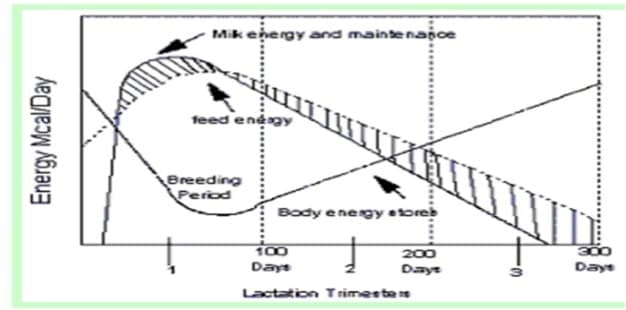
In the previous article, the topic was selected during the maternity care of the cow.  The main focus was on how the cow should be fed from the time of calving till the next calving.  The two phrases, Steaming Up and Challenge Feeding, needs some explanation.  It seems necessary to describe them briefly in this article.

Let’s see what is streaming up.  Milking should be stopped two months before calving.  After stopping milking, they should be given only limited food during the rest period.  But the cow needs to be given more feed after calving.  The cow should be introduced to the transition from limited feed to more feed.

It takes 10 to 15 days for the rumen, one of the four compartments of the cow’s stomach, to adapt to the new feeding pattern.  Microbes that accelerate digestion need about the same amount of time.  Therefore, cows need to be weaned from 10 to 15 days before gradual feeding with 3 to 4 kg of postpartum feed.  This process is called steaming up, which dairy farmers need to be introduced to.  Cows trained in this manner do not experience digestive problems and deficiency in milk production.

Now let’s see what  the challenge diet is.  Cows can give more milk up to 60 days after calving. During this time, farmers should increase an additional half a kilogram of feed every four to five days.  It is like challenging a cow to give more feed and press more milk.

This is why it is known as the Challenge Feeding Scheme. If it is found that the milk production does not increase even after a certain limit, the feeding should be stopped there.  Then try to increase milk production by giving more nutritious fodder.

Dairy farmers can get more expert advice on cow feed from the institutes affiliated to the Animal Husbandry Department, Dairy Associations, Agriculture Officer or Veterinary Physicians.

Cattle rearing has been for many people in India for a long time.  A family can live comfortably if they rear for five cattle.  They can earn money by selling milk cow dung curd ghee, etc.  To get maximum milk production, farmers have to follow steaming up and challenge feeding.

Source : Krishi Jagran written by Prof Rajendra Kumar

Swipe to continue reading

Previous Article

Next Article