Highlights
- International dairy prices are rebounding slowly but remain below their May lows
- Despite market disruptions, world milk output is rising, mostly in Asia, but also in Europe and North America
- International trade in butter, cheese, and whole milk powder could expand, but skim milk powder may contract.
The Food and Agriculture Organization of the United Nation (FAO) Dairy Price Index averaged 105.3 points in November, up 0.9 points (0.9 percent) month-on-month, continuing the upward trend registered in recent months and nearing an 18-month high.
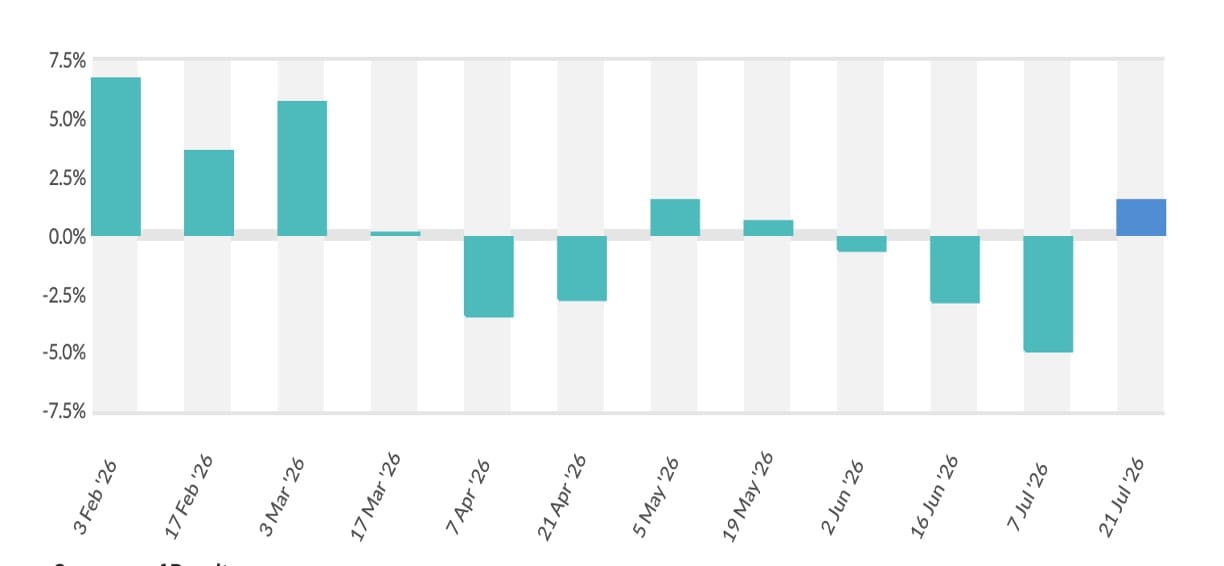
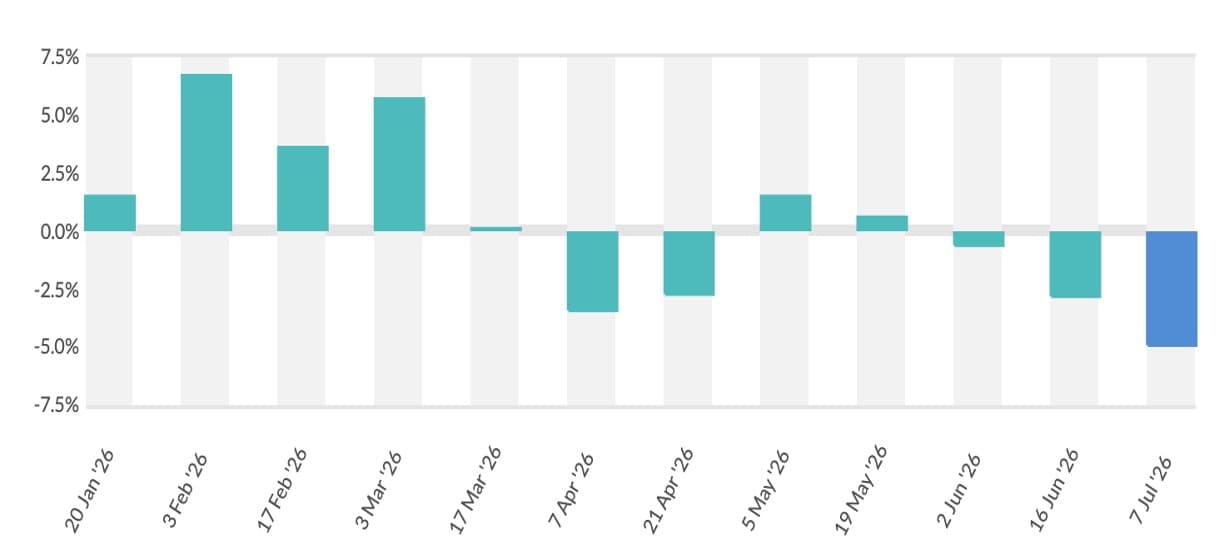
Considering the overall dairy product price movements since January to November, only cheese quotations registered an increase, as a result of persistent and robust import demand from Asia and consistently high internal demand in Europe, notwithstanding disruptions to food services sales. By contrast, price quotations in November for SMP, WMP and butter were down from January, reflecting negative fallouts from COVID-19 market disruptions, economic slowdowns and transport bottlenecks including port congestions.
World Milk Production
World milk production is forecast to reach nearly 860 million tonnes in 2020, up 1.4 percent from 2019, with expected increases in Asia, Europe, and North America, along with small gains in Oceania, Central America and the Caribbean, and Africa. By contrast, milk output in South America will likely contract.
In Asia, milk output in 2020 is forecast at 362 million tonnes, up 2.0 percent year-on-year, principally as a result of anticipated expansions in India, Pakistan, China, and Turkey, but also in Japan, the Republic of Korea and Saudi Arabia. By contrast, milk production may fall in the Islamic Republic of Iran and the Syrian Arab Republic, among others. India’s milk output is likely to reach 195 million tonnes, up 2.1 percent year-on-year, underpinned by an increase in dairy cattle numbers, and improved feed and fodder availability, resulting from favourable monsoon rains (June to September). During COVID-19 lockdowns, the village cooperatives’ network has also helped milk collections to remain steady, while milk powder processing plants absorbed excess milk, sustaining output expansion.
World dairy trade is expanding despite the economic recession
World dairy exports are forecast to reach 78 million tonnes (milk equivalent) in 2020, up 1.5 percent year-on-year, a pace of expansion almost equal to the average growth rate of the preceding five years. The increase is attributed primarily to the persistently high global import demand, sustained by China, reflecting increased economic activities, and also Algeria, Saudi Arabia and Nigeria. Australia and the Russian Federation may also step-up imports in line with rising internal demand, while Colombia is foreseen to import more, especially under the US-Canada Trade Agreement.
Trade performance of dairy products
In 2020, exports of cheese are forecast to expand by nearly 3 percent and those of butter and WMP by 0.5 percent each, while SMP trade could fall by about 3 percent. Whey powder exports, which accounts for 16 percent of global milk trade by volume, is likely to expand by 11 percent.
Butter exports to increase, albeit slowly
At 970 000 tonnes, global butter trade in 2020 is likely to record a slower growth of only 0.5 percent compared to the 6 percent average recorded over the two preceding years. This increase mainly reflects the continued high imports by China, along with those of the Russian Federation, Saudi Arabia, Australia and the United States of America. By contrast, Mexico, the Philippines, the United Arab Emirates (UAE), Indonesia and Japan, among others, may reduce purchases. The European Union is likely to supply much of the expanded global demand in 2020, supplemented by Argentina and Belarus. However, shipments from India and New Zealand, as well as Ukraine, Australia, the United States of America and Mexico, may contract.
Regarding exports, the European Union is benefitting from increased global demand for butter, while production is adequate to meet export and internal needs. Rising butter demand from the Russian Federation is helping Argentina and Belarus to register increased sales. Belarus is also benefitting from sustained demand from the neighbouring countries. By contrast, India’s butter shipments may plummet by as much as 63 percent, reflecting a sharp fall in imports by the Middle East, caused by lower household incomes and outmigration of a sizeable Asian labour force. New Zealand — the world’s largest butter exporter — may see its butter exports in 2020 fall by over 12 000 tonnes, as many countries are curtailing imports, partially offset by increased imports by China, the Russian Federation, Saudi Arabia and Egypt.
Despite market disruptions, global cheese trade expands
Global cheese trade is forecast to grow by nearly 3 percent to around 2.7 million tonnes in 2020, reflecting the fifth consecutive year of expansion. Continued import growth in China, as well as the Russian Federation and the Republic of Korea, among others, is behind this year’s relatively expected strong trade growth.
In China, rising incomes, end to the lockdowns and the revival of economic activities underpin the 12 percent anticipated growth in cheese imports, to over 182 000 tonnes. Meanwhile, the Russian Federation is expected to raise cheese imports by nearly 6 percent, only slightly below the average of the previous four years, to 285 000 tonnes. Similarly, the Republic of Korea’s cheese imports may rise by 10 percent, surpassing last year’s, mainly in line with the increasing trend in domestic consumption. By contrast, the United States of America and Japan may reduce cheese purchases due to increases in domestic production.
Global SMP trade is contracting amidst widespread import curtailments
SMP exports are forecast to contract by 3.0 percent in 2020 year-on-year, a second consecutive year of decline, to under 2.5 million tonnes, as many countries curb purchases, consistent with economic slowdowns, COVID-19 related market disruptions, and increased national output in several importing countries. The sharpest import reductions are forecast in the Philippines, China, the Russian Federation, Mexico, Bangladesh and Japan, which would lead to reduced sales by the European Union, Turkey, Uruguay and Ukraine, among others. However, the United States of America, New Zealand, Canada, and Belarus may still step-up exports.
High imports in the Middle East are sustaining WMP trade expansion
World exports of WMP are forecast to expand slightly (about 0.5 percent) to 2.6 million tonnes in 2020, driven by higher imports by Algeria, the United Arab Emirates, Saudi Arabia, Nigeria and Oman, reflecting more stable incomes from petroleum exports in recent months. WMP imports may also rise in Australia, Brazil and Viet Nam. By contrast, China, Malaysia, Singapore, Bangladesh, Indonesia, the Russian Federation and the Philippines are likely to import less in 2020.
However, in China, an expansion in national production, high stock levels and passive demand are causing WMP imports to contract by about 5 percent year-on-year, to about 770 000 tonnes. Malaysia, Indonesia, the Philippines and Singapore may also reduce WMP imports in 2020, reflecting a regional economic slowdown and stalled tourism industry. The decline in Bangladesh reflects lower demand from the food services sector, mostly hotels, bakeries and restaurants and in the Russian Federation, the drop stems from rising domestic production and restrained consumer demand.