Latest Blogs
See More

Indian Dairy News

DairyNews7x7
Global Dairy News
DairyNews7x7
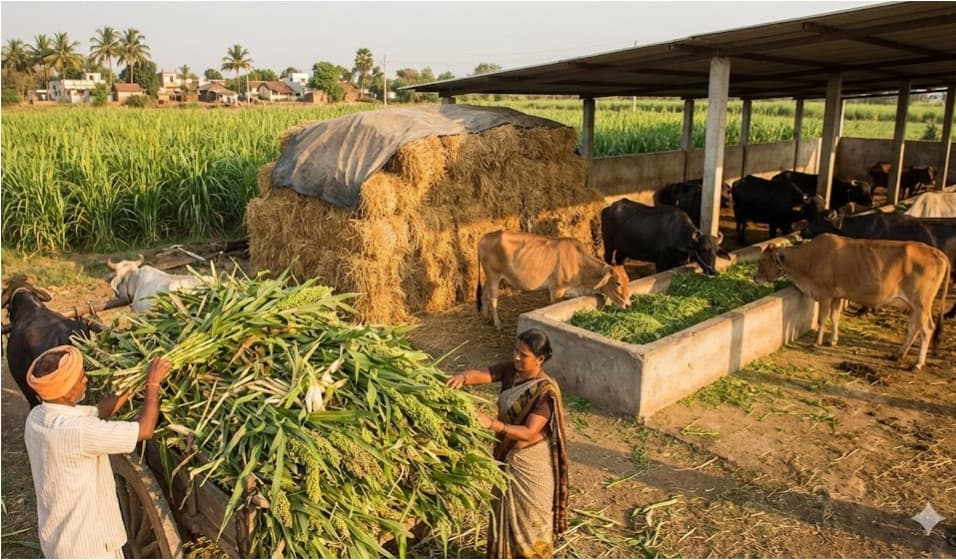
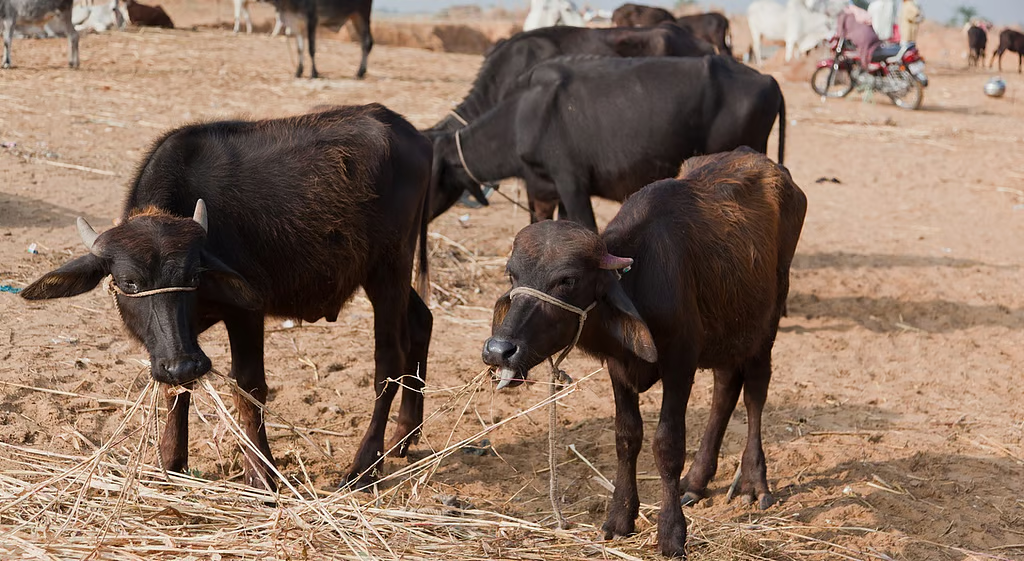
As India maintains its position as the world’s largest milk producer, industry leaders and policymakers are urging a comprehensive fodder policy to address what many analysts now call a structural bottleneck for sustainable dairy sector growth. Chronic shortages of green and dry fodder — often ranging between 11–32% for green and over 20% for dry — are constraining milk yields, increasing production costs, and threatening resilience in rural incomes.
Unlike short-term feed procurement fixes, a dedicated fodder policy framework seeks to prioritise year-round feed security through strategic land use, optimized crop rotations, high-yield fodder varieties, and support for preservation techniques such as silage making. Experts argue that fodder availability is not only a dairy input issue but also a key productivity lever that can raise per-animal yields, reduce seasonal vulnerability, and protect rural livelihoods.
In the absence of sufficient fodder, Indian dairy farmers face sharp cost escalations — feed costs account for approximately 70% of milk production expenditure — while persistent deficits directly translate into lower productivity and income instability for smallholders.
Government and cooperative initiatives are already recognising this challenge. Under the National Dairy Plan and other livestock programmes, efforts to build fodder-focused Farmer Producer Organisations (FPOs) and fodder seed chains are underway, with technical training and capacity building reaching thousands of farmers and community groups. These initiatives aim to improve production and conservation of fodder, introduce drought-tolerant varieties, and support cluster-based fodder enterprises, laying groundwork for broader policy action.
At the same time, innovations such as hybrid silage maize and structured silage processes are gaining attention as practical, scalable solutions that can ensure fodder quality and availability even in lean seasons. Such crop innovations, combined with supportive policies, have the potential to link feed security with livestock productivity in a more sustainable way.
While technological solutions like AI-driven crop planning and precision analytics offer promise, stakeholders emphasise that policy direction is needed to mainstream these tools, make them affordable, and integrate them with existing extension services. A comprehensive fodder policy could create incentives for fodder cultivation, preservation infrastructure, credit access, and public–private collaboration — catalysing dairy growth from the ground up.
As dairy stakeholders mobilise around this agenda, the policy narrative is shifting from short-term crop support to long-term feed security platforms that could stabilise production, lower input costs and safeguard India’s dairy dominance in a changing climate and competitive global landscape.
Boosts milk yields by ensuring consistent and nutritious feed
Reduces input cost volatility for smallholders
Enables year-round production resilience
Enhances fodder crop entrepreneurship and FPO models
Supports food security and rural income stability