Logo
IndianGlobalBlogsPublicationsPodcastsMarketAboutContact
Logo
IndianGlobalBlogsPublicationsPodcasts
7News
World Pays More, Demands More: New Frontier of Dairy TradeFarm Economy Seen Stabilizing in 2026; Costs & Policy Still Key ConstraintsThe FAO Dairy Price Index declined by 4.4% in Dec 2025Heritage Foods MD Wins Outstanding Dairy Professional Award 2025Parag Milk Sharpens Focus on Health & Nutrition with Protein-Led Push

Indian Dairy News

Farm Economy Seen Stabilizing in 2026; Costs & Policy Still Key Constraints
Jan 11, 2026

Farm Economy Seen Stabilizing in 2026; Costs & Policy Still Key Constraints

According to the December Ag Economists’ Monthly Monitor, agricultural economists now expect the farm economy to stabilise in 2026 after years of pressure, but high input costs and policy uncertainty...Read More

The FAO Dairy Price Index declined by 4.4% in Dec 2025
Jan 11, 2026

The FAO Dairy Price Index declined by 4.4% in Dec 2025

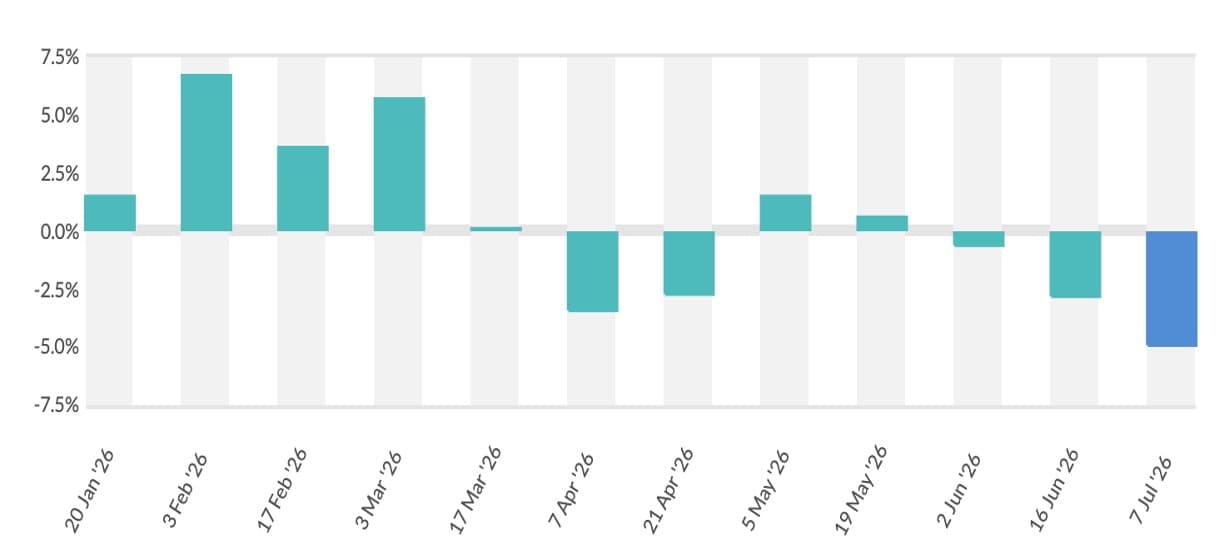
The FAO Dairy Price Index declined by 5.9 points (4.4 percent) in December. Butter prices fell sharply, driven by seasonally higher cream availability in Europe and stock accumulation following strong...Read More

Heritage Foods MD Wins Outstanding Dairy Professional Award 2025
Jan 11, 2026

Heritage Foods MD Wins Outstanding Dairy Professional Award 2025

Heritage Foods Limited announced that Mrs. N. Bhuvaneswari, Vice Chairperson & Managing Director, received the Outstanding Dairy Professional Award 2025 (Andhra Pradesh) at the Indian Dairy Associatio...Read More

DairyNews7x7
Advertisement

Latest Blogs

See More
From Forecast to Fact: 2025 Lessons, 2026 Dairy Outlook
Jan 01, 2026

From Forecast to Fact: 2025 Lessons, 2026 Dairy Outlook

As we step into 2026, it is worth pausing to reflect on how the Indian dairy sector navigated the challenges of 2025 and how closely reality tracked the forecasts I outlined in the first blog of last...Read More

India–NZ Dairy FTA: Safeguards or Silent Slippages?
Dec 26, 2025

India–NZ Dairy FTA: Safeguards or Silent Slippages?

The recently concluded India–New Zealand Free Trade Agreement (FTA) marks an important milestone in bilateral trade, while carefully ring-fencing India’s sensitive dairy sector. Under the agreement, c...Read More

Vision 2047: India’s Dairy Development Roadmap
Dec 21, 2025

Vision 2047: India’s Dairy Development Roadmap

As India moves steadily toward Vision 2047, the dairy sector stands at a strategic inflection point. From being a food security instrument in the decades following Independence, dairy has evolved into...Read More

Global Dairy Dynamics: Innovation, Sustainability & Inclusion
Dec 18, 2025

Global Dairy Dynamics: Innovation, Sustainability & Inclusion

The International Dairy Processing Conference (IDPC) 2026, organised by the Trade Promotion Council of India (TPCI) at Yashobhoomi Convention Centre, Dwarka, New Delhi on 7 January 2026, will serve as...Read More

Global Dairy News

Midan’s Top 10 Meat & Dairy Trends to Watch in 2026
Jan 10, 2026

Midan’s Top 10 Meat & Dairy Trends to Watch in 2026

Midan Marketing has published its annual Top 10 meat and dairy industry trends for 2026, highlighting the forces likely to shape consumer behaviour, product development and value-chain strategies in t...Read More

U.S. Dietary Guidelines Overhaul Raises Dairy, Meat
Jan 09, 2026

U.S. Dietary Guidelines Overhaul Raises Dairy, Meat

The newly released 2025–2030 U.S. Dietary Guidelines, unveiled by Health Secretary Robert F. Kennedy Jr. and the Department of Agriculture, represent a major shift in federal nutrition policy, placing...Read More

Spoiled Dairy Becomes 3D Printing Plastic
Jan 07, 2026

Spoiled Dairy Becomes 3D Printing Plastic

Researchers patent a biomaterial from wasted milk proteins, creating biodegradable 3D printing filament and a potential new revenue stream for dairy. Excess milk that once flowed down farm drains duri...Read More

DairyNews7x7
Advertisement
Dairy News 7x7

Your trusted source for all the latest dairy industry news, market insights, and trending topics.

FOLLOW US
CATEGORIES
  • Global News
  • Indian News
  • Blogs
  • Publications
  • Podcasts
SUBSCRIBE TO OUR NEWSLETTER

Stay informed with the latest updates and trending news in the dairy industry.

No spam, unsubscribe at any time

GET IN TOUCH
C-49, C Block, Sector 65,
Noida, UP 201307
+91 7827405029dairynews7x7@gmail.com

© 2026 Dairy News 7x7. All Rights Reserved.

Terms of ServicePrivacy Policy

Can India’s dairy sector help in Covid vaccine transportation?

By DairyNews7x7•Published on November 27, 2020

  • A major challenge in transporting Covid-19 vaccines is the ultra-cold temperatures required for the purpose. Except for the vaccine being developed by Oxford University-AstraZeneca, which can be stored in normal household refrigerators with a temperature range of 2 degrees to 8 degrees Celsius, all the others — Pfizer-BioNTech, Sputnik-V and Moderna — require a temperature of anywhere between minus 18 degrees to minus 90 degrees Celsius.
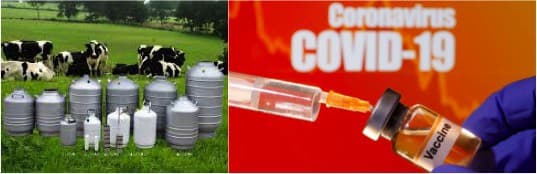
  • It turns out, India does have a limited cold chain facility to offer ultra-low cold temperatures, thanks to the infrastructure in place to transport the semen of bulls used for artificial insemination of cows across the country. For the record, the semen collected from bulls is transported at minus 196 degrees Celsius — much lower than the lowest temperature required for a Covid-19 vaccine, which is for the Pfizer-BioNTech vaccine candidate that needs to be stored between -60 degrees to -90 degrees C.
  • Since sperms are destroyed even at room temperatures within 15 minutes of collection, they are first diluted and stored in small vials — called straws — which are then sealed and frozen in liquid nitrogen containers. This is an idea that has been used in the US  since the 1950s by cattle breeders there and was later adapted for use for organ transplantation and blood banking.
  • Liquid nitrogen, which is inert, colourless, odourless, non corrosive, nonflammable and extremely cold, is produced by compressing and cooling the gas to below its boiling point, which is minus 195.79 degrees Celsius. It is also available in plenty from the chemical fertiliser units, with Indian being the world’s second largest producer and also as a by-product of liquid oxygen plants.
  • Moreover, the containers used for transporting the semen also have huge capacities, with a 35 litre container able to house 2,500 straws while a 48 litre one can accommodate 15,000 straws. However, given the huge numbers involved in the distribution of any potential Covid vaccine, the dairy sector’s cold chain infrastructure can at best be an add-on and unlikely to complement the need for an effective vaccine distribution network.

Swipe to continue reading

Previous Article

Next Article