Logo
IndianGlobalBlogsPublicationsPodcastsMarketAboutContact
Logo
IndianGlobalBlogsPublicationsPodcasts
7News
World Pays More, Demands More: New Frontier of Dairy TradeIndia-EU Carbon Trade Talks: Why Dairy Is Watching CloselyDairy Demand to Spike for Makar Sankranti FestivalSouthern Dairy & Food Conclave Ends, Blending Technology with TraditionFarm Economy Seen Stabilizing in 2026; Costs & Policy Still Key Constraints

Indian Dairy News

India-EU Carbon Trade Talks: Why Dairy Is Watching Closely
Jan 11, 2026

India-EU Carbon Trade Talks: Why Dairy Is Watching Closely

India and the European Union (EU) are intensifying negotiations on a long-pending Free Trade Agreement (FTA), with the EU’s Carbon Border Adjustment Mechanism (CBAM) at the centre of climate and trade...Read More

Dairy Demand to Spike for Makar Sankranti Festival
Jan 11, 2026

Dairy Demand to Spike for Makar Sankranti Festival

As Makar Sankranti approaches, India’s dairy industry — especially in Bihar and neighbouring regions — is gearing up for a significant seasonal surge in demand for milk, curd and related dairy product...Read More

Southern Dairy & Food Conclave Ends, Blending Technology with Tradition
Jan 11, 2026

Southern Dairy & Food Conclave Ends, Blending Technology with Tradition

The Southern Dairy & Food Conclave 2026 (SDFC-2026) — organised by the Indian Dairy Association’s South Zone under the banner of the Southern Dairy Summit — concluded in Calicut (now Verghese Kurien N...Read More

DairyNews7x7
Advertisement

Latest Blogs

See More
From Forecast to Fact: 2025 Lessons, 2026 Dairy Outlook
Jan 01, 2026

From Forecast to Fact: 2025 Lessons, 2026 Dairy Outlook

As we step into 2026, it is worth pausing to reflect on how the Indian dairy sector navigated the challenges of 2025 and how closely reality tracked the forecasts I outlined in the first blog of last...Read More

India–NZ Dairy FTA: Safeguards or Silent Slippages?
Dec 26, 2025

India–NZ Dairy FTA: Safeguards or Silent Slippages?

The recently concluded India–New Zealand Free Trade Agreement (FTA) marks an important milestone in bilateral trade, while carefully ring-fencing India’s sensitive dairy sector. Under the agreement, c...Read More

Vision 2047: India’s Dairy Development Roadmap
Dec 21, 2025

Vision 2047: India’s Dairy Development Roadmap

As India moves steadily toward Vision 2047, the dairy sector stands at a strategic inflection point. From being a food security instrument in the decades following Independence, dairy has evolved into...Read More

Global Dairy Dynamics: Innovation, Sustainability & Inclusion
Dec 18, 2025

Global Dairy Dynamics: Innovation, Sustainability & Inclusion

The International Dairy Processing Conference (IDPC) 2026, organised by the Trade Promotion Council of India (TPCI) at Yashobhoomi Convention Centre, Dwarka, New Delhi on 7 January 2026, will serve as...Read More

Global Dairy News

Midan’s Top 10 Meat & Dairy Trends to Watch in 2026
Jan 10, 2026

Midan’s Top 10 Meat & Dairy Trends to Watch in 2026

Midan Marketing has published its annual Top 10 meat and dairy industry trends for 2026, highlighting the forces likely to shape consumer behaviour, product development and value-chain strategies in t...Read More

U.S. Dietary Guidelines Overhaul Raises Dairy, Meat
Jan 09, 2026

U.S. Dietary Guidelines Overhaul Raises Dairy, Meat

The newly released 2025–2030 U.S. Dietary Guidelines, unveiled by Health Secretary Robert F. Kennedy Jr. and the Department of Agriculture, represent a major shift in federal nutrition policy, placing...Read More

Spoiled Dairy Becomes 3D Printing Plastic
Jan 07, 2026

Spoiled Dairy Becomes 3D Printing Plastic

Researchers patent a biomaterial from wasted milk proteins, creating biodegradable 3D printing filament and a potential new revenue stream for dairy. Excess milk that once flowed down farm drains duri...Read More

DairyNews7x7
Advertisement
Dairy News 7x7

Your trusted source for all the latest dairy industry news, market insights, and trending topics.

FOLLOW US
CATEGORIES
  • Global News
  • Indian News
  • Blogs
  • Publications
  • Podcasts
SUBSCRIBE TO OUR NEWSLETTER

Stay informed with the latest updates and trending news in the dairy industry.

No spam, unsubscribe at any time

GET IN TOUCH
C-49, C Block, Sector 65,
Noida, UP 201307
+91 7827405029dairynews7x7@gmail.com

© 2026 Dairy News 7x7. All Rights Reserved.

Terms of ServicePrivacy Policy

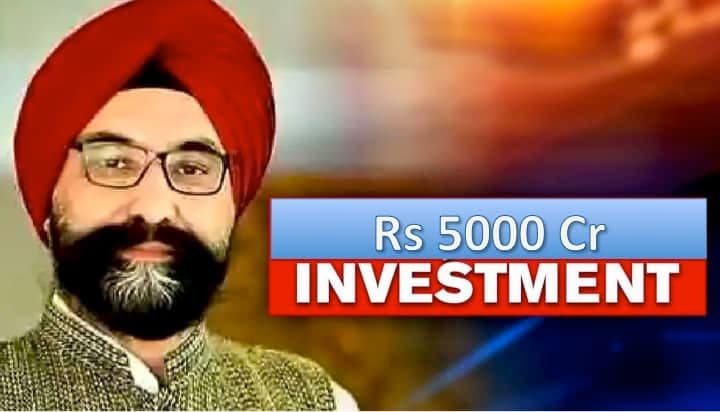
Amul to invest Rs 5000 Crores in next 5 years in dairy infrastructure

By DairyNews7x7•Published on January 10, 2021

A drop was seen in the ice cream and fresh cream business that catered to the hotels, restaurants and catering segment.

Amul is not worried about the commodity stock as it would be taken care of during summer, he said.Amul is not worried about the commodity stock as it would be taken care of during summer, he said.

Dairy major Amul expects to see an 8% growth in revenues in this financial year, driven by a surge in demand. “Our turnover in consumer products has increased 15-20% because people have consumed more of branded products”, said R S Sodhi, MD, Gujarat Cooperative Milk Marketing Federation, which owns the Amul brand. The growth would have been higher but the commodity market saw a sharp fall because of the pandemic, he said.

Doubling the turnover

Sodhi said they have set a target of doubling turnover to Rs 1 lakh crore by 2024 from Rs 52,000 crore at present by procuring more, processing more and marketing more. “This year we will be investing Rs 1,000 core and we will be investing around Rs 5,000 crore in the next five years in expanding milk processing infrastructure,” Sodhi said.

In Maharashtra, where Amul used to collect 10 to 11 lakh litres of milk a day, on the request of the state government during lockdown, the company doubled the collection to 22 lakh litres. “We suffered little bit in commodity business because we got 15% to 17% more milk as the unorganised players and small dairies reduced their procurement so we started getting more milk,” Sodhi said.

Amul is not worried about the commodity stock as it would be taken care of during summer, he said. A drop was seen in the ice cream and fresh cream business that catered to the hotels, restaurants and catering segment. Ice cream sales had gone down 85% but has made some recovery and is now down 50%. But Amul has compensated for this drop in commodities with growth in the consumer business with maximum growth coming from Tier II and III markets, Sodhi said.

Covid acted as a catalyst for packed foods

“Covid-19 has had a positive impact on organised packed food brand business. The positive impact will come in the next one or two years because of the shift to the organised branded and packed food. This shift is going to be irreversible,” Sodhi said. “The shift was already taking place from unorganised to packed but this was at 7% to 8% but during Covid, it multiplied by two to three times and this is irreversible for brands which are trustworthy and affordable and Amul is meeting all the requirements,” Sodhi pointed out.

The market was there for the taking with only one third of the milk market sector organised, he said. “Amul would have to procure more, process more, market more and add more distribution points,” Sodhi said. “The dairy industry is at `8 lakh crore at present, of which the organised is only Rs 2.5 lakh crore and Amul is only at `52,000 crore,” Sodhi said.

Sodhi spoke to TiE Pune Chapter members and urged start-ups that this was the best time to get into the food business as consumers were moving to organised food and start-up could make the best of it by building companies. Around 90% of the food business is unorganised and get into this segment, he said. “You can build a `100 crore brand by just being a city brand,” he suggested. Food business is long term and takes decades, brick-by-brick, brick and mortar and it cannot be done just by sitting in front of laptops, he said.

Amul’s brand building during Covid times

According to Sodhi, Amul used the lockdown period to build the brand, reassure consumers and continue communicating with them, while others withdrew from the market. They hit the jackpot with the re-run of the Ramayan and Mahabharat teleserials and with the same ad spend they were able to get 3x benefit. The uncluttered, focused viewership and TRPs exceeding last year’s IPL got us 100x benefit, he said.

“Amul is not a big ad spender and we never spend more than 1% of the turnover. Last five years it has only been around 0.8% and we don’t spend 8% to 10% like other organised food businesses. We spend minimal because we have an umbrella brand and have only one child to take care of,” Sodhi said.

Amul is expanding facilities in Gujarat and beyond Gujarat. According to Sodhi, they are investing more in milk procurement infrastructure within Gujarat and outside Gujarat and expanding distribution points across the country. This is a game of supply chain efficiency, he said.

After Gujarat, it was in Maharashtra that they were making the highest procurement with daily collection at 21 to 22 lakh litres milk. “We have four plants in Maharashtra at Pune, Nagpur and we are investing in two more plants in Maharashtra,” he said. Amul has now become the largest organised milk procurement agency in Maharashtra, he said.

Growth beyond Gujarat

Amul is also investing in Punjab. According to Sodhi, Amul entered Punjab around five years ago and at present it is collecting three lakh litres of milk per day from 50,000 farmers in Punjab . “We are paying them the same price what a Gujarat farmer is getting. With our entry other players such as Nestle have to pay higher price. We may be buying around 5% to 10% in the geographies we are operating but when we enter the market, others have to pay more price,” Sodhi said. Verka, the local brand in Punjab, was paying slightly lower than them. Amul has its own dairy plant at Khamano, located between Ludhiana and Chandigarh.

“Besides that we have got three hired out private plants. One is near Chandigarh, one at Bhatala and one in Bhatinda. We are investing a lot in Punjab,” Sodhi said. The first investment will be in milk, pasteurized milk and then other products — paneer, curd and butter milk with maximum realisation coming from pasteurized milk, he said.

Sodhi suggested farmers organise themselves into co-operatives if they want to grow bigger and build brands. Farmer producer organisations are good for small scale and small geography, but if they want to grow bigger — with checks and balances — then co-operatives is the best model for farmers, he said.

Swipe to continue reading

Previous Article

Next Article