Latest Blogs
See More


Indian Dairy News



DairyNews7x7
Global Dairy News


DairyNews7x7
Of the 69 cases decided by the Nuh district and sessions court under Haryana’s law against cow slaughter in the second half of 2022, only four have ended in conviction, an acquittal rate of 94%.
Nuh, a district predominantly populated by Meo Muslims, has seen several cases of lynching and violence against local residents over allegations of cow slaughter during the past decade.
According to data provided by the Nuh police, only four cases—two in July and one each in October and December—actually ended in conviction during that six-month period. Despite an abysmally low conviction rate, almost one case every second day has been registered under The Haryana Gauvansh Sanrakshan and Gausamvardhan Act, 2015 in Nuh district alone over the last seven years. As of December 2022, there were 1,192 such cases pending before the Nuh court.
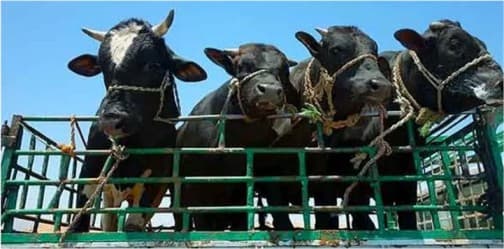
Acquitting the accused of all charges in one such case over two months ago, Judicial Magistrate First Class, Amit Verma, observed in his order that “merely because the accused is a Muslim, presumption cannot be drawn that he was transporting the cows for the purpose of slaughtering”.
The judge, in his order, also pointed out several loopholes in the prosecution’s case such as the police official heading the raiding party not being able to identify the accused, the Test Identification Parade not carried out, contradictory statements by the witnesses, and the case property not being in a sealed condition when produced before the court.
He added that the investigating officers lacked the knowledge of the law and invoked wrong sections in the challans, giving a benefit to the accused. “There are hardly any independent witnesses in the cases as most of the raids are conducted at night and also the locals don’t want to go against their own community. The closed-circuit television coverage in Nuh is almost nil. The investigating officers, each dealing with 40-50 cases, too are overworked,” said the public prosecutor.
Nuh’s Superintendent of Police Varun Singla conceded that there were sometimes “procedural lapses” on the part of the police due to practical difficulties, such as meat samples not lifted at the spot because staying at the crime scene for a longer time in such cases could be risky for the police team. Also, the vehicles used in the commission of the crime are usually stolen, making it difficult to link them with the accused, while mobile phone SIMs are procured using fake identities, said Mr. Singla.
With the efforts of the police, 96 villages where cow slaughter cases had been reported over the past five years have now adopted resolutions calling for the boycott of the accused, said Mr. Singla, adding that ulemas have also issued fatwas against beef consumption since it is illegal.