Latest Blogs
See More


Milk, being an important constituent of our diet since birth, has now seen a diminishing demand in recent years. Although being a beverage power packed with essential nutrients that are important for development and maintaining health, milk has seen a decline in consumption worldwide.

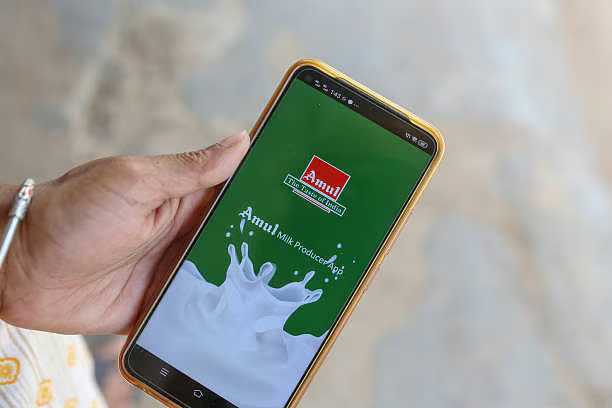
Similar trends have been seen in India, where many households are moving away from drinking cow's milk. In India, almost 3% of households no longer drink milk. The well-known Indian dairy business Amul raised the cost of its Amul Gold and Taaza milk packets by Rs 2. 14% of people switched to locally supplied, unbranded milk as a result of this price increase, while 20% reduced the quantity of milk consumed.
China has also seen a significant shift in milk consumption. Milk production has increased to 42 million tons from 30.39 million tons in 2017. While production has seen a lot of growth, many Chinese citizens have lost faith in the dairy industry, especially milk, after the 2008 tainted Sanlu Company milk scandal, where melamine, a non-protein nitrogen, was discovered in baby formula in order to boost its protein levels. This milk crisis resulted in the death of 6 infants and kidney stones and urinary tract infections in 300,000 infants.
The problem was made much more difficult because, on average, China's birth rate dropped to 6.39 per 1,000 in 2023. Even after the 35-year-old one-child restriction was repealed in 2016, birth rates continued to decline. A surplus of 300,000 tons of milk was produced in 2023 due to these causes, which also caused the price of milk to drop to US$0.5 per kilogram. China's milk producers have begun turning fluid milk into milk powder in an effort to recover their investments and export to other nations due to the country's ageing population and low birth rate.
New Zealand follows with 17,926.00 thousand MT, while Mexico consumes 11,261.00 thousand MT. Argentina and Ukraine round out the list, with milk consumption of 11,045.00 thousand MT and 10,793.00 thousand MT, respectively. India, however, remains the world's largest producer of milk, with an estimated production of 207.1 million metric tons in 2024. The European Union follows closely with 149.33 million metric tons, while the US produces 102.68 million metric tons.
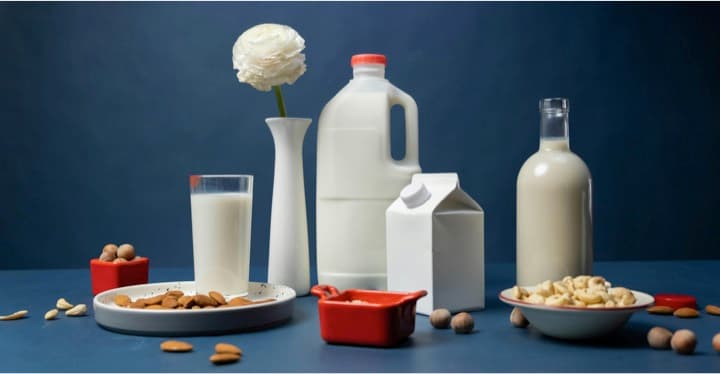
Customers are also searching more and more to lessen their carbon footprint. The World Health Organization estimates that 14.5% of greenhouse gas emissions worldwide are caused by livestock. According to a survey, one glass of plant-based milk generates three times fewer greenhouse gases than a glass of conventional milk, making it far less harmful to the environment. Additionally, soy milk helps with water conservation because it uses 64% less water than dairy milk. Due to these environmental advantages, plant-based milk is now able to offset the climate impact of dairy farming.
Additionally, although plant-based milk has been referred to as milk, the US, UK, India, and the European Union do not like this misconception since they have prohibited the use of the name "milk" unless it refers to a dairy product. According to a 2013 European Union law, milk cannot be used unless it is secreted from an animal. UK has followed suit with plant-based milk brand Oatly being forced to remove milk from its 2019 slogan "Post Milk generation", which UK courts contested that the word milk was misleading for traditional milk drinkers.
Moreover, as some plant-based drink companies were using the word "milk" to deceive customers, the FDA in the US has taken tough measures against them. Since then, companies such as Hershey's and Alt Co. have substituted the term "plant-based drink" for "milk" on their goods.
There has been significant progress in the shift from conventional milk to plant-based alternatives. Despite the fact that many customers are choosing dairy alternatives, research shows the majority of these options lack the nutritional benefits of dairy milk and frequently require additional nutrients. Despite this, there is an increasing demand for dairy alternatives as more consumers choose sustainable, ethical, and health-conscious options.